
Engineers in Permitting – Key to Texas Project Success

Delays and confusion during permitting can turn even ambitious Texas development projects into costly headaches. Developers in Houston and Austin know that the right engineering partner is more than an advisor—they are the technical backbone driving compliance and speed. Understanding the engineer’s role is key for smooth approvals, as these professionals handle site analysis, documentation, and regulatory coordination. Explore how expert engineering makes the difference in keeping your project on track and moving toward timely completion.
Table of Contents
- Defining Engineers’ Role in Permitting
- Types of Permits Requiring Engineering Expertise
- Water and Environmental Permits
- Floodplain and Drainage Permits
- Steps Engineers Take in the Permitting Process
- Legal Duties and Compliance in Texas
- Common Pitfalls and How Engineers Prevent Delays
Key Takeaways
| Point | Details |
|---|---|
| Engineers Are Essential in Permitting | Engineers translate project visions into compliant technical packages, ensuring adherence to local codes and regulations. |
| Timely Documentation Streamlines Approval | Thorough and accurate engineering documentation reduces permitting timelines significantly, preventing costly delays. |
| Identify Required Permits Early | Understanding which permits necessitate engineering involvement helps in budgeting time and resources effectively. |
| Proactive Communication with Regulators | Engaging engineers early in the process facilitates better coordination with permitting offices, reducing the chance of project delays. |
Defining Engineers’ Role in Permitting
Engineers aren’t just support players in Texas permitting—they’re the technical backbone that keeps projects moving and compliant. When a city or county reviews your development application, engineers are the ones providing the data, calculations, and design proof that regulators need to approve your project.
Your engineer’s primary job in permitting is straightforward: translate your project vision into a technical package that satisfies local codes and environmental regulations. They analyze site conditions, calculate load capacities, design stormwater management systems, and ensure every structural element meets Texas building standards.
The Core Responsibilities
Developing and submitting complete design documentation is where engineers earn their keep. This includes detailed construction plans, structural calculations, grading plans, and site layouts that regulators can evaluate.
Engineers also serve as technical guarantors during the review process. They interpret complex building codes, respond to municipal review comments, and revise plans when inspectors identify issues. This back-and-forth between your engineer and the permitting office can make or break your timeline.
Environmental compliance requires specialized attention. Complex permitting and environmental reviews demand engineers who understand stormwater regulations, flood zone requirements, and drainage considerations specific to your Texas location—whether that’s Houston’s unique flood challenges or Austin’s environmental sensitivity.
Here’s what your engineer handles during permitting:
- Site analysis and feasibility studies
- Structural and foundation design calculations
- Grading and drainage plans
- Building code compliance review
- Environmental impact assessment
- Municipal review responses and revisions
- Construction administration coordination
Why This Matters for Your Project Timeline
A capable engineer compresses permitting timelines significantly. When plans are complete, accurate, and thoughtfully prepared the first time, review cycles shorten dramatically. Incomplete or error-filled submissions trigger revision requests that can delay projects by weeks or months.
In Houston, where flood regulations are increasingly complex, your engineer’s ability to navigate environmental and safety standards directly impacts approval speed. Similarly, Austin’s environmental requirements demand engineers familiar with local tree preservation ordinances and habitat considerations.
Your engineer also bridges communication gaps between you and the permitting office. They speak the language of codes and regulations, translating technical requirements into actionable design changes.
A well-prepared engineering package can reduce permitting review cycles by 30-50%, compared to incomplete submissions requiring multiple revisions.
The investment in thorough upfront engineering work—structural analysis, grading design, and compliance verification—pays dividends when the permitting office reviews your application.
To help visualize engineering’s project role, here’s a function-impact breakdown:
| Engineering Function | Business Impact | Risk If Neglected |
|---|---|---|
| Site Assessment | Identifies constraints early | Costly redesigns |
| Technical Documentation | Speeds permit approvals | Extended review cycles |
| Compliance Verification | Minimizes legal exposure | Permit denial or violations |
| Stakeholder Coordination | Prevents community objections | Public opposition delays |
| Inspector Response/Revision Handling | Keeps timeline on track | Approval bottlenecks |
Pro tip: Engage your engineer before submitting your permitting application, not after. Early consultation on site constraints, zoning requirements, and environmental factors prevents costly redesigns later.
Types of Permits Requiring Engineering Expertise
Not all permits require engineering involvement, but the ones that do demand serious expertise. Understanding which permits need engineer sign-off helps you budget time and resources correctly. In Texas, several permit categories automatically trigger engineering requirements based on project scope and location.
Building and structural permits are the most common. These cover new construction, major renovations, and additions affecting the building’s structural integrity. Your engineer designs the foundation, verifies load calculations, and ensures compliance with Texas building codes.
Site development and grading permits control how you modify the land. Grading plans show elevation changes, drainage patterns, and erosion control measures. In Houston’s flood-prone environment, grading permits are critical for managing stormwater and protecting adjacent properties.
Here are the main permit categories requiring engineering expertise:
Here’s a summary comparing key permit types and their unique engineering challenges in Texas:
| Permit Type | Unique Engineering Challenge | Local Impact Example |
|---|---|---|
| Building/Structural | Foundation and load calculations | Austin: Tree preservation focus |
| Grading/Site Development | Drainage and erosion design | Houston: Flood risk mitigation |
| Water Resource | Stormwater management planning | Houston: Watershed compliance |
| Environmental | Habitat and wetlands analysis | Austin: Sensitive site review |
| Floodplain Development | Flood elevation and property effects | Houston: Mandatory in flood zones |
| Utility Connection | Safe layout for utilities | Statewide: Plumbing regulations |
| Erosion/Sediment Control | Soil stability and runoff prevention | Texas Hill Country: Steep slopes |
- Building permits for new structures and major renovations
- Grading and site development permits
- Water resource permits for drainage and stormwater management
- Environmental permits for wetlands or water body impacts
- Utility connection permits for electrical, mechanical, and plumbing systems
- Floodplain development permits in designated flood zones
- Erosion and sediment control permits
Water and Environmental Permits
These permits involve the most complex engineering work. Water resource permits require detailed engineering analysis for drainage design, stormwater management, and environmental protection.
If your project touches wetlands, streams, or flood plains, environmental permits apply. Your engineer must demonstrate that the project won’t negatively impact water quality or natural resources. Austin’s environmental sensitivity means projects often require extensive habitat assessments and mitigation planning.
Clean Water Act permitting processes involve specialized technical analysis for water quality and environmental compliance. Even commercial projects near waterways trigger these requirements.
Floodplain and Drainage Permits
Texas requires floodplain development permits in designated flood zones. Your engineer analyzes how the project affects flood elevation and surrounding properties. In Houston, this is nearly every development—the city’s aggressive floodplain management means detailed engineering is non-negotiable.
Drainage permits ensure your stormwater system properly manages runoff. The engineer designs detention ponds, channels, and outfalls meeting local drainage criteria.
Complex permit applications with inadequate engineering analysis get rejected or delayed. Complete, accurate engineering documentation approves faster.
Think of these permits as regulatory checkpoints. Each one has specific technical requirements that only engineers can certify. Missing one category during initial planning forces costly redesigns.
Pro tip: Meet with your engineer early to identify which permit categories your project requires, then budget 2-4 weeks for each engineering study—this prevents last-minute scrambling before submitting applications.
Steps Engineers Take in the Permitting Process
The permitting journey isn’t random—engineers follow a structured sequence that moves your project from concept to approved plans. Each step builds on the previous one, and skipping steps or doing them out of order creates delays. Here’s how experienced engineers navigate this process in Texas.
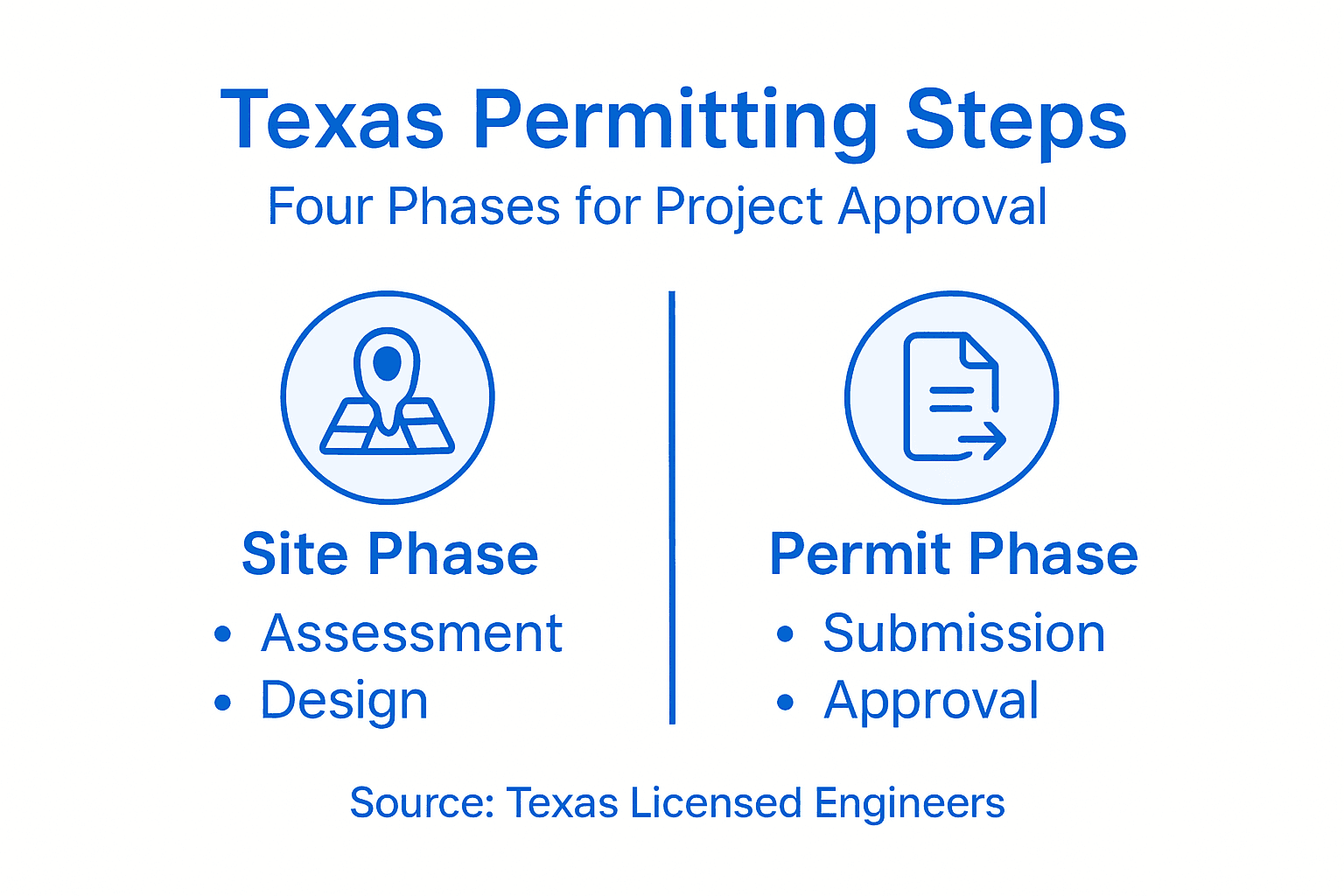
Phase 1: Site Assessment and Initial Design
Engineers start by understanding your property and project goals. They conduct site visits, review existing surveys, and identify potential constraints like flood zones, easements, or environmental sensitivities.

This phase includes basic feasibility analysis. Can the site accommodate your vision given existing topography and utilities? What challenges exist that require design solutions?
Your engineer then develops preliminary designs showing the project layout, building footprints, and site modifications. These sketches aren’t final—they’re exploration tools to identify what permitting will require.
Phase 2: Preparation and Technical Documentation
Environmental impact assessments and technical analyses form the backbone of permit applications. Your engineer prepares detailed engineering calculations, structural plans, site plans, and drainage designs specific to your project type.
For residential projects, this means structural plans showing foundation design and load calculations. For commercial development, it includes grading plans, utility layouts, and stormwater management designs.
Your engineer coordinates with you to gather required information—property ownership details, survey data, project specifications. Nothing gets submitted until documentation is complete and accurate.
Key documents prepared during this phase:
- Structural and foundation design plans
- Site plans and grading designs
- Drainage and stormwater management plans
- Utility connection plans
- Environmental assessment reports (where required)
- Erosion control specifications
Phase 3: Submission and Agency Coordination
Once documentation is complete, your engineer submits applications to the appropriate agencies. This isn’t fire-and-forget—your engineer tracks submissions, monitors review progress, and responds to agency questions.
Regulatory agencies review plans, conduct inspections, and request revisions throughout the approval process. Your engineer interprets technical feedback from inspectors and adjusts plans accordingly.
Revisions are normal. Agency comments on drainage design, structural capacity, or environmental impact require plan modifications. Your engineer updates drawings and resubmits within required timeframes.
Phase 4: Final Approval and Construction Readiness
Once all agencies approve, your engineer ensures all permit conditions are clearly understood. Some permits impose ongoing requirements—inspection schedules, performance standards, or monitoring obligations that your engineer coordinates.
Engineers manage the permitting journey from start to finish, ensuring nothing falls through cracks and deadlines stay on track.
Your engineer also prepares construction documents from the permitted plans, coordinating with contractors and inspectors for the building phase.
Pro tip: Request weekly status updates from your engineer during the permitting review period so you stay informed of progress, anticipated comments, and timeline adjustments before surprises emerge.
Legal Duties and Compliance in Texas
When your engineer stamps a set of plans, they’re putting their professional license on the line. In Texas, this isn’t just a formality—it’s a legal commitment to accuracy, safety, and regulatory compliance. Understanding what this responsibility means protects both you and your project.
Engineers in Texas are bound by the Texas Engineering Practice Act and the Texas Board of Professional Engineers rules. These regulations define what engineers must do, what they can’t do, and what happens when they fail to meet standards.
Professional Licensing and Accountability
Licensed Professional Engineers in Texas carry individual accountability for their work. They can’t hide behind companies or teams—their personal license is at risk on every stamped document.
This means your engineer must verify all calculations, confirm site conditions, and ensure design compliance before submitting anything to permitting offices. No shortcuts. No guesses. Everything must be documentable and defensible.
Your engineer’s stamp certifies that plans meet Texas building codes and applicable regulations. This certification has legal weight in court if disputes arise later.
Ethical and Legal Requirements
Engineers maintain professional integrity through strict adherence to safety standards and accurate permit documentation. Falsifying calculations, hiding site constraints, or misrepresenting project details violates Texas engineering ethics codes and can result in license suspension or revocation.
Texas requires engineers to provide truthful, complete information in all submissions. If your site has subsurface conditions affecting foundation design, engineers must disclose this. If drainage calculations don’t meet local standards, plans must reflect required modifications.
These aren’t suggestions—they’re legal mandates with serious consequences for violations.
Compliance Documentation and Record-Keeping
Engineers must maintain detailed records of their design process, calculations, and site investigations. These documents demonstrate compliance with regulations and provide evidence if disputes arise.
In Texas, engineers coordinate environmental assessments and regulatory compliance throughout project development. For commercial or industrial projects, this includes hazard analysis, risk assessment documentation, and proof of regulatory coordination.
Key compliance responsibilities include:
- Accurate calculations and design documentation
- Site investigation records and survey data
- Code compliance verification and documentation
- Environmental impact assessments (where required)
- Coordination with regulatory agencies
- Response documentation for all inspector comments
- Final as-built plan certifications
What Happens When Compliance Fails
Noncompliance has real consequences. Rejected permits, project delays, code violations, and potential liability all flow from engineering work that doesn’t meet standards. In worst cases, engineers face license discipline or legal action.
Your engineer’s professional insurance doesn’t cover intentional violations or gross negligence—only legitimate mistakes made in good faith.
A licensed engineer’s responsibility is non-negotiable: every plan, calculation, and submission must meet Texas standards or the engineer’s license is at risk.
This accountability actually protects you. Your engineer has every incentive to get things right the first time because their professional reputation depends on it.
Pro tip: Ask your engineer to walk you through their code compliance verification process and show you the calculations supporting critical design decisions—this transparency ensures you understand what’s been approved and why.
Common Pitfalls and How Engineers Prevent Delays
Permitting delays aren’t random—they follow predictable patterns. Projects get stuck because of incomplete documentation, inadequate site analysis, or failure to anticipate regulatory requirements. Understanding these pitfalls helps you avoid them.
Experienced engineers know which mistakes cost time and money. They build prevention strategies into their process from day one. Here’s what separates fast-track projects from those that languish in review.
The Documentation Problem
Incomplete or inaccurate engineering plans are the number one cause of permit rejection. Missing details force inspectors to request revisions, adding weeks to timelines. Calculations with errors require recalculation and resubmission.
Your engineer prevents this by completing thorough site investigations before design begins. Soil reports, survey data, utility locates—all gathered upfront so designs are based on reality, not assumptions.
Plans submitted to permitting offices must be dimensionally accurate, code-compliant, and complete. No half-finished drawings. No assumptions about site conditions. Everything must be documented and verified.
Early Stakeholder Engagement
Proactive community and stakeholder engagement prevents opposition delays that can derail projects. Neighbors and property owners who understand a project from the start raise fewer objections during permitting.
Your engineer should identify potential concerns—drainage impacts on neighbors, traffic patterns, environmental considerations—and address them in design. Presenting solutions upfront rather than waiting for complaints significantly speeds approval.
In Texas communities, early coordination with local planning departments clarifies requirements before substantial design work begins. This prevents redesigns triggered by overlooked zoning provisions or site plan standards.
Common Delays in Texas
Complex zoning ordinances and community concerns create permitting bottlenecks requiring strategic navigation. Houston’s unique drainage requirements and Austin’s environmental constraints demand specialized engineering knowledge.
Common delay sources include:
- Incomplete site investigations revealing unexpected conditions
- Design changes triggered by missed code requirements
- Inadequate environmental assessments
- Drainage calculations not meeting local standards
- Utility conflicts discovered during review
- Community opposition due to lack of early engagement
- Unrealistic project timelines forcing rushed engineering work
Prevention Strategies
Your engineer prevents delays through systematic risk management. Before any design work, they identify potential obstacles: zoning limitations, environmental constraints, utility conflicts, drainage requirements.
They build contingency into schedules. Complex projects require more review cycles than simple ones—planning for this reality prevents panic when inspectors request revisions.
Engineers also maintain ongoing communication with permitting offices. Rather than submitting plans cold and hoping for approval, they coordinate with inspectors early, understanding expectations and addressing concerns before formal submission.
The best permitting strategy is building quality into your engineering from the start—complete documentation, thorough analysis, and realistic timelines prevent almost every delay.
Proactive engineers compress what could be six-month review cycles into two or three months through preparation and coordination.
Pro tip: At project kickoff, have your engineer create a detailed permitting roadmap showing anticipated review timelines, required studies, and likely inspection points—this transparency prevents surprises and lets you budget time realistically.
Ensure Your Texas Project Permits Get Approved Without Delay
Navigating the complex permitting process in Texas requires precise engineering expertise focused on compliance, detailed documentation, and early stakeholder coordination. The article highlights that missing key steps like thorough site assessment, accurate structural calculations, and environmental compliance can cause costly delays and risk permit denials. If you want to avoid revising submissions multiple times or facing legal hurdles, partnering with licensed engineers experienced in Texas regulations is essential.

At Texas Licensed Engineers, we specialize in delivering comprehensive permitting solutions tailored to residential and commercial projects across Houston, Austin, Dallas, San Antonio, and beyond. Our team ensures your construction plans, grading designs, and environmental assessments align perfectly with local codes. Visit our TLE Archives – Texas Licensed Engineers | Residential & Commercial to explore how our expert services have expedited project approvals for many clients. Don’t let incomplete engineering slow down your next Texas development. Start your permitting journey right by consulting with us today.
Frequently Asked Questions
What role do engineers play in the permitting process in Texas?
Engineers serve as the technical backbone of the permitting process, providing crucial calculations, designs, and documentation that regulatory agencies need to approve development projects.
Why is it important to engage an engineer early in the permitting process?
Engaging an engineer early helps identify site constraints, zoning requirements, and environmental factors, preventing costly redesigns and streamlining the application submission process.
What types of permits typically require engineering expertise?
Common permits that require engineering involvement include building and structural permits, grading and site development permits, water resource permits, environmental permits, and floodplain development permits.
How can engineers help avoid delays in the permitting process?
Engineers can prevent delays by conducting thorough site investigations, submitting complete and accurate documentation, engaging with community stakeholders early, and maintaining communication with permitting offices throughout the review process.
Recommended
- Role of Engineers in Texas Construction Projects – Texas Licensed Engineers
- Role of Engineers in Texas Projects: Ensuring Safety and Compliance – Texas Licensed Engineers | Residential & Commercial
- Role of Engineers in Permitting – Streamlining Florida Projects – Florida Licensed Engineers
- Why Use Licensed Engineers in Texas Projects – Texas Licensed Engineers | Residential & Commercial


