
Foundation Inspection Checklist for Texas Homes and Buildings
More than eight out of ten American homes in Texas face foundation challenges due to shifting soil and extreme weather patterns. For Houston and Austin homeowners, a thorough foundation inspection can be the difference between peace of mind and costly structural repairs. This guide offers step-by-step direction on gathering critical inspection tools, detecting early warning signs, and meeting all local building code requirements to protect your property’s value and safety.
Table of Contents
- Step 1: Gather Inspection Tools And Documentation
- Step 2: Identify Exterior And Interior Foundation Issues
- Step 3: Check Drainage And Grading Around The Structure
- Step 4: Assess Cracks, Shifts, And Moisture Signs
- Step 5: Verify Compliance With Texas Building Codes
Quick Summary
| Key Point | Explanation |
|---|---|
| 1. Gather essential inspection tools | Collect specific tools like laser distance measurer and moisture meter to support a thorough foundation inspection. |
| 2. Identify critical foundation issues | Inspect both exterior and interior surfaces for signs of cracks, unevenness, and moisture that may indicate structural problems. |
| 3. Evaluate drainage and grading | Ensure that water drains away from the foundation by checking the grading and drainage systems around your home. |
| 4. Assess cracks and moisture indicators | Examine for settlement cracks and water-related signs that could suggest foundation vulnerabilities and require immediate attention. |
| 5. Verify compliance with local building codes | Review Texas building codes to confirm that your foundation construction meets current regulations and standards for safety. |
Step 1: Gather inspection tools and documentation
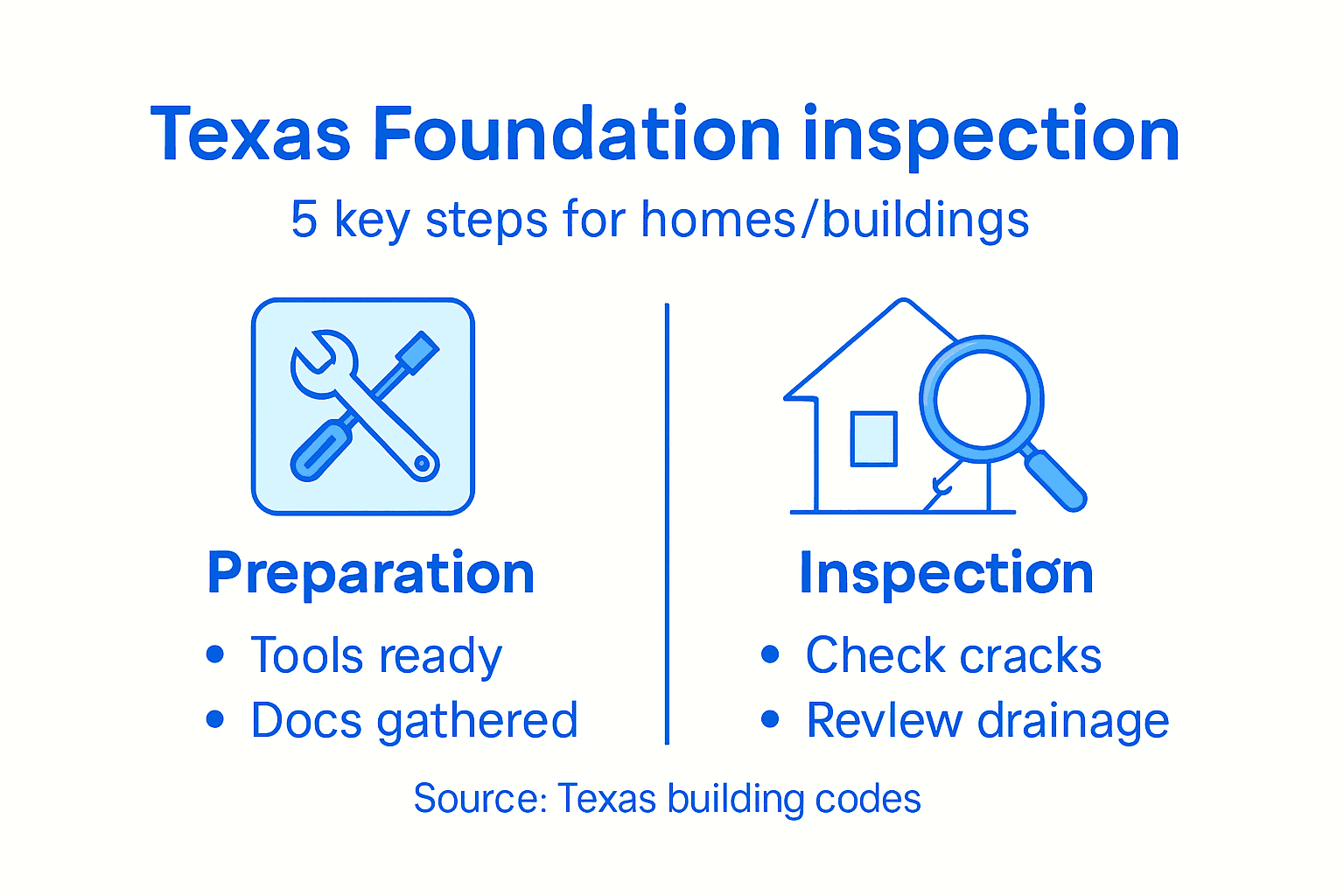
Successfully preparing for a foundation inspection requires strategic planning and comprehensive documentation gathering. Your toolkit and paperwork will serve as the critical foundation for a thorough structural assessment of your Texas property.
Start by collecting essential structural inspection documentation including original construction blueprints, site survey records, and previous geotechnical reports. Ensure these documents are organized and easily accessible before your inspection. Your primary tools should include a high-quality laser distance measurer, digital level, crack measurement gauge, moisture meter, and a professional grade camera for detailed photographic documentation.
Prepare a dedicated inspection folder with plastic sleeves to protect important papers and create space for noting observations during the site visit. Wear comfortable clothing with multiple pockets to carry your tools and keep your hands free for measurements and detailed examinations.
Here’s a summary of essential tools and documents for a thorough foundation inspection:
| Category | Item | Purpose |
|---|---|---|
| Document | Construction blueprints | Confirm original foundation specs |
| Document | Site survey records | Reference property boundaries |
| Document | Geotechnical reports | Assess soil and subgrade details |
| Tool | Laser distance measurer | Measure distances/settlement shifts |
| Tool | Digital level | Check for uneven surface slopes |
| Tool | Crack measurement gauge | Quantify width of foundation cracks |
| Tool | Moisture meter | Detect dampness/intrusion risks |
| Tool | Professional camera | Document visual evidence |
Pro tip: Always keep digital backups of your inspection documents in at least two separate locations to prevent potential loss of critical information.
Step 2: Identify exterior and interior foundation issues
Foundation inspection requires a systematic and detailed approach to uncovering potential structural problems in your Texas home. Your goal is to methodically examine both exterior and interior surfaces for signs of foundation distress that could compromise your property’s integrity.
Begin your inspection by thoroughly examining the exterior perimeter, looking for critical foundation warning signs such as horizontal or stair-step cracks in brick veneer, uneven ground settlement, and visible concrete slab displacement. Walk the entire perimeter slowly, using a trained eye to detect subtle shifts or irregularities in the foundation wall alignment. Inside your home, check for secondary indicators including wall cracks near door frames, uneven floor surfaces, gaps between walls and baseboards, and doors that no longer close properly.
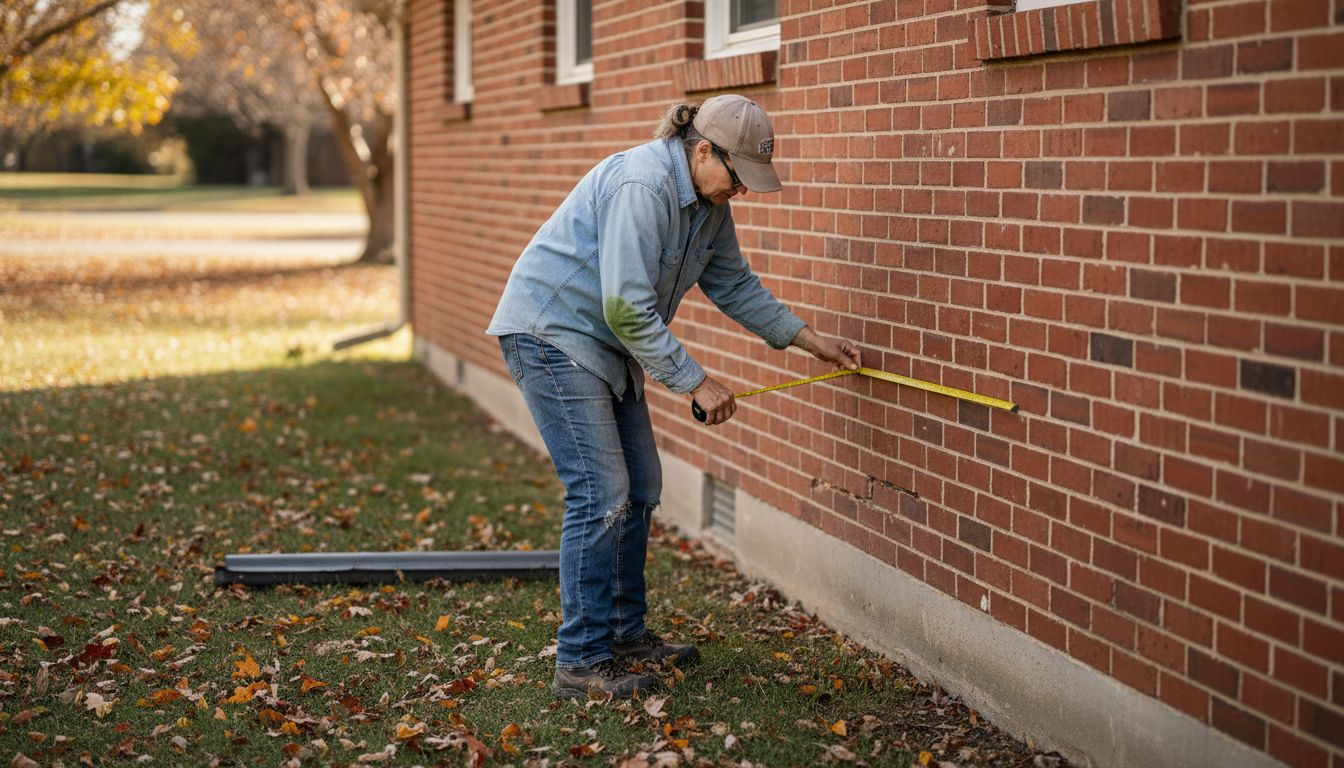
Pay special attention to moisture patterns and potential water intrusion points, as these can significantly accelerate foundation deterioration. Look for signs of hydrostatic pressure such as water stains, efflorescence on walls, or damp areas near foundation walls that might indicate drainage or waterproofing issues.
Compare these common signs of foundation issues by location:
| Location | Typical Signs | What It Indicates |
|---|---|---|
| Exterior | Stair-step cracks, slab displacement | Structural movement or settling |
| Interior | Wall cracks near doors, uneven floors | Foundation shifting inside |
| Moisture Area | Efflorescence, water stains, dampness | Water intrusion or poor drainage |
Pro tip: Take clear, dated photographs of every detected issue to create a comprehensive visual record for future reference and potential professional assessment.
Step 3: Check drainage and grading around the structure
Proper drainage and grading are critical components of foundation protection for Texas homes. Your mission is to systematically evaluate how water moves around your property and identify potential risks that could compromise your foundation’s structural integrity.
Begin by carefully examining the drainage requirements for residential foundations. Measure the ground slope around your home’s perimeter to ensure there is at least 6 inches of downward fall within the first 10 feet from the foundation walls. Look for areas where water might pool or flow toward the foundation instead of away from it. Check for signs of erosion, inadequate landscaping grading, or improper drainage that could direct water toward your home’s structural base.
Inspect your gutters, downspouts, and exterior drainage systems to confirm they effectively channel water away from the foundation. Look for extended downspout extensions that direct water at least 4 to 6 feet from the foundation, and ensure these paths are clear of obstructions. Pay close attention to low spots in your yard where water might accumulate, and consider installing French drains or creating swales if natural drainage is insufficient.
Pro tip: Use a long carpenter’s level or laser level to precisely measure ground slope and identify even subtle grading issues that could impact foundation health.
Step 4: Assess cracks, shifts, and moisture signs
Foundation health requires a comprehensive evaluation of subtle and significant structural changes that could indicate serious underlying problems. Your inspection will focus on identifying potential warning signs that might compromise your Texas home’s structural integrity.
Begin by carefully examining settlement cracks and structural shifts throughout your property. Look for horizontal or diagonal cracks wider than 1/4 inch, particularly those running along walls near door frames and windows. Pay special attention to areas where doors or windows stick, floors appear uneven, or walls show signs of movement. Check for progressive crack widening and measure existing cracks to track potential progression.
Focus on moisture indicators that can signal foundation vulnerability. Inspect interior and exterior walls for efflorescence (white powdery residue), water stains, mold growth, and damp patches that might indicate water intrusion. Check basement or crawl space areas for signs of water seepage, paying close attention to wall joints, floor edges, and areas near plumbing fixtures. Look for musty odors or visible moisture condensation that could suggest underlying drainage or waterproofing issues.
Pro tip: Use a bright flashlight and moisture meter to detect hidden moisture problems that might not be immediately visible to the naked eye.
Step 5: Verify compliance with Texas building codes
Ensuring your foundation meets state regulatory standards is critical for structural safety and legal compliance. Your goal is to systematically confirm that your property adheres to the most current Texas building code requirements for foundation construction and inspection.
Start by reviewing industrialized housing and building codes specific to foundation design and construction. Verify that your property meets the current International Building Code editions adopted by Texas, paying close attention to foundation design specifications, load requirements, and structural integrity standards. Cross reference your original construction documents with the latest state mandated codes, noting any potential discrepancies that might require professional assessment or remediation.
Carefully document each compliance verification step, including measurements, material specifications, and structural details. Check for local amendments specific to your city or county, as municipalities like Austin often have additional requirements beyond state minimums. Collect and organize all relevant documentation including original building permits, engineering drawings, and inspection records to demonstrate full regulatory compliance.
Pro tip: Keep a digital and physical copy of all code compliance documentation in a secure location for future reference and potential property transactions.
Protect Your Texas Property with Expert Foundation Inspection Services
Ensuring your home or commercial building stands strong begins with a detailed foundation inspection. The article highlights challenges like identifying foundation cracks, assessing drainage and grading, and verifying compliance with Texas building codes. These are critical pain points that call for professional evaluation to prevent costly structural damage and maintain your peace of mind.
Avoid the stress of missed warning signs and potential costly repairs by partnering with experienced licensed engineers who understand Texas-specific requirements. Our team offers comprehensive structural inspections, precise site evaluations, and code compliance verification designed to safeguard your property’s foundation integrity.

Take charge of your property’s safety today with trusted engineering solutions tailored to Texas homes and buildings. Visit the TLE Archives – Texas Licensed Engineers | Residential & Commercial to explore expert advice and services. Ready for a thorough foundation inspection or need a detailed construction plan? Contact us at https://texaslicensedengineers.com and secure your property’s future now. For additional insights, check out Uncategorized Archives – Texas Structural Inspectors and discover how we address complex foundation challenges.
Frequently Asked Questions
What tools do I need for a foundation inspection in Texas?
To conduct a thorough foundation inspection, you will need tools such as a laser distance measurer, digital level, crack measurement gauge, moisture meter, and a professional grade camera. Gather these tools and prepare an inspection folder to keep all documentation organized.
How do I identify signs of foundation issues in my home?
Begin by examining both the exterior and interior of your home for signs like horizontal or stair-step cracks, uneven floors, and gaps between walls and baseboards. Document any signs you find with photographs and measurements to track potential issues.
What should I check regarding drainage and grading around my foundation?
Ensure that the ground slopes away from your home’s foundation by at least 6 inches within the first 10 feet. Look for pooling water and evaluate your gutters and downspouts to confirm they effectively direct water away from your home.
How can I assess moisture signs during my foundation inspection?
Inspect both interior and exterior walls for efflorescence, water stains, and damp patches that indicate possible water intrusion. Use a moisture meter to evaluate any suspicious areas and take photos to document your findings.
What steps should I take to verify compliance with Texas building codes?
Review the current Texas building codes related to foundation construction and compare them to your original construction documents. Document your compliance checks meticulously, noting any discrepancies that may need remediation.
How often should I conduct a foundation inspection on my property?
Aim to perform a foundation inspection every few years or after significant weather events, such as heavy rainfall. Regular evaluations help catch potential issues early and can prevent more serious problems down the line.
Recommended
- 7 Key Steps for a Complete Residential Inspection Checklist – Texas Licensed Engineers | Residential & Commercial
- 7 Types of Structural Inspections Every Texas Property Needs – Texas Licensed Engineers | Residential & Commercial
- 7 Essential Steps for a Structural Inspection Checklist – Texas Licensed Engineers | Residential & Commercial
- Why Foundation Inspections Matter for Texas Homes – Texas Licensed Engineers | Residential & Commercial
