
How to Get Structural Inspection in Texas Easily
Cracks in walls or shifting floors often mean a hidden structural problem that American homeowners in Houston and Austin simply cannot ignore. With Texas weather extremes and aging properties, missing early signs may lead to costly repairs down the road. This guide reveals the smart steps that help protect your investment, ensure full compliance, and make renovation planning safer and stress free for your Houston or Austin home.
Table of Contents
- Step 1: Assess Inspection Needs For Your Property
- Step 2: Find Licensed Engineers In Your Texas City
- Step 3: Schedule The On Site Structural Inspection
- Step 4: Prepare Documents And Site For Inspection
- Step 5: Review Inspection Report And Ensure Compliance
Quick Summary
| Key Point | Explanation |
|---|---|
| 1. Assess Property Before Inspection | Understand your property’s needs based on age, type, and condition before scheduling an inspection. |
| 2. Verify Engineer Credentials | Use state databases to check the licensing and experience of structural engineers relevant to your property type. |
| 3. Prepare for On-Site Inspection | Organize documents and clear access to areas of concern to facilitate a thorough inspection process. |
| 4. Analyze Inspection Report Thoroughly | Carefully review findings to categorize urgency and consult with engineers for detailed understanding and next steps. |
| 5. Maintain Digital Records | Create a digital tracking system for inspection findings and actions to ensure ongoing property maintenance and compliance. |
Step 1: Assess Inspection Needs for Your Property
Before scheduling a structural inspection in Texas, you need to understand the specific requirements for your property. Different types of properties and construction stages require unique inspection protocols recommended by Texas regulatory agencies.
Start by examining your property’s characteristics. Residential homes in Texas typically need structural inspections during key phases: before purchasing, after significant renovations, when experiencing foundation issues, or if the property is older than 20 years. Commercial properties have additional compliance requirements that vary based on building type and usage. Factors like construction age, previous damage, local building codes, and recent environmental events such as floods or extreme weather can all influence the type of inspection needed.
Carefully review your property’s history and current condition. Look for signs of potential structural concerns like uneven floors, wall cracks, foundation shifts, or water damage. These indicators suggest you might need a comprehensive structural assessment to ensure your property’s safety and integrity.
Pro tip: Contact a licensed Texas structural engineering professional who can provide a personalized inspection recommendation based on your specific property characteristics and local regulatory standards.
Here is a summary of property types and when structural inspections are most important in Texas:
| Property Type | Common Inspection Triggers | Unique Considerations |
|---|---|---|
| Residential Home | New purchase, renovations, aging, damage | Foundation shifts, older building codes |
| Commercial Property | Compliance checks, renovations, disasters | Usage-based regulations, more permits |
Step 2: Find Licensed Engineers in Your Texas City
Locating a qualified structural engineer in Texas requires strategic research and verification. Texas licensing regulations mandate specific professional credentials for engineers performing structural assessments, which means you must carefully validate each professional’s qualifications.
Start by checking the Texas Board of Professional Engineers website for licensed professionals in your specific city. You can search by location, specialization, and current license status. Focus on engineers with specific experience in residential or commercial structural inspections relevant to your property type. Look for professionals who have worked in cities like Houston, Austin, Dallas, or San Antonio and understand local building codes and environmental challenges specific to Texas regions.
When evaluating potential engineers, request their professional license number and verify their credentials through official state databases. Check their professional background, years of experience, specialized certifications, and reviews from previous clients. Many reputable engineering firms offer online profiles that showcase their expertise and areas of specialization.
Pro tip: Request multiple quotes and compare the engineers professional credentials, ensuring they have specific experience matching your property’s unique structural assessment needs.
This table highlights key credentials to verify when selecting a Texas structural engineer:
| Credential Type | Why It Matters | How to Verify |
|---|---|---|
| Texas Professional License | Legal requirement, ensures legitimacy | State board database search |
| Specializations | Ensures experience with your property | Review resume or portfolio |
| Years of Experience | Reflects skill level and reliability | Ask directly or check profile |
| Client Reviews | Insight into satisfaction and results | Search online testimonials |
Step 3: Schedule the On Site Structural Inspection
Scheduling your structural inspection requires careful planning and coordination with licensed professionals. Residential building inspection procedures in Texas follow specific regulatory protocols that ensure thorough and accurate property assessments.
Contact the engineering firm you selected to arrange an on site inspection. Provide detailed information about your property including its location, age, construction type, and any specific concerns you want addressed. Most engineering firms offer online scheduling or phone booking options. Be prepared to provide your property address, preferred inspection dates, and any necessary access details. Some inspections might require specific preparation such as clearing access areas or having specific construction stages ready for review.

Confirm the inspection details in writing and ask about the estimated duration of the inspection. Typically structural inspections can take between two to four hours depending on your property size and complexity. Ensure you or a representative can be present during the inspection to answer questions and provide access to all necessary areas of the property.
Pro tip: Request a preliminary inspection checklist from your engineer beforehand and prepare your property accordingly to maximize the efficiency of your on site structural assessment.
Step 4: Prepare Documents and Site for Inspection
Preparing your property for a structural inspection involves strategic documentation and site readiness. Structural documentation requires precise engineering submissions to ensure a comprehensive and accurate assessment.
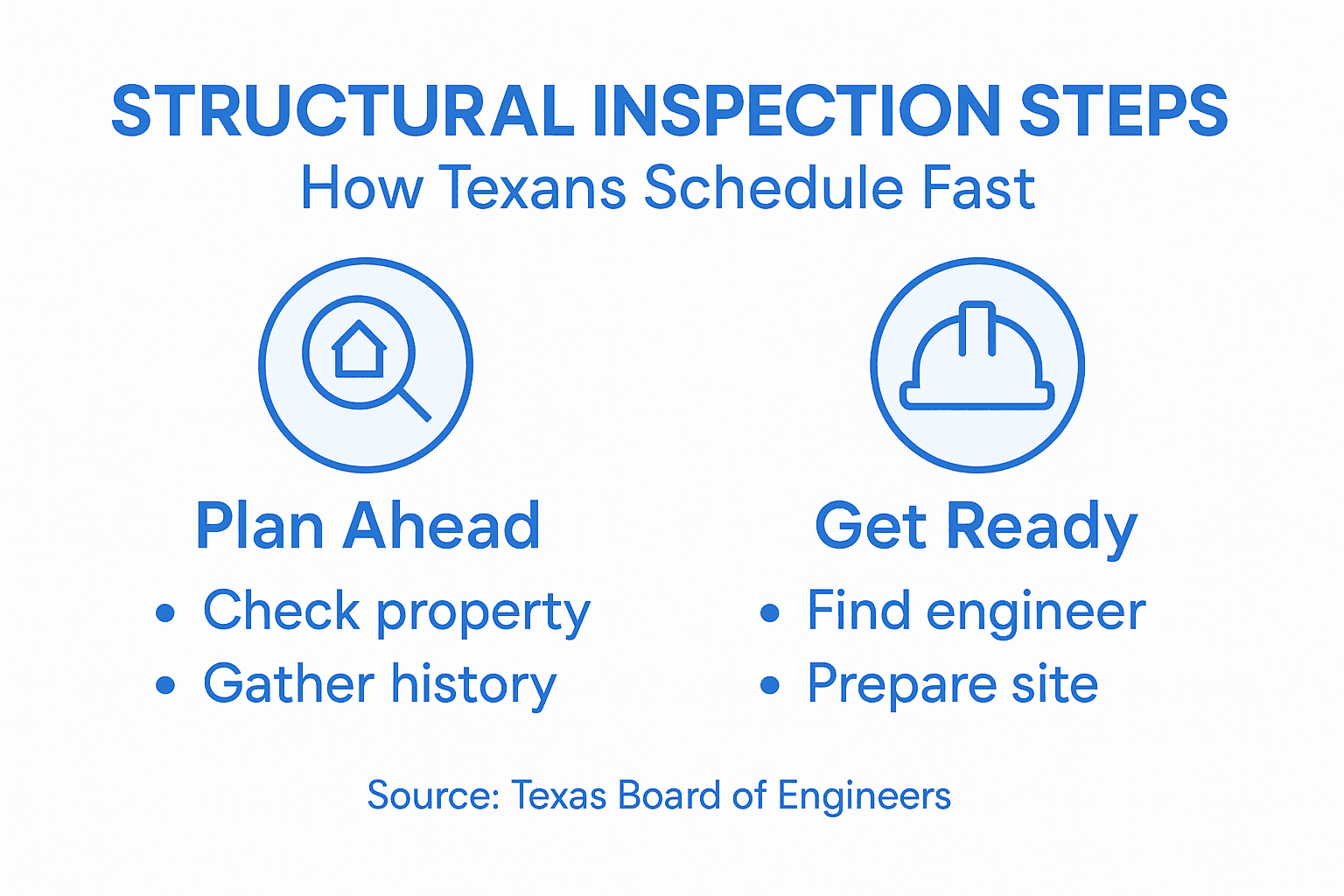
Gather all essential documents before the inspection day. This includes original construction plans, previous inspection reports, survey documents, foundation records, and any modifications made to the property. Create a comprehensive folder with architectural drawings, engineering calculations, geotechnical reports, and proof of permits. Ensure all documents are organized chronologically and easily accessible for the inspector.
Prepare your property physically by clearing access to all critical areas. Remove obstacles around foundation perimeters, crawl spaces, and structural elements. Ensure electrical panels, plumbing access points, and critical structural zones are unobstructed. If you have any specific concerns about potential structural issues, prepare detailed notes or photographic evidence to share with the engineering team during the inspection.
Pro tip: Make digital copies of all physical documents and store them in a secure cloud backup as a failsafe against potential loss or damage.
Step 5: Review Inspection Report and Ensure Compliance
After receiving your structural inspection report, carefully analyze the findings to understand your property’s condition and any potential issues. Texas regulations require detailed reporting on foundation performance and structural integrity that demands thorough examination.
Review each section of the inspection report meticulously. Pay special attention to any noted structural concerns, including foundation shifts, wall cracks, potential water damage, or areas requiring immediate remediation. Understand the severity of each observation and categorize them by urgency. Some findings might require immediate professional intervention, while others could be preventative recommendations for future maintenance.
Consult with the engineering team who conducted the inspection to fully comprehend the technical details and potential implications of their findings. Request a clear explanation of any complex terminology or technical assessments. If significant structural issues are identified, consider scheduling a follow-up consultation with a specialized structural engineer who can provide detailed guidance on necessary repairs or modifications to ensure your property meets all Texas building compliance standards.
Pro tip: Create a digital spreadsheet tracking each inspection finding, its recommended action, estimated cost, and completion status to maintain organized and proactive property maintenance.
Secure Your Property’s Future with Trusted Texas Structural Inspections
Navigating the complexities of scheduling a thorough structural inspection can feel overwhelming. From understanding inspection triggers to finding licensed engineers who comply with Texas regulations, every step matters to protect your residential or commercial property. This article highlights critical challenges such as verifying credentials, preparing your site for inspection, and interpreting detailed reports — all essential to maintain your property’s safety and comply with local codes.

Take control of your property’s structural health today by partnering with experts who specialize in comprehensive inspections, foundation evaluations, and engineering solutions tailored for Texas residents and businesses. Explore our curated collection of professional insights at the TLE Archives – Texas Licensed Engineers | Residential & Commercial and uncover expert guidance to simplify your inspection process. Ready for peace of mind? Visit texaslicensedengineers.com and connect with qualified engineers in Houston, Austin, Dallas, San Antonio, and beyond. Don’t delay critical maintenance that ensures your investment stays safe and compliant—schedule your inspection now and take the first step toward lasting structural integrity.
Frequently Asked Questions
How do I assess if my property needs a structural inspection in Texas?
To determine if your property requires a structural inspection, examine its age, condition, and any recent renovations or issues. Look for signs like uneven floors or wall cracks, and if you see these, schedule an inspection as soon as possible.
What steps should I take to find a qualified structural engineer in Texas?
Start by checking the Texas Board of Professional Engineers website for licensed professionals in your area. Focus on finding engineers with relevant experience in inspecting properties like yours and request multiple quotes to compare credentials.
How can I prepare my property for a structural inspection?
Before the inspection, gather important documents such as construction plans and previous inspection reports. Clear access to critical areas like the foundation and structural elements so that the engineer can perform a thorough assessment.
What should I expect during my structural inspection?
During the inspection, the engineer will assess the property’s structural integrity, looking for issues like foundation shifts or water damage. Typically, the inspection lasts 2 to 4 hours, so be prepared to answer questions and provide access to all necessary areas.
How do I review the structural inspection report effectively?
To review the inspection report, focus on the sections detailing any structural concerns and the urgency of each issue. Consider creating a digital spreadsheet to track findings and recommended actions, which will help you prioritize repairs or maintenance tasks.
Recommended
- How to Order Structural Inspection for Texas Homes – Texas Licensed Engineers | Residential & Commercial
- How to Request Structural Inspection for Texas Homes – Texas Licensed Engineers | Residential & Commercial
- Structural Inspection Process: Safeguarding Texas Properties – Texas Licensed Engineers | Residential & Commercial
- Structural Inspection in Texas – Protecting Property Value – Texas Licensed Engineers | Residential & Commercial
- Pool Construction Process Explained for Texas Homeowners
