
Defining Structural Analysis: Impact for Texas Homes
Roughly 30 percent of American home construction claims in Texas stem from preventable structural issues. This problem matters because regional soil shifts and extreme weather can threaten building safety and value, particularly for residential projects in Houston, Dallas, or San Antonio. Understanding structural analysis gives homeowners and contractors the knowledge to protect their investments, avoid common pitfalls, and meet strict building codes unique to every major Texas city.
Table of Contents
- Structural Analysis Explained For Texas Projects
- Main Types And Methods In Residential Use
- How Structural Analysis Protects Property Value
- Legal Standards And Engineering Requirements
- Frequent Mistakes By Homeowners And Contractors
Key Takeaways
| Point | Details |
|---|---|
| Importance of Structural Analysis | Structural analysis is essential for ensuring the safety and performance of Texas buildings, accommodating unique geological and climatic factors. |
| Types of Analysis | Various analysis methods, including static and dynamic assessments, help engineers address specific building challenges and optimize design. |
| Legal Compliance | Adhering to Texas’s stringent legal standards and building codes is crucial for ensuring safety and maintaining property value. |
| Common Mistakes | Homeowners and contractors often underestimate local soil conditions and overlook regular maintenance, leading to potential structural risks. |
Structural Analysis Explained for Texas Projects
Structural analysis represents a critical engineering discipline that provides comprehensive insights into the behavior, safety, and performance of residential and commercial buildings across Texas. By systematically evaluating how structures respond to various loads and environmental conditions, engineers can design buildings that withstand the state’s unique geological and climatic challenges. Structural engineering approaches integrate fundamental mechanics with advanced computational techniques to predict potential stress points and ensure structural integrity.
At its core, structural analysis involves creating mathematical models that simulate how buildings respond to different forces. These models consider multiple variables including wind loads, seismic activity, foundation stability, and material performance. Texas projects require specialized analysis due to the state’s diverse terrain – from coastal regions with hurricane risks to inland areas experiencing expansive clay soils that can dramatically impact building foundations. Engineers must account for these complex regional characteristics when conducting detailed structural assessments.
The process of structural analysis typically involves several key stages. First, engineers conduct comprehensive site evaluations to understand local geological conditions. Then they develop detailed computational models that simulate potential stress scenarios. These models help predict how structures will behave under different loading conditions, allowing professionals to identify potential weaknesses before construction begins. Advanced simulation techniques enable engineers to test multiple design scenarios, optimizing safety and performance while maintaining cost-effectiveness.
Pro tip: Always consult a licensed structural engineer who understands Texas-specific building challenges and can provide customized analysis for your specific project location and design requirements.
Main Types and Methods in Residential Use
Residential structural analysis encompasses multiple sophisticated methods for evaluating building performance and safety. Design load assessments are fundamental, identifying the various forces that impact residential structures, including live loads from occupants and furniture, dead loads from the building’s own weight, wind pressures, and potential seismic activities unique to different Texas regions.
Structural engineers utilize several primary analysis methods to ensure residential building integrity. These include static analysis, which evaluates forces acting on a structure in a stationary state, and dynamic analysis, which examines how buildings respond to moving or changing loads like wind, earthquakes, or structural vibrations. Advanced computational modeling allows professionals to simulate complex scenarios, predicting potential stress points and material responses before actual construction begins. Residential structures typically employ different structural systems such as moment frames, braced frames, and shear wall configurations, each designed to distribute and manage loads effectively.
The primary types of residential structural analysis methods include linear and nonlinear analysis techniques. Linear methods assume materials behave predictably under stress, while nonlinear methods account for more complex material behaviors and potential deformations. Engineers carefully select analysis approaches based on specific project requirements, considering factors like building height, geographical location, soil conditions, and expected environmental challenges. For Texas homes, this might mean extra attention to foundation design due to the state’s expansive clay soils and variable climate conditions that can create significant structural stress.
Pro tip: Request a comprehensive geotechnical report alongside your structural analysis to fully understand the unique ground conditions that might impact your residential building’s design and long-term stability.
Here’s a comparison of main structural analysis methods used in Texas residential projects:
| Method | Applications | Strengths | Limitations |
|---|---|---|---|
| Static Analysis | Stationary load scenarios | Simple and cost-effective | Limited for dynamic loads |
| Dynamic Analysis | Seismic, wind, vibrations | Assesses real-world conditions | Requires advanced modeling |
| Linear Analysis | Regular material behavior | Quick calculations | Not for complex deformations |
| Nonlinear Analysis | Irregular stress response | Captures complex behaviors | Data intensive and slower |
How Structural Analysis Protects Property Value
Structural analysis plays a crucial role in maintaining and enhancing property values, particularly in challenging Texas environments. Sustainability and resilience research demonstrates that comprehensive structural evaluations directly impact a property’s long-term market worth by identifying potential vulnerabilities and ensuring building integrity. By proactively assessing structural health, homeowners can prevent minor issues from escalating into expensive repairs that could significantly diminish property value.

The financial implications of structural analysis extend far beyond immediate maintenance concerns. Professional evaluations help detect early signs of potential structural degradation, such as foundation shifts, material stress, or environmental damage common in Texas’ variable climate. These assessments provide homeowners with critical insights into their property’s condition, enabling targeted interventions that preserve structural integrity and maintain market competitiveness. Insurance companies and potential buyers often view detailed structural reports as a mark of responsible property management, which can translate directly into higher resale values and more attractive investment propositions.
Technical assessments go beyond simple inspections by employing advanced diagnostic techniques that map out potential future risks. Engineers utilize sophisticated computational models to simulate stress scenarios, predicting how structures might respond to environmental challenges like extreme heat, sudden temperature changes, or potential seismic activities. For Texas properties, this means understanding how expansive clay soils, temperature fluctuations, and regional weather patterns could impact long-term structural performance. Such comprehensive analysis provides homeowners with a strategic approach to property maintenance, effectively turning structural evaluation into a proactive investment protection strategy.
Pro tip: Schedule a professional structural analysis every five to seven years, or immediately after significant environmental events, to stay ahead of potential structural issues and maintain your property’s value.
Legal Standards and Engineering Requirements
Structural engineering in Texas is governed by a comprehensive set of legal standards designed to ensure public safety and professional accountability. Texas Board of Architectural Examiners statutes establish rigorous licensing requirements that mandate engineers demonstrate technical expertise, ethical conduct, and compliance with state-specific regulations. These legal frameworks protect homeowners by ensuring that structural analysis and design meet stringent quality and safety standards specific to Texas’ unique environmental challenges.
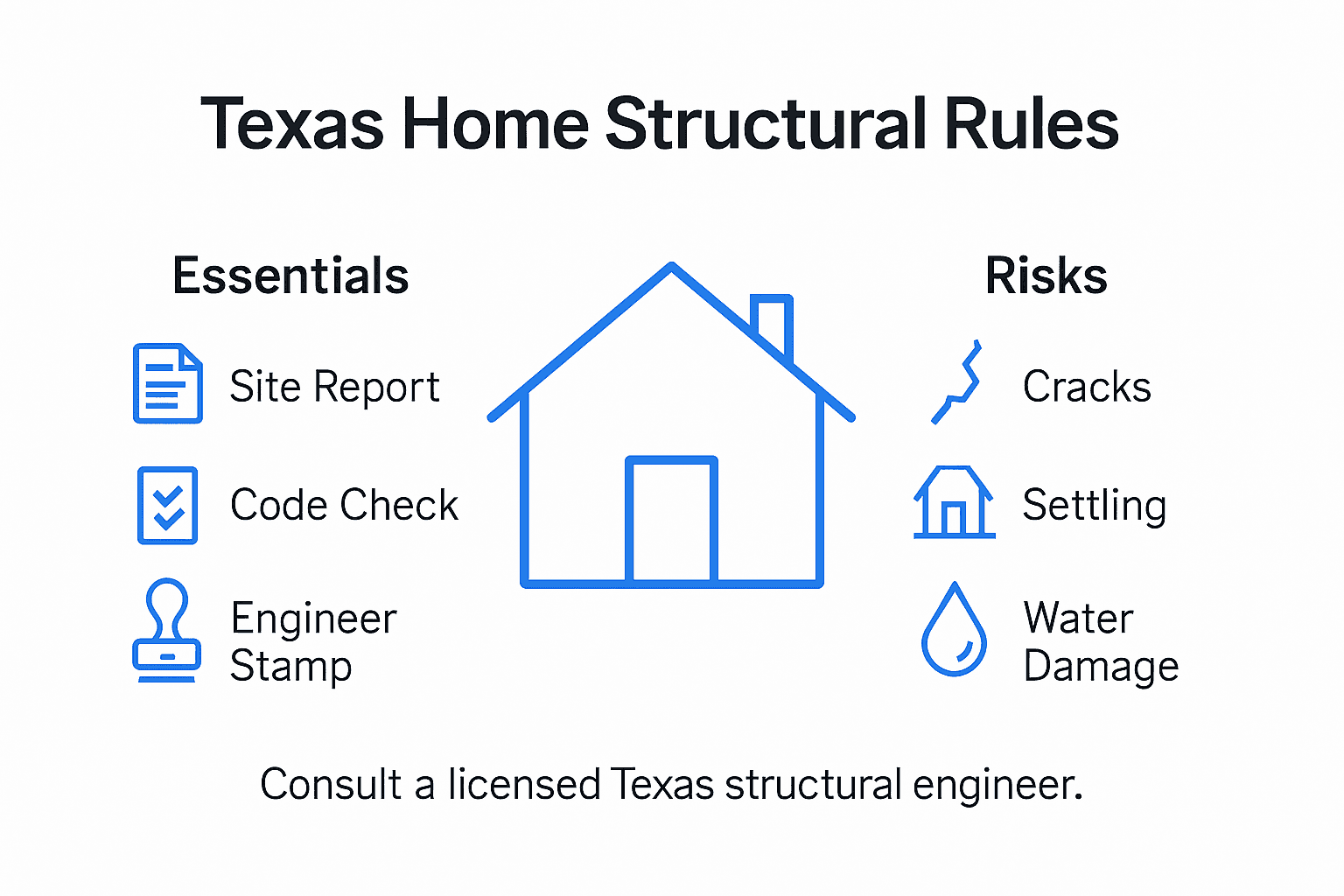
Building codes play a critical role in defining engineering requirements, particularly for residential structures. The Texas Department of Insurance adopts specific international building codes that address regional environmental risks, such as hurricane and windstorm protection. These regulations specify detailed structural design parameters, including wind load calculations, debris resistance standards, and construction techniques tailored to Texas’ diverse geographical regions. Compliance with these codes is not just a legal requirement but a crucial mechanism for protecting homeowners from potential structural failures and ensuring insurance eligibility.
Professional engineers in Texas must navigate a complex landscape of legal standards that extend beyond basic building codes. Licensing requirements include ongoing education, periodic professional reviews, and strict adherence to engineering ethics. Structural engineers must maintain comprehensive documentation, conduct thorough site assessments, and provide detailed analysis that meets both state regulatory requirements and professional best practices. This multilayered approach ensures that every residential project undergoes rigorous scrutiny, protecting homeowners from potential structural vulnerabilities and ensuring long-term building safety.
Pro tip: Always verify an engineer’s current Texas professional license and request a detailed explanation of how their proposed design meets local building code requirements.
Below is a summary of the key legal and regulatory considerations for structural engineering in Texas:
| Requirement | Impact on Projects | Importance for Homeowners |
|---|---|---|
| State Licensing | Ensures expertise | Protects safety and legal compliance |
| Building Codes | Defines design rules | Verifies insurance and eligibility |
| Ongoing Education | Maintains best practices | Ensures up-to-date safety standards |
| Documentation Standards | Supports accountability | Provides proof for resale or claims |
Frequent Mistakes by Homeowners and Contractors
Homeowners and contractors often make critical errors in structural analysis that can compromise building safety and long-term structural performance. One of the most prevalent mistakes is underestimating the impact of Texas’ unique geological conditions, particularly the state’s expansive clay soils that dramatically shift with moisture changes. Residential inspection checklists highlight the importance of comprehensive foundation assessments, yet many professionals overlook subtle signs of potential structural stress that can lead to significant future damage.
Contractors frequently make costly misjudgments during structural design and construction phases. These include inadequate soil testing, improper drainage planning, and failing to account for regional environmental stressors like extreme temperature fluctuations and potential wind loads. Some professionals cut corners by using generic design templates instead of creating site-specific structural analyses that consider the unique characteristics of each Texas location. This approach can result in structures that are fundamentally misaligned with local geological and climatic conditions, potentially leading to premature structural failures.
Homeowners contribute to structural risks through their own set of common mistakes. Many delay or completely ignore professional structural inspections, assuming that visible damage is the only indicator of potential problems. They may also undertake unauthorized modifications to load-bearing structures, unknowingly compromising the building’s structural integrity. DIY renovations that alter original architectural designs without professional engineering consultation can create hidden stress points that may not become apparent until significant damage has occurred. Additionally, homeowners often neglect regular maintenance that could prevent minor issues from escalating into major structural problems.
Pro tip: Schedule a comprehensive structural assessment with a licensed Texas engineer every three to five years, and always consult a professional before making any significant structural modifications to your home.
Secure Your Texas Home with Trusted Structural Analysis from Experts
Understanding the unique challenges that Texas homes face from expansive clay soils, shifting foundations, and variable weather can feel overwhelming. This article highlights the critical need for comprehensive structural analysis that addresses wind loads, soil conditions, and seismic risks to protect your investment and ensure safety. Many homeowners and contractors overlook these specific factors, which can lead to costly future repairs or jeopardized property value.
If you are looking for professional guidance tailored to Texas residential projects, explore our TLE Archives – Texas Licensed Engineers | Residential & Commercial for expert insights and solutions.

Don’t wait for visible damage to appear. Let our licensed engineers provide detailed inspections, foundation evaluations, and custom construction plans designed for Texas home conditions. Visit us now at https://texaslicensedengineers.com to schedule your consultation and protect the structural integrity of your home with proven engineering expertise.
Frequently Asked Questions
What is structural analysis in the context of residential buildings?
Structural analysis involves assessing how buildings respond to various loads and environmental conditions, ensuring their safety and performance.
How can structural analysis protect property value in Texas?
By identifying potential vulnerabilities early and ensuring structural integrity, structural analysis helps prevent costly repairs and enhances market competitiveness.
What are the main types of structural analysis methods used in Texas homes?
The main types include static analysis, dynamic analysis, linear analysis, and nonlinear analysis, each suited to different project requirements and conditions.
Why is it important to hire a licensed structural engineer in Texas?
Hiring a licensed engineer ensures compliance with local building codes, guarantees expertise in structural integrity, and protects homeowners from potential safety risks.
Recommended
- Structural Inspection in Texas – Protecting Property Value – Texas Licensed Engineers | Residential & Commercial
- Forensic Structural Analysis: Risks And Legal Impact In Texas – Texas Licensed Engineers | Residential & Commercial
- What Is a Structural Engineer and Why Texans Rely On Them – Texas Licensed Engineers | Residential & Commercial
- Structural Engineering Guide 2025 for Texas Projects – Texas Licensed Engineers | Residential & Commercial
