
Top 7 reasons you need engineering calculations in Texas
Skipping engineering calculations on a Texas construction project is not a minor oversight. It can stop your permit cold, trigger a failed inspection, void your insurance, or worse, put lives at risk. Whether you’re a homeowner in Houston adding a room addition or a contractor breaking ground on a commercial build in Dallas, the numbers behind your plans are what stand between a smooth project and a costly disaster. Here’s exactly why sealed, accurate engineering calculations are non-negotiable in Texas, and what happens when they’re missing.
Table of Contents
- Safety and structural integrity
- Code compliance and legal requirements
- Performance and efficiency (HVAC, energy, and beyond)
- Insurance, liability, and resale value
- Commercial projects and special cases
- What happens when calculations are wrong or missing?
- How to make the most of your engineering calculations
- Get expert engineering support for your Texas project
- Frequently asked questions
Key Takeaways
| Point | Details |
|---|---|
| Ensures safety | Engineering calculations protect your home’s structure against Texas-specific risks like wind and expansive soil. |
| Required for permits | Most Texas cities require sealed engineering calculations for permits, especially on complex or commercial projects. |
| Saves time and money | Accurate calculations prevent costly delays, failed inspections, and expensive repairs. |
| Boosts value and resale | Documented calculations increase buyer trust and insurance options for your property. |
Safety and structural integrity
Engineering calculations are the backbone of every safe building in Texas. They tell you whether your foundation can handle expansive clay soils, whether your roof framing can survive a Category 3 hurricane, and whether your walls can take the lateral wind loads common along the Gulf Coast. Without them, you’re guessing, and in Texas, guessing gets expensive fast.
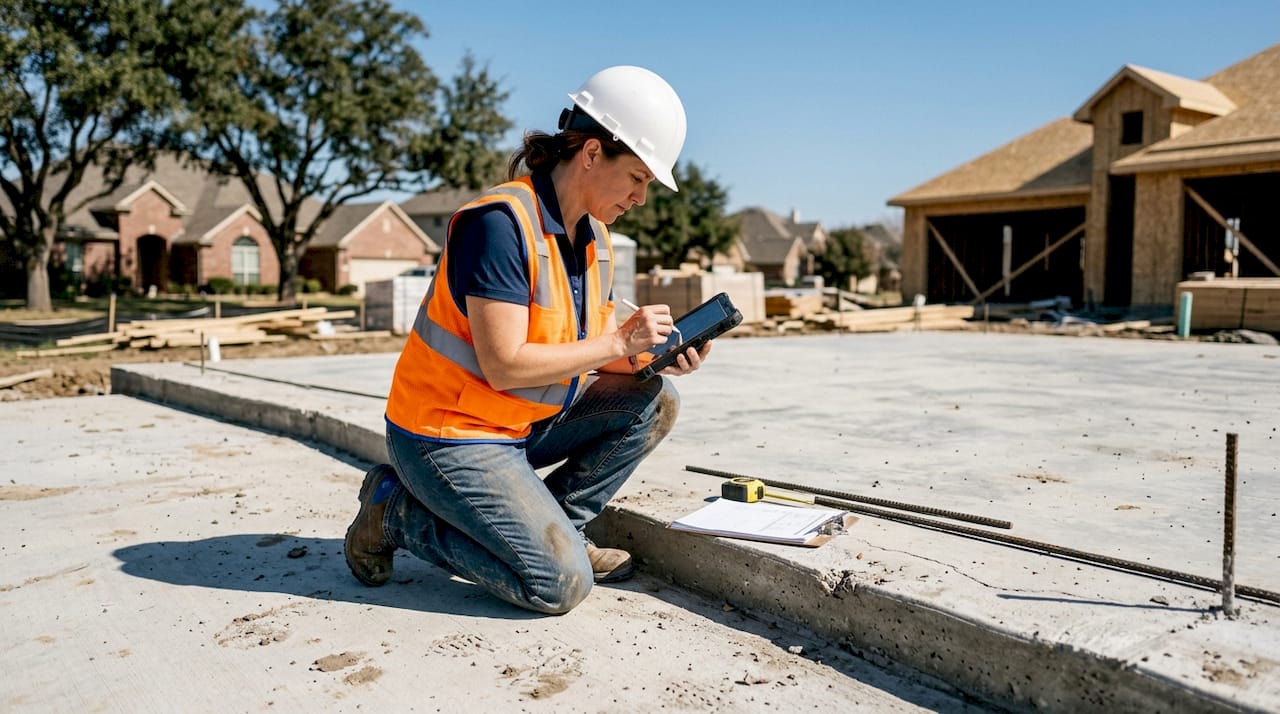
Texas presents some of the most demanding structural conditions in the country. Expansive soils in the Dallas and Austin areas can shift foundations several inches seasonally. Coastal regions face wind uplift pressures of 45 to 65 psf (pounds per square foot). These are not conditions where rule-of-thumb sizing works.
Here’s what proper structural calculations cover on a typical Texas project:
- Dead loads and live loads for floors, roofs, and walls
- Wind uplift and lateral force resistance for hurricane and high-wind zones
- Foundation bearing capacity on expansive or unstable soils
- Seismic considerations for west Texas projects near fault zones
- Roof equipment loads for HVAC units or solar panels added post-construction
The types of engineering calculations required vary by project scope, but structural and foundation calculations are almost always at the top of the list.
Pro Tip: If your project sits on black clay soil (common in North Texas), always request a geotechnical report alongside your foundation calculations. The soil data directly feeds the engineer’s design assumptions.
“Engineering calculations are required by Texas law for specific building elements including structural, mechanical, electrical, foundation design, hydrologic management, and plumbing systems beyond simple drainage to protect public health, safety, and welfare.”
Code compliance and legal requirements
Safety is the foundation, but meeting regulations is the gatekeeper. Getting your Texas permits approved depends directly on submitting the right calculations, sealed by a licensed professional engineer (PE). A sealed plan means a Texas-licensed engineer has reviewed, signed, and stamped the documents, taking legal responsibility for their accuracy.
Here’s when sealed engineering calculations are required for Texas permit applications:
- Structural systems on any project outside standard prescriptive code paths
- Mechanical systems including HVAC equipment over certain tonnage thresholds
- Electrical systems for service upgrades, panel changes, or commercial installations
- Plumbing systems beyond basic residential drainage
- Foundation design on expansive soils or flood-prone sites
Sealed engineering plans and calculations are mandatory for permit applications in residential and commercial construction in Texas jurisdictions, especially for structural integrity in expansive soils, wind loads, and flood zones.
Skipping this step does not just slow you down. It can result in permit denial, stop-work orders, fines, and forced demolition of unpermitted work. Understanding the engineering permits process in Texas saves you weeks of back-and-forth with city plan reviewers. Knowing what engineering specs belong in your submittal package is equally critical.
Texas engineering law is clear on this. The Texas engineering law outlines exactly which systems require a licensed engineer’s stamp, and municipalities like Houston, Austin, and San Antonio each layer their own local amendments on top of state minimums.
Key stat: Projects submitted without required calculations face permit delays averaging 6 to 12 weeks, which on a commercial project can translate to tens of thousands of dollars in carrying costs.
Performance and efficiency (HVAC, energy, and beyond)
Legal compliance opens the door, but performance, comfort, and long-term costs are why your calculations need to be precise. Nowhere is this more obvious than HVAC sizing in Texas homes and commercial buildings.
Manual J is the industry-standard load calculation method for residential HVAC. It accounts for your home’s square footage, insulation levels, window area, orientation, and local climate data to determine the exact heating and cooling capacity you need. In Texas, where summers routinely push 100 degrees and humidity is brutal, getting this wrong is not just uncomfortable, it’s expensive.
Manual J load calculations are standard for proper HVAC sizing in Texas, avoiding oversizing and undersizing issues like high humidity or inefficiency, and are required for permits in many jurisdictions.
Here’s what happens when contractors skip the math:
- Oversized units short-cycle, meaning they cool the air quickly but don’t run long enough to remove humidity
- Indoor humidity climbs above 60%, creating ideal conditions for mold growth
- Energy bills spike because the system runs inefficiently
- Equipment wears out faster due to constant on-off cycling
Oversizing HVAC by rule-of-thumb leads to short-cycling, humidity above 60%, and mold, while Manual J shows 30 to 40% lower loads in efficient homes compared to rule-of-thumb estimates.
Pro Tip: Ask your HVAC contractor to show you the Manual J report before any equipment is ordered. If they can’t produce one, that’s a red flag. A proper calculation takes less than a day and protects you from years of mold and high bills.
For interpreting engineering calculations on HVAC and energy systems, working with a licensed engineer ensures the numbers match your actual building conditions.
Insurance, liability, and resale value
Beyond function and code, engineering calculations tangibly impact your insurance options, liability exposure, and future sales price. This is an angle many homeowners overlook until it’s too late.
Insurance companies increasingly require sealed engineering documentation before issuing or renewing policies on modified or custom-built homes. Here’s how calculations protect you financially:
- Insurance approval: Many carriers require sealed plans for wind, flood, or structural coverage on non-standard builds
- Liability protection: Contractors with sealed calculations on file are far less exposed in the event of a structural failure or injury claim
- Appraisal support: Appraisers assign higher values to homes with documented engineering, especially in flood or wind zones
- Faster closings: Buyers and their lenders want proof that the work was done right, and sealed calculations provide that paper trail
“Sealed engineering plans and calculations are mandatory for permit applications in residential and commercial construction in Texas jurisdictions, especially for structural integrity in expansive soils, wind loads, and flood zones.”
For commercial project requirements, the stakes are even higher. Lenders, investors, and tenants all scrutinize engineering documentation before signing off on a deal.
Commercial projects and special cases
So when are extra calculations required, and which projects leave you no room to fudge the math? The answer depends on your project type, location, and soil conditions.
| Project type | Calculations required? | Key trigger |
|---|---|---|
| Simple single-family home on stable soil | Sometimes not | Follows IRC prescriptive path |
| Home on expansive clay soils | Yes | Foundation design required |
| Room addition or structural modification | Yes | Load path changes |
| Commercial building (any size) | Always | IBC mandates sealed plans |
| Flood zone construction | Yes | Hydrologic and structural calcs |
| Solar panel or rooftop HVAC addition | Yes | Roof load calculations needed |
| Retrofit or change of occupancy | Yes | New load analysis required |
Exemptions exist for simple residential structures not deviating from IRC prescriptive methods or on non-expansive soils, but engineering calculations are needed for edge cases like expansive clay soils, roof equipment additions, or commercial projects.
Edge cases catch a lot of Texas homeowners off guard. Adding a second story, converting a garage, installing a rooftop solar array, or building in a FEMA flood zone all trigger calculation requirements that a standard contractor may not flag for you.
Understanding the difference between commercial vs residential engineering requirements helps you plan ahead. Knowing your permit drawing requirements before you start saves significant time during plan review.
What happens when calculations are wrong or missing?
To appreciate the value of good calculations, compare the outcomes side by side.
| Scenario | With proper calculations | Without proper calculations |
|---|---|---|
| Permit application | Approved on first submission | Delayed 6 to 12 weeks |
| HVAC performance | Correct sizing, low humidity | Mold risk, high energy bills |
| Structural safety | Meets wind and load requirements | Risk of failure in storms |
| Insurance coverage | Full coverage available | Possible denial or exclusion |
| Resale transaction | Clean title, fast closing | Buyer concerns, price reduction |
| Inspection outcome | Pass on first review | Failed inspection, costly rework |
Permitting delays of 6 to 12 weeks without proper calculations are common, and oversized HVAC causes measurable humidity and mold issues, while Houston wind loads of 45 to 65 psf uplift demand precise structural math.
The financial damage adds up fast. A 10-week permit delay on a commercial project in Austin or San Antonio can cost $15,000 to $50,000 in lost rent, contractor holding fees, and loan interest. Mold remediation in a poorly calculated HVAC installation averages $3,000 to $10,000 per incident. These are not hypothetical risks.
Proper engineering due diligence before breaking ground is the single most cost-effective step you can take on any Texas project.
How to make the most of your engineering calculations
Knowing the why and the risks, here’s how you can act smart and make your next Texas project both smooth and secure.
- Hire your engineer early. Bring them in during design, not after your contractor has already framed the walls.
- Confirm your soil conditions. Get a geotechnical report for any project on unknown or clay-heavy soils.
- Request sealed copies of all calculations. Keep them with your property records for insurance, resale, and future modifications.
- Ask your engineer to walk you through the key assumptions. Understand what loads were used and why.
- Verify your city’s specific requirements. Texas codes vary by city but mandate IBC and IRC baselines, and local amendments can add requirements you won’t find in the state code alone.
For interpreting engineering calculations on your specific project, a licensed engineer can walk you through what each number means and how it protects your investment.
Pro Tip: Always keep a physical and digital copy of your sealed engineering calculations. When you sell your home or file an insurance claim after a storm, having that documentation ready can save weeks of back-and-forth and thousands of dollars.
Get expert engineering support for your Texas project
You now know exactly what’s at stake when engineering calculations are missing, wrong, or unsealed. The next step is making sure your project has the right numbers behind it before you submit a single permit application.

At Texas Licensed Engineers, we provide sealed engineering calculations for residential and commercial projects across Houston, Austin, Dallas, San Antonio, and beyond. From foundation design on expansive soils to Manual J HVAC load reports and full structural packages, we handle the math so your project moves forward without delays. Explore the full range of engineering calculations for Texas homes, learn how the engineering permits process works in your city, or contact Texas Licensed Engineers today to get started with a licensed professional who knows Texas codes inside and out.
Frequently asked questions
When does Texas law require engineering calculations for a new home?
Texas requires engineering calculations for homes with structural elements outside prescriptive codes, expansive soils, special wind zones, or flood-prone sites. Simple homes on stable soils following standard IRC paths may qualify for exemptions.
What happens if I skip engineering calculations on my permit application?
You risk permit delays of 6 to 12 weeks, failed inspections, stop-work orders, and costly corrections before the city will approve your project.
Are HVAC load calculations really important if my contractor uses a rule-of-thumb?
Yes. Rule-of-thumb HVAC sizing leads to oversized equipment, indoor humidity above 60%, and mold growth. Manual J calculations prevent all three and are required for permits in many Texas cities.
Do small residential projects ever need engineering calculations?
Some simple projects on stable soils following code may not, but edge cases like clay soils, additions, flood zones, or rooftop equipment additions always require sealed engineering calculations.
How can I tell if my project’s calculations are accurate?
Work with a licensed Texas PE and always request sealed plans for review before submitting to your city. A seal means a licensed engineer has taken legal responsibility for the accuracy of the work.
Recommended
- 7 Residential Engineering Benefits Every Texas Homeowner Needs – Texas Licensed Engineers
- 7 Essential Tips for Choosing Engineers in Texas – Texas Licensed Engineers
- How to interpret engineering calculations for Texas projects – Texas Licensed Engineers
- Why Get Engineering Services in Texas Homes – Texas Licensed Engineers


