
Plans vs blueprints: key differences for Texas projects

Confusing building plans with blueprints is one of the most common mistakes Texas homeowners and contractors make when starting construction projects. Many people use these terms interchangeably, assuming they mean the same thing. This misconception can lead to permit rejections, project delays, and costly rework. Understanding the critical differences between formal building plans and informal blueprints is essential for anyone navigating residential or commercial construction in Texas. This article clarifies what each document is, why the distinction matters legally, and how to use them correctly to keep your project on track.
Table of Contents
- Key takeaways
- What are building plans? definition, purpose, and components
- Understanding blueprints: history, informal use, and limitations
- Key differences between plans and blueprints for Texas construction projects
- Applying your knowledge: practical tips for Texas homeowners and contractors
- Get expert help with your Texas construction plans and inspections
- Frequently asked questions
Key Takeaways
| Point | Details |
|---|---|
| Formal building plans | Formal building plans are the legally approved documents used for permits and construction guidance in Texas, not informal drawings. |
| Blueprints are informal | Blueprints today typically refer to informal concept sketches rather than documents approved for permitting. |
| Sealed plan requirement | Texas law requires sealed plans for commercial projects over 5,000 square feet, stamped by a licensed professional engineer. |
| Avoid permit delays | Confusing building plans with blueprints can lead to permit rejections and project delays. |
| Plan components defined | Building plans include site plans, floor plans, structural drawings, MEP diagrams, elevations, and compliance notes to guide construction. |
What are building plans? definition, purpose, and components
Building plans are formal, detailed, approved construction documents that include architectural, structural, MEP layouts, and specifications used for permits, contracts, and construction guidance. These documents serve as the official roadmap for your entire project, from initial permitting through final inspection.
The purpose of building plans extends far beyond simple drawings. They ensure safety, establish legal compliance with building codes, guide contractors through complex construction phases, and provide a basis for cost estimation and scheduling. Without proper plans, you cannot legally break ground on most construction projects in Texas.
Texas law requires sealed plans for commercial projects over 5,000 sq ft, meaning a licensed professional engineer must review and stamp the documents. Even residential projects typically need approved plans to obtain permits, though the sealing requirements may vary by jurisdiction and project scope.
Typical building plan components include:
- Site plans showing property boundaries, setbacks, utilities, and drainage
- Floor plans detailing room layouts, dimensions, and spatial relationships
- Structural drawings specifying foundations, framing, load-bearing elements
- Mechanical, electrical, and plumbing (MEP) diagrams
- Elevation views showing exterior appearances from multiple angles
- Cross-section details revealing internal construction methods
- Material specifications and construction notes
- Code compliance documentation and calculations
These components work together to create a complete picture of your project. Each element addresses specific regulatory requirements and provides contractors with the information they need to build correctly. The technical details within building plans are legally binding, meaning contractors must follow them precisely or request formal change orders.
Pro Tip: Submit fully sealed and compliant plans to your local building department before starting any construction work. This proactive approach prevents permit delays and ensures you are not building on uncertain ground that could require expensive corrections later.
Understanding blueprints: history, informal use, and limitations
The term blueprint has an interesting origin story. Blueprints originated as a historical reproduction method called the cyanotype process for technical drawings, creating white lines on blue paper. This reproduction technique was revolutionary in the late 1800s and early 1900s, allowing architects and engineers to share copies of drawings before modern photocopiers and digital tools existed.

Today, the cyanotype process is obsolete, but the term blueprint persists in common language. People often use it to describe any construction drawing, whether official or informal. This casual usage creates confusion because modern blueprints rarely have formal approval status or the technical rigor required for permitting.
In current practice, blueprint typically refers to:
- Informal concept sketches or preliminary designs
- Contractor-level reference drawings without engineering seals
- High-level visualizations for client presentations
- Historical documents from older projects
- Any construction drawing printed or displayed, regardless of official status
The critical limitation of blueprints is their lack of legal standing. Unlike official building plans, blueprints typically lack sealings, approvals, and the technical details needed for regulatory compliance. You cannot submit an informal blueprint to a Texas building department and expect permit approval. The document must meet specific standards, include required calculations, and bear the seal of a licensed professional.
Misusing blueprints for unapproved drawings leads to disputes and rework because modern CAD and BIM tools blur visual lines, but formal plans still control compliance. A drawing might look professional and detailed, but without proper engineering review and official approval, it remains just a blueprint in the informal sense.
Relying on blueprints instead of approved building plans puts your entire project at risk. Permit offices will reject incomplete or unsealed documents, causing delays that cascade through your construction schedule and budget. Always verify that your documents meet official plan requirements before submission.
The shift to digital design tools has made the visual distinction between plans and blueprints nearly invisible. Both might appear as crisp PDF files or CAD drawings. The real difference lies in the documentation, approvals, and technical rigor behind them, not their appearance.
Key differences between plans and blueprints for Texas construction projects
Now that you understand what each document type represents, let us examine their differences in detail. This comparison highlights why using the correct terminology and documentation matters for your Texas project.
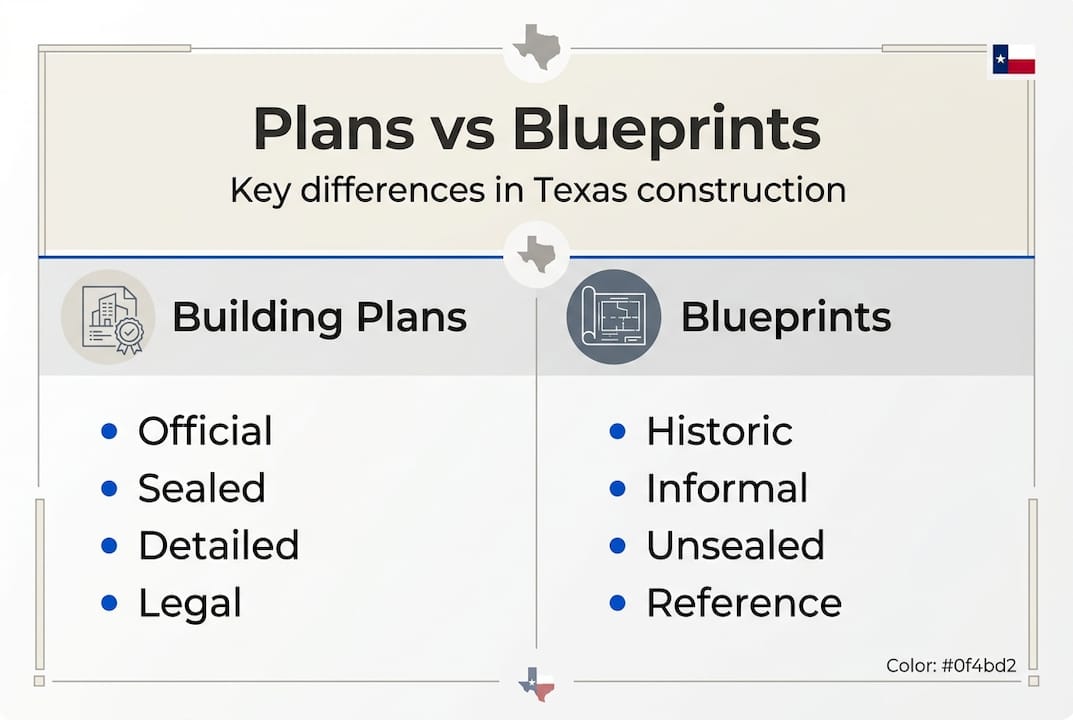
| Feature | Building Plans | Blueprints |
|---|---|---|
| Primary purpose | Legal compliance, permitting, construction execution | Visualization, informal reference |
| Technical detail | Comprehensive specs, calculations, materials | Variable, often high-level only |
| Professional seal | Required by licensed engineer/architect | Not typically sealed |
| Regulatory acceptance | Mandatory for permits in Texas | Not accepted for official permits |
| Legal binding | Contractually and legally enforceable | Informational only |
| Revision control | Formal change order process | Informal updates |
| Cost | Higher due to professional services | Lower, may be conceptual only |
Plans are conceptual and layout focused for visualization and approvals, while blueprints are technical and execution focused for contractors but cannot substitute plans. This distinction is crucial because building plans are authoritative for permits in Texas, while blueprints serve only as informal references.
The practical implications of confusing these documents include:
- Permit application rejections that delay project start dates
- Contractor confusion leading to construction errors
- Legal disputes when informal drawings conflict with contract expectations
- Costly rework when building departments identify non-compliant work
- Insurance complications if projects lack proper documentation
- Difficulty securing financing without approved plans
Texas building departments require specific documentation standards. You cannot simply hand over a set of drawings and expect approval. The plans must include load calculations, code compliance notes, material specifications, and professional certification. Blueprints, even if beautifully rendered, rarely meet these requirements.
For residential projects, the distinction might seem less critical, but it still matters. Many Texas municipalities require stamped plans even for home additions, structural modifications, or new construction. Using informal blueprints might work for internal planning, but you will need proper plans for official approvals.
Commercial projects face even stricter requirements. The types of construction plans needed for commercial work include detailed structural, mechanical, electrical, plumbing, and fire protection drawings. Each discipline requires coordination and professional oversight. Blueprints cannot provide this level of rigor.
Understanding the construction plans purpose helps you appreciate why Texas regulations mandate proper documentation. Plans protect public safety, ensure building longevity, and create accountability throughout the construction process. For more detailed comparisons, review blueprint vs floor plan distinctions to see how different drawing types serve different project needs.
Pro Tip: Always verify that submitted documents for permits are sealed building plans, not informal blueprints. Ask your engineer or architect to confirm that all required stamps, signatures, and technical details are included before filing with your local building department.
Applying your knowledge: practical tips for Texas homeowners and contractors
Understanding the difference between plans and blueprints is only valuable if you apply that knowledge to your projects. Here are actionable steps to ensure you use the correct documentation and avoid common pitfalls.
-
Engage a licensed Texas engineer or architect early in your project planning phase. They can assess whether your project requires sealed plans and guide you through documentation requirements specific to your municipality.
-
Request a pre-submittal meeting with your local building department. Many Texas cities offer this service to review preliminary plans and identify potential issues before formal submission, saving time and revision costs.
-
Verify that all drawings include professional seals and signatures. Check that the seal is current, matches the professional’s license type, and covers the scope of work shown in the plans.
-
Maintain clear version control throughout design and construction. Label each plan revision with dates and revision numbers to avoid confusion between outdated blueprints and current approved plans.
-
Communicate clearly with contractors about which documents are official plans versus informal reference blueprints. Establish that sealed plans take precedence in any conflict or ambiguity.
-
Keep complete sets of approved plans on-site during construction. Building inspectors will reference these documents during inspections, and having them readily available prevents delays.
-
Document any field changes through formal change orders that update the official plans. Do not rely on marked-up blueprints or verbal agreements for significant modifications.
Texas requires building plans sealed by licensed engineers for many projects, and relying on blueprints alone can cause costly delays. This requirement exists to protect homeowners, contractors, and the public from unsafe or non-compliant construction.
For contractors, understanding how to interpret both plans and blueprints improves project execution. Use official plans as your primary reference for dimensions, specifications, and compliance requirements. Treat blueprints or sketches as supplementary visualization tools that help communicate design intent but do not override sealed plans.
Homeowners should ask their contractors to confirm they are working from approved plans, not outdated or informal blueprints. This simple verification prevents misunderstandings that could lead to permit violations or construction defects. Reference the structural inspection checklist texas to understand what inspectors will evaluate during construction.
Before starting any significant residential project, consult the residential planning guide houston for specific guidance on Houston-area requirements. Other Texas cities have similar resources tailored to their local codes and procedures.
Pro Tip: Early engagement with local building authorities can preempt plan approval delays. Schedule a consultation before finalizing your design to identify potential code issues, setback violations, or documentation gaps that could stall your permit application.
Get expert help with your Texas construction plans and inspections
Navigating the complexities of building plans, permits, and inspections requires specialized expertise. Texas Licensed Engineers provides comprehensive services to ensure your residential or commercial project meets all regulatory requirements and proceeds smoothly from design through completion.
Our team prepares detailed construction plans that include all necessary technical specifications, calculations, and professional seals required for Texas permits. We understand local building codes across Houston, Austin, Dallas, San Antonio, and other Texas cities, ensuring your plans satisfy jurisdiction-specific requirements.

Beyond plan preparation, we offer structural inspection services that protect your investment and ensure construction quality. Our licensed engineers identify potential issues before they become expensive problems, providing detailed reports that give you confidence in your project’s integrity.
Whether you need help understanding the purpose of building plans texas for your specific project or require full engineering services from concept through completion, our experienced team delivers the expertise Texas homeowners and contractors trust. Contact us today to discuss how we can support your construction goals with professional engineering services that ensure compliance, safety, and project success.
Frequently asked questions
What is the main difference between a plan and a blueprint?
Building plans are official, sealed documents required for permits and legal compliance in Texas construction. Blueprints are informal reference drawings or historical reproductions that lack regulatory approval and cannot substitute for official plans.
Can I use blueprints to get a building permit in Texas?
No, Texas building departments require sealed building plans prepared by licensed professionals for most construction projects. Blueprints without proper engineering seals, technical specifications, and code compliance documentation will be rejected during permit review.
Do all Texas construction projects need sealed plans?
Commercial projects over 5,000 square feet require sealed plans by law. Residential projects often need approved plans depending on scope and local jurisdiction. Minor repairs or cosmetic work may not require formal plans, but structural changes, additions, and new construction typically do.
How much do building plans cost compared to blueprints?
Building plans cost more because they require professional engineering or architectural services, detailed calculations, and regulatory compliance work. Blueprints may be inexpensive conceptual drawings but cannot fulfill permit requirements, making them insufficient for most Texas construction projects despite lower initial costs.
What happens if I build using blueprints instead of approved plans?
Building without approved plans violates Texas construction regulations and can result in stop-work orders, fines, mandatory demolition of non-compliant work, difficulty selling the property, and insurance complications. Always obtain proper permits based on sealed building plans before starting construction.
Who can prepare building plans in Texas?
Licensed professional engineers and registered architects can prepare and seal building plans in Texas. The specific professional required depends on project type and scope. Structural, mechanical, electrical, and plumbing plans often need discipline-specific engineering seals to meet regulatory standards.
Recommended
- Construction Plans: Key Insights for Texas Homeowners – Texas Licensed Engineers
- Purpose of Construction Plans: Safety and Compliance in Texas – Texas Licensed Engineers
- Purpose of Building Plans: Securing Safety and Compliance in Texas – Texas Licensed Engineers
- 7 Types of Construction Plans Every Texas Homeowner Needs – Texas Licensed Engineers
- Technical Drawings That Prevent Stand Build Surprises


