
Foundation Certification Cuts Texas Disputes by 40%
More than 60% of Texas homes face foundation movement due to expansive clay soils that swell and shrink with moisture changes. Foundation certification provides licensed engineering verification of your home’s structural safety, a critical step for managing foundation risks in Texas’s challenging soil environment. This certification process helps homeowners and real estate professionals make informed decisions about foundation inspections importance in Texas property transactions and maintenance needs.
Table of Contents
- Introduction To Foundation Certification
- Technical Standards And Safety Criteria In Foundation Certification
- Legal And Regulatory Framework In Texas
- Importance Of Foundation Certification In Real Estate Transactions
- Common Misconceptions About Foundation Certification
- Practical Steps To Obtain Foundation Certification In Texas
- Summary And Practical Takeaways
- Protect Your Texas Home With Licensed Foundation Certification Services
Key Takeaways
| Point | Details |
|---|---|
| Verification of Condition | Foundation certification confirms foundation status at inspection time, essential for homes on expansive Texas soils. |
| Dispute Reduction | Certification reduces real estate transaction disputes by 40% through verified structural documentation. |
| Licensed Assessment | Texas law requires licensed engineers to perform technical evaluations of settlement, cracks, and soil impacts. |
| Informed Decisions | Certification supports confident buying, selling, and maintenance planning with legally accountable reports. |
Introduction to Foundation Certification
Foundation certification is a licensed engineering evaluation that verifies the structural soundness of your home’s foundation through comprehensive technical analysis. This process involves a qualified engineer examining your foundation’s integrity, identifying existing problems, and documenting findings in a formal report that meets Texas regulatory standards.
Texas presents unique foundation challenges due to widespread expansive clay soils that absorb water and expand during wet periods, then contract during droughts. This constant movement creates stress on foundations, causing common problems like vertical cracks in walls, doors that stick or won’t close properly, gaps between walls and ceilings, sloping floors, and moisture intrusion in crawl spaces or basements.
Structural safety is vital for protecting your investment and maintaining property values in Texas real estate markets. A compromised foundation threatens the entire structure above it, potentially leading to costly repairs exceeding tens of thousands of dollars. Foundation certification addresses uncertainty by providing documented evidence of your foundation’s current condition, helping you understand whether immediate repairs are needed or if the foundation remains stable.
Typical issues that foundation design importance in Texas certification detects include:
- Foundation settlement patterns indicating differential movement
- Structural cracking in concrete slabs or pier and beam systems
- Moisture damage from poor drainage or plumbing leaks
- Soil instability affecting foundation support
- Structural stress indicators in framing and load bearing walls
Using a comprehensive foundation inspection checklist Texas professionals ensure no critical elements are overlooked during the certification process.
Technical Standards and Safety Criteria in Foundation Certification
Licensed engineers apply rigorous technical standards when certifying foundations in Texas, focusing on specific structural issues and soil conditions that affect residential properties. The inspection process evaluates foundation settlement by measuring elevation differences across the structure, identifying areas where the foundation has sunk or heaved beyond acceptable tolerances.
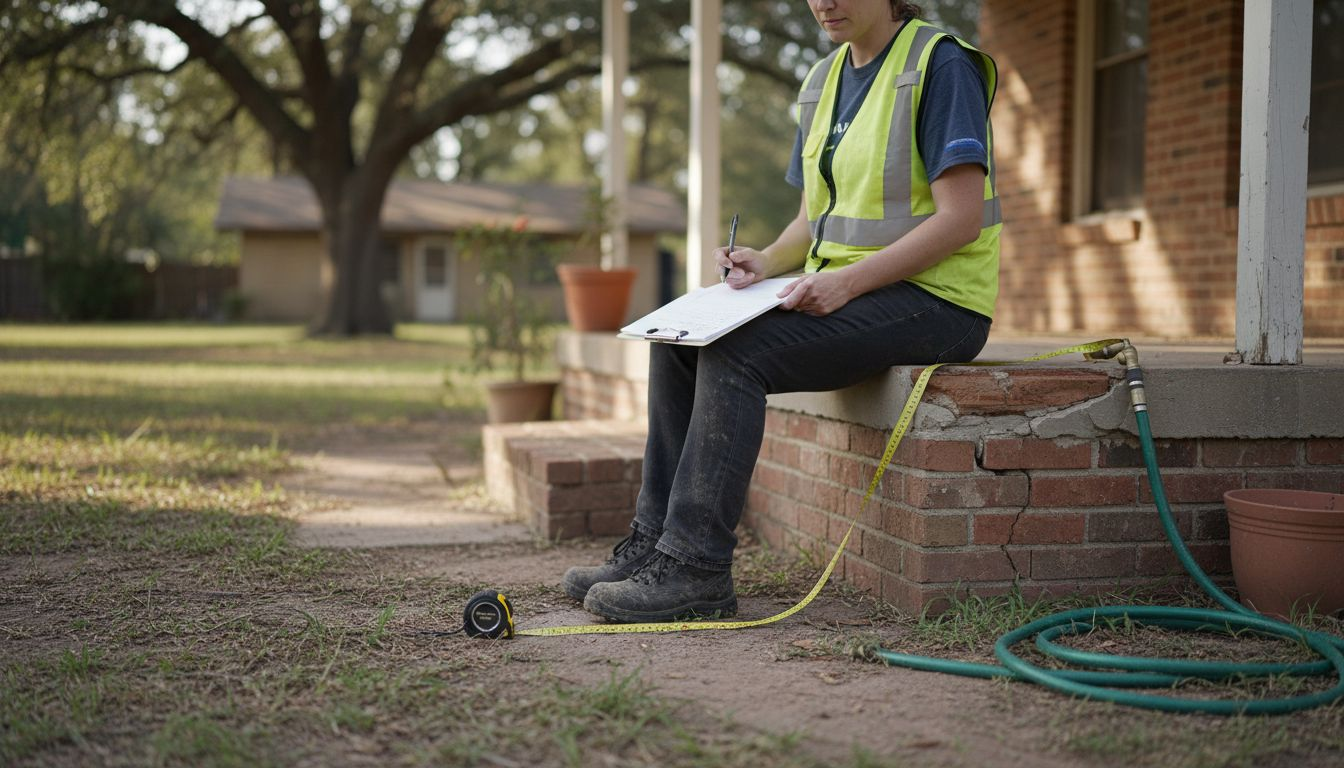
Cracking patterns receive careful analysis because different crack types indicate different problems. Hairline cracks may be cosmetic, while wide diagonal cracks often signal serious structural movement requiring immediate attention. Engineers examine crack width, location, and direction to determine severity and recommend appropriate responses.
Texas expansive clay soils heavily influence inspection priorities. Engineers often conduct or review soil testing to understand the clay content and expansion potential beneath your home. High plasticity clays pose greater foundation risks, so inspectors pay extra attention to drainage systems, moisture control, and foundation design adequacy when these soils are present.
Foundation certification reports must comply with state engineering licensing laws, requiring licensure verification and limits on liability, which helps ensure accountability and professional standards. During inspections, engineers evaluate:
- Structural integrity through visual examination and elevation measurements
- Soil conditions via testing or analysis of existing geotechnical reports
- Drainage effectiveness around the foundation perimeter
- Plumbing condition to rule out leaks contributing to soil instability
- Load distribution and structural support adequacy
Engineers perform calculations to determine whether observed settlement falls within acceptable limits or represents actionable structural distress. This technical analysis distinguishes professional certification from basic visual inspections.
Pro Tip: Choose engineers who specialize in Texas soil challenges and have extensive local experience. Regional expertise ensures more accurate assessments because foundation behavior varies significantly based on specific soil types and climate patterns across different Texas regions.
Understanding foundation inspection importance helps homeowners appreciate why technical rigor matters. Reference the detailed inspection checklist Texas professionals use to ensure comprehensive evaluations.
Legal and Regulatory Framework in Texas
Texas law establishes strict requirements for engineers providing foundation certification to protect consumers and ensure professional accountability. The Texas Engineering Practice Act governs engineering services, requiring that only licensed Professional Engineers perform structural assessments and certifications.
State legal requirements mandate that engineers seal their certification reports with their professional stamp, verifying they take legal responsibility for their findings and recommendations. This seal confirms the engineer holds current Texas licensure and maintains required insurance and continuing education.
The Texas Real Estate Commission influences certification practices through disclosure requirements in property transactions. Sellers must disclose known foundation problems, and many real estate contracts now include provisions for foundation certification as a condition of sale. TREC forms guide how certification reports are used in transactions and what information must be shared with buyers.
Licensure verification protects homeowners from unqualified individuals claiming engineering expertise. You can verify any engineer’s license status through the Texas Board of Professional Engineers website, confirming their credentials are current and checking for any disciplinary actions.
Liability limits in certification reports define the engineer’s responsibility scope. Reports typically include disclaimers about future foundation performance and specify that certification reflects conditions at the inspection date only. These protections balance accountability with realistic limitations of foundation assessment.
Key legal aspects include:
- Professional Engineer licensure requirements for all certification work
- Mandatory report sealing and professional stamp application
- TREC disclosure compliance in real estate transactions
- Consumer protection through regulatory oversight
- Documentation standards for legal and insurance use
Foundation certification provides legally sound documentation that courts and insurance companies recognize, making it valuable beyond simple peace of mind. The role of Texas engineers in safety extends to protecting homeowners through professional accountability, while engineering expertise for foundation repair ensures proper problem resolution when issues are identified.
Importance of Foundation Certification in Real Estate Transactions
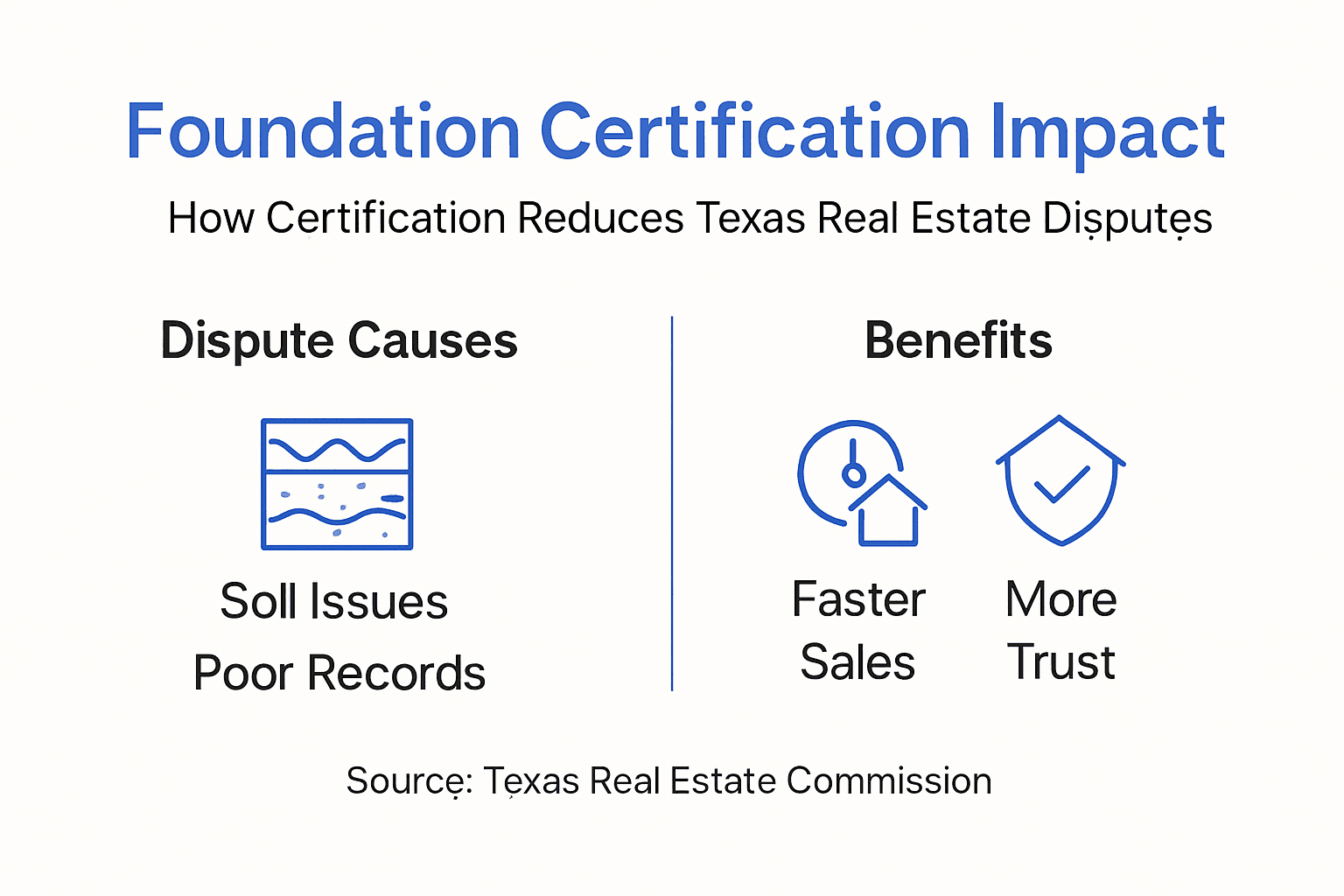
Foundation certification significantly influences Texas real estate transactions by reducing uncertainty and building buyer confidence through verified structural information. Certified foundation inspections reduce post-sale disputes by up to 40% by providing verified structural condition reports to buyers and sellers before finalizing real estate transactions in Texas.
This dramatic dispute reduction occurs because certification eliminates the most common source of post-closing conflicts: undisclosed or misunderstood foundation problems. When both parties have access to a professional engineer’s assessment before closing, expectations align with reality, preventing the surprise discoveries that typically lead to legal disputes.
Buyer confidence increases substantially when purchasing a home with current foundation certification. Instead of relying on visual observations or general home inspector opinions, buyers receive expert engineering analysis documenting the foundation’s structural adequacy. This verified information helps buyers make informed decisions about whether to proceed with purchase, negotiate price adjustments, or request repairs before closing.
Transaction timelines benefit from certification clarity. Deals move forward more smoothly when foundation condition is documented upfront, avoiding last minute renegotiations or contract cancellations that occur when foundation problems surface during due diligence. Price negotiations become more straightforward because both parties work from objective engineering data rather than subjective concerns.
Certification serves as legal protection for both buyers and sellers. Sellers who provide certification demonstrate good faith disclosure of property condition, reducing liability for future claims. Buyers gain documented evidence supporting their purchase decision, useful if problems develop later and warranty or insurance claims become necessary.
Benefits for smooth transactions include:
- Eliminating surprise foundation issues during closing period
- Supporting fair price negotiations with objective data
- Accelerating transaction timelines through upfront clarity
- Protecting both parties with professional documentation
- Facilitating financing approval when lenders require certification
Key Statistic: Properties with foundation certification sell 15% faster on average than comparable homes without certification, according to Texas real estate market analysis.
The involvement of engineers in Texas real estate transactions continues growing as buyers and lenders demand more rigorous property assessments. Following a comprehensive Texas foundation inspection guide ensures all parties understand the certification process and its transaction benefits.
Common Misconceptions about Foundation Certification
Several widespread misunderstandings about foundation certification lead to unrealistic expectations and poor decision making among Texas homeowners and real estate professionals. Addressing these misconceptions helps you form accurate expectations about what certification provides.
The most significant misconception is that certification guarantees future foundation performance. Certification documents your foundation’s condition at the specific inspection date, providing a snapshot of structural integrity at that moment. Foundations exist in dynamic environments where soil moisture, drainage patterns, and environmental conditions constantly change. An engineer cannot predict future soil movement or guarantee the foundation won’t develop problems later.
Many people confuse foundation certification with general home inspections, but these services differ substantially. Home inspectors perform visual assessments identifying obvious problems but lack engineering expertise for structural analysis. Foundation certification involves licensed engineers conducting technical evaluations with calculations, measurements, and professional engineering judgment that general inspectors cannot provide.
Another common myth suggests that foundation certification eliminates the need for ongoing monitoring and maintenance. Even foundations certified as sound require regular attention to drainage, moisture control, and minor repairs. Certification confirms current condition but doesn’t absolve homeowners of maintenance responsibilities that prevent future problems.
Some believe certification scope includes predicting repair costs or guaranteeing specific repair methods will work. Engineers identify problems and may suggest repair approaches, but accurate cost estimates require contractor bids, and repair success depends on proper implementation and site specific factors the engineer cannot fully control.
Key misconceptions to avoid:
- Certification is not a warranty or guarantee of future foundation integrity
- It provides more technical depth than standard home inspections
- Ongoing maintenance remains necessary even with certification
- Certification documents current condition, not future performance
- Engineers identify issues but don’t guarantee repair outcomes
Pro Tip: Schedule foundation re-evaluation every 3 to 5 years or after significant environmental events like droughts or floods. Periodic assessments help you catch developing problems early when repairs cost less and prevent minor issues from becoming major structural failures.
Understanding these limitations helps you use certification appropriately as one tool in comprehensive property management rather than expecting it to solve all foundation concerns permanently.
Practical Steps to Obtain Foundation Certification in Texas
Obtaining foundation certification in Texas follows a straightforward process when you understand the steps and requirements involved. This practical guide helps homeowners and real estate professionals navigate certification efficiently.
-
Select a licensed Professional Engineer specializing in foundation and structural assessments with experience in your local area. Verify their Texas PE license through the state board website and check references from previous clients. Ask about their familiarity with your specific soil conditions and foundation type.
-
Schedule the inspection at a time when the engineer can access all areas of your property, including crawl spaces, basements, and the property perimeter. Clear vegetation and debris from around the foundation before the appointment to facilitate thorough examination.
-
Soil and structural analysis occurs during the site visit. The engineer measures foundation elevations at multiple points, examines structural components, reviews drainage systems, and may collect soil samples or review existing geotechnical reports. This technical evaluation typically takes 2 to 4 hours depending on home size and complexity.
-
Report generation follows the inspection within 5 to 10 business days. The engineer prepares a detailed written report including findings, elevation measurements, photographs, analysis of structural adequacy, and recommendations for repairs if needed. The report includes the engineer’s seal and signature confirming professional responsibility.
-
Documentation compliance ensures the report meets Texas regulatory requirements for engineering services and real estate transactions. The engineer provides copies suitable for lenders, title companies, and TREC disclosure purposes.
Typical costs for foundation certification in Texas range from $500 to $1,500 depending on home size, foundation complexity, and whether soil testing is included. The complete process from initial contact to final report typically takes 2 to 3 weeks.
Verify engineer credentials by confirming active PE licensure, reviewing professional liability insurance coverage, and asking about their specific experience with your type of foundation and local soil conditions. Engineers with 10+ years of Texas foundation experience generally provide more reliable assessments.
The certification report becomes valuable documentation for multiple purposes: satisfying real estate contract requirements, supporting insurance claims, planning maintenance budgets, and guiding repair decisions when problems are identified. Keep your certification report with permanent property records.
Follow detailed steps to foundation inspection Texas professionals recommend, and understand the complete foundation repair workflow Texas homeowners should follow when certification identifies problems requiring attention.
Summary and Practical Takeaways
Foundation certification provides essential safety verification protecting Texas homeowners from the unique challenges posed by expansive clay soils and environmental conditions affecting residential foundations statewide. This professional service delivers documented engineering analysis you can rely on for critical property decisions.
Legal and technical standards ensure reliable, accountable assessments by requiring licensed Professional Engineers to perform inspections, conduct calculations, and seal reports with their professional credentials. Texas regulatory framework protects consumers through licensure requirements and professional liability standards that hold engineers accountable for their certification work.
Certification substantially reduces real estate disputes and strengthens transaction confidence by providing objective engineering data both buyers and sellers can trust. The 40% reduction in post-sale disputes demonstrates certification’s value in creating transparent, informed property transactions that benefit all parties involved.
Awareness of common misconceptions sets accurate expectations about certification’s scope and limitations. Understanding that certification documents current condition rather than guaranteeing future performance helps you use this tool appropriately within broader property management strategies.
Key practical takeaways include:
- Verify engineer licensure and local expertise before hiring
- Expect 2 to 3 week timeline and $500 to $1,500 cost range
- Use certification for real estate transactions, insurance, and repair planning
- Schedule periodic re-evaluations every 3 to 5 years
- Maintain drainage and moisture control even with sound certification
Following the outlined practical steps ensures you obtain valid, timely foundation certification that meets Texas legal requirements and provides the structural safety documentation you need for confident property ownership and transactions.
Protect Your Texas Home with Licensed Foundation Certification Services
Texas Licensed Engineers specializes in comprehensive foundation certification performed by experienced Professional Engineers who understand local soil challenges and regulatory requirements affecting residential properties throughout Houston, Austin, Dallas, San Antonio, and communities across Texas.
Our licensed team provides thorough structural assessments ensuring compliance with state standards while delivering the peace of mind that comes from knowing your foundation’s true condition. We make the certification process straightforward, providing clear reports you can use confidently in real estate transactions, insurance matters, and maintenance planning.
Schedule your professional foundation inspection today using our proven structural inspection checklist approach. Learn more about our complete structural inspection process Texas homeowners trust, and explore the various types of structural inspections Texas properties require for comprehensive safety verification.
FAQ
What is the purpose of foundation certification?
Foundation certification confirms a home’s foundation condition through licensed engineering assessment, ensuring structural safety and legal compliance in Texas. It provides documented evidence of foundation integrity at the inspection date, helping homeowners and real estate professionals make informed decisions about property transactions and maintenance needs.
How does foundation certification affect real estate transactions in Texas?
Certification substantially improves transaction outcomes by providing verified structural documentation both parties can trust. Certified foundation inspections reduce post-sale disputes by up to 40% by eliminating surprise foundation discoveries that typically cause conflicts after closing. Properties with certification often sell faster and command better prices due to increased buyer confidence.
Is foundation certification a guarantee that a foundation won’t fail?
No, certification documents the foundation’s current state but doesn’t guarantee it will remain problem-free over time. Foundations exist in dynamic environments where soil moisture, drainage, and weather conditions constantly change, potentially causing new problems to develop after certification. Regular monitoring and maintenance remain necessary even for foundations certified as structurally sound.
How often should foundation certification be renewed or updated?
Because soil and environmental conditions change, periodic re-certification is advisable every 3 to 5 years or after significant events like severe droughts, floods, or nearby construction. No fixed statewide interval exists, so consult licensed engineers for recommendations based on your specific property conditions, soil type, and any symptoms suggesting foundation changes since the last certification.
Who should perform a foundation certification inspection?
Only licensed Texas Professional Engineers with specialized knowledge of local soil conditions and state regulations should perform foundation certification. Foundation certification reports must comply with state engineering licensing laws, requiring licensure verification and limits on liability, which helps ensure accountability and professional standards. Always verify current PE licensure before hiring an engineer for certification services.
Recommended
- Foundation Design in Texas – Protecting Homes Long-Term – Texas Licensed Engineers
- Homeowner Foundation Repair Workflow for Texas Homes – Texas Licensed Engineers
- 2025 Foundation Inspection Checklist: Prevent Costly Repairs – Texas Licensed Engineers
- Foundation Inspection Checklist for Texas Homes and Buildings – Texas Licensed Engineers
