
Roles in Construction Projects: Texas Homeowners’ Impact
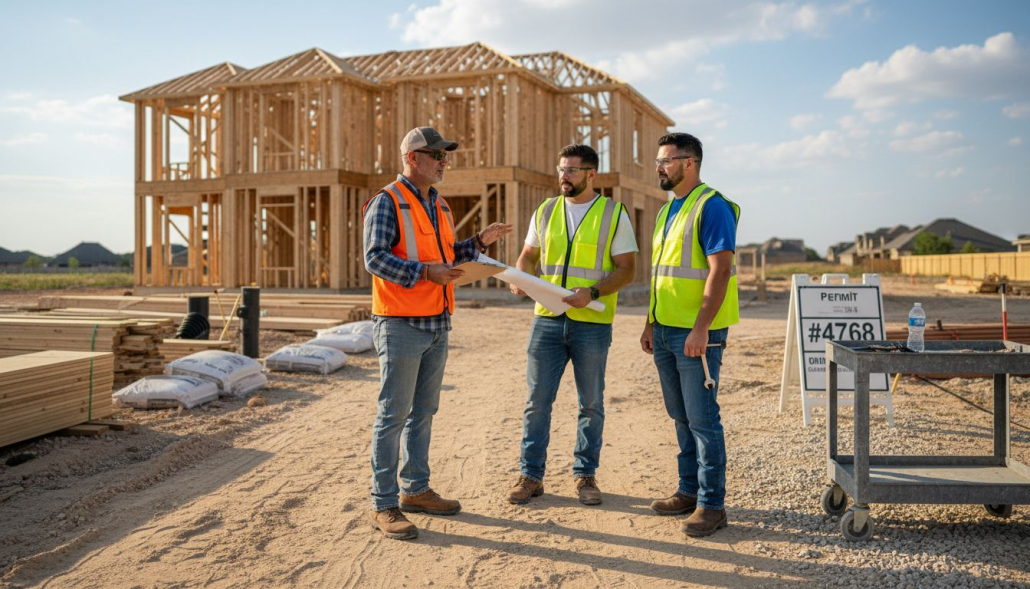
Managing a residential build in Houston or Austin can quickly become overwhelming when so many specialized professionals are involved. Each role, from architects and carpenters to inspectors, carries unique responsibilities that shape project quality, safety, and efficiency. Understanding the core team behind Texas construction projects empowers homeowners and contractors to communicate more clearly and coordinate seamlessly, resulting in fewer costly mistakes and a smoother building experience.
Table of Contents
- Core Roles In Texas Construction Projects
- Types Of Professionals In Residential Builds
- Key Responsibilities Of Each Team Member
- Licensing, Compliance, And Local Regulations
- Risks, Liabilities, And Avoidable Mistakes
Key Takeaways
| Point | Details |
|---|---|
| Core Professional Roles | Texas construction projects require collaboration among Architects, Construction Managers, Electricians, Carpenters, and Plumbers to ensure successful project execution. |
| Licensing and Compliance | Professionals in Texas must hold valid licenses, adhere to local building codes, and fulfill ongoing education requirements to ensure legal compliance and protect homeowners. |
| Risk Management | Comprehensive risk management plans are crucial for addressing financial, legal, and safety risks, helping to prevent delays and promote successful project outcomes. |
| Importance of Communication | Effective communication among team members is essential for seamless project execution and resolution of potential issues before they escalate. |
Core Roles in Texas Construction Projects
Texas construction projects involve a complex network of specialized professionals who collaborate to transform architectural visions into safe, functional structures. From initial planning stages to final construction, these experts bring unique skills that collectively ensure project success across residential and commercial developments.
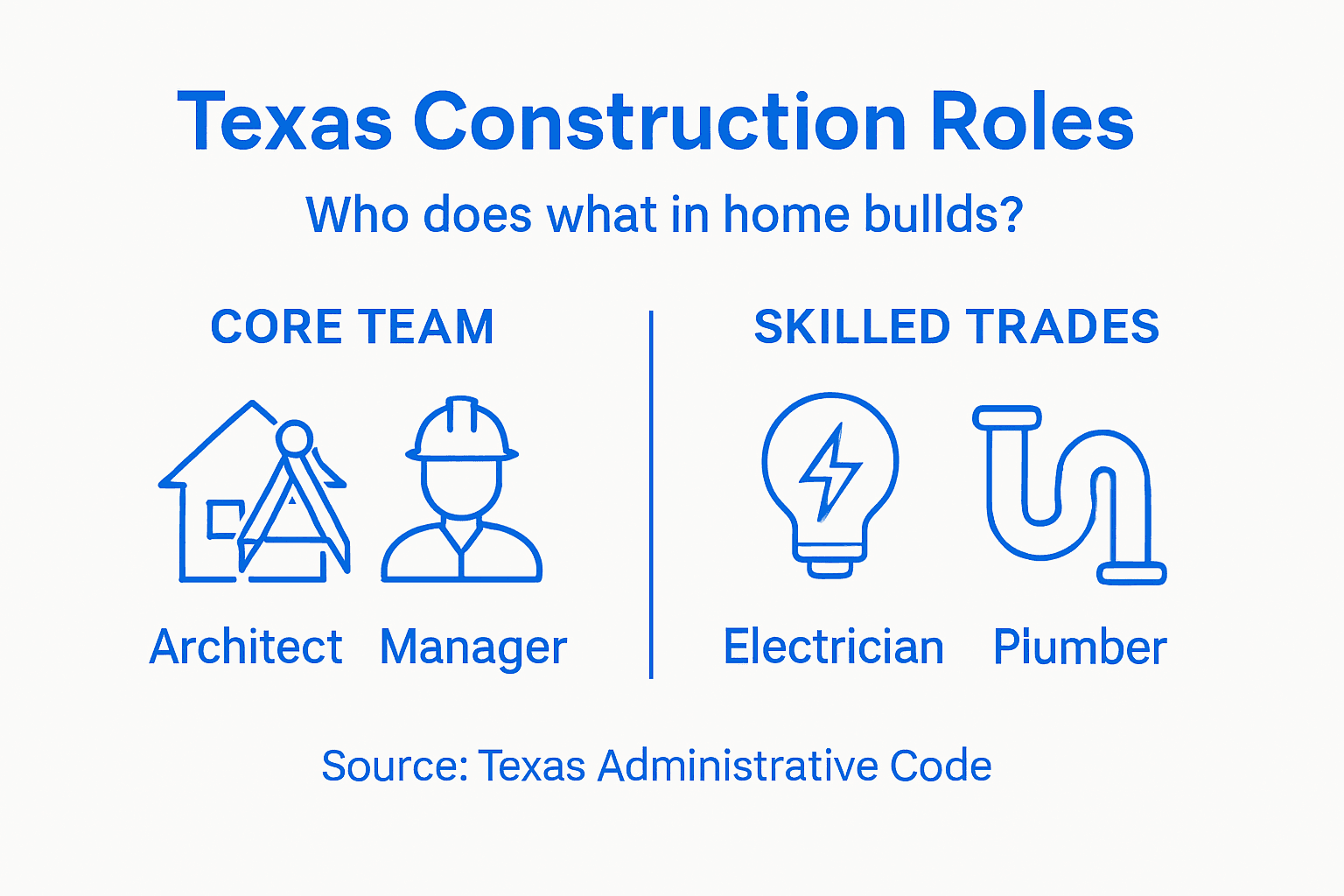
The Architecture and Construction career cluster in Texas encompasses several core professional roles critical to project completion:
- Architects: Design comprehensive building plans and aesthetic blueprints
- Construction Managers: Oversee project budgets, schedules, and overall execution
- Electricians: Install and maintain electrical systems ensuring code compliance
- Carpenters: Construct and install structural wooden frameworks
- Plumbers: Design and implement building water and drainage systems
Each professional plays a strategic role in construction management and inspection, contributing specialized expertise that transforms architectural concepts into tangible built environments. Construction managers serve as central coordinators, integrating individual contributions into a cohesive project strategy.
Here’s a quick summary of core construction roles and their primary impact on Texas projects:
| Role | Area of Expertise | Key Impact on Project |
|---|---|---|
| Architect | Design & planning | Shapes project vision |
| Construction Manager | Coordination & execution | Delivers on time and budget |
| Electrician | Electrical systems | Ensures power and safety |
| Carpenter | Structural frameworks | Provides building stability |
| Plumber | Water & drainage | Guarantees functional systems |
These professionals must collaborate seamlessly, understanding local building codes, safety regulations, and project-specific requirements. Their coordinated efforts ensure that every aspect of construction meets rigorous Texas standards for structural integrity, functionality, and compliance.
Pro tip: Always verify the professional licensing and credentials of your construction team before initiating any project to guarantee quality and legal compliance.
Types of Professionals in Residential Builds
Residential construction projects in Texas demand a sophisticated team of specialized professionals who work together to transform architectural plans into livable, safe homes. Each role contributes unique expertise critical to successful project completion, ensuring that residential builds meet stringent quality and safety standards.
The construction industry categorizes residential professionals into several key groups:
-
Skilled Trades
- Carpenters: Construct structural frameworks
- Electricians: Install and maintain electrical systems
- Plumbers: Design and implement water/drainage infrastructure
- HVAC Technicians: Install heating and cooling systems
-
Supervision and Management
- Construction Managers: Coordinate project timelines and budgets
- Project Supervisors: Oversee daily construction activities
-
Engineering and Design
- Structural Engineers: Ensure building structural integrity
- Architectural Designers: Create comprehensive building plans
These professionals engage in specialized construction management to transform residential projects from conceptual designs to completed structures. Their coordinated efforts address everything from foundational work to final finishing touches.
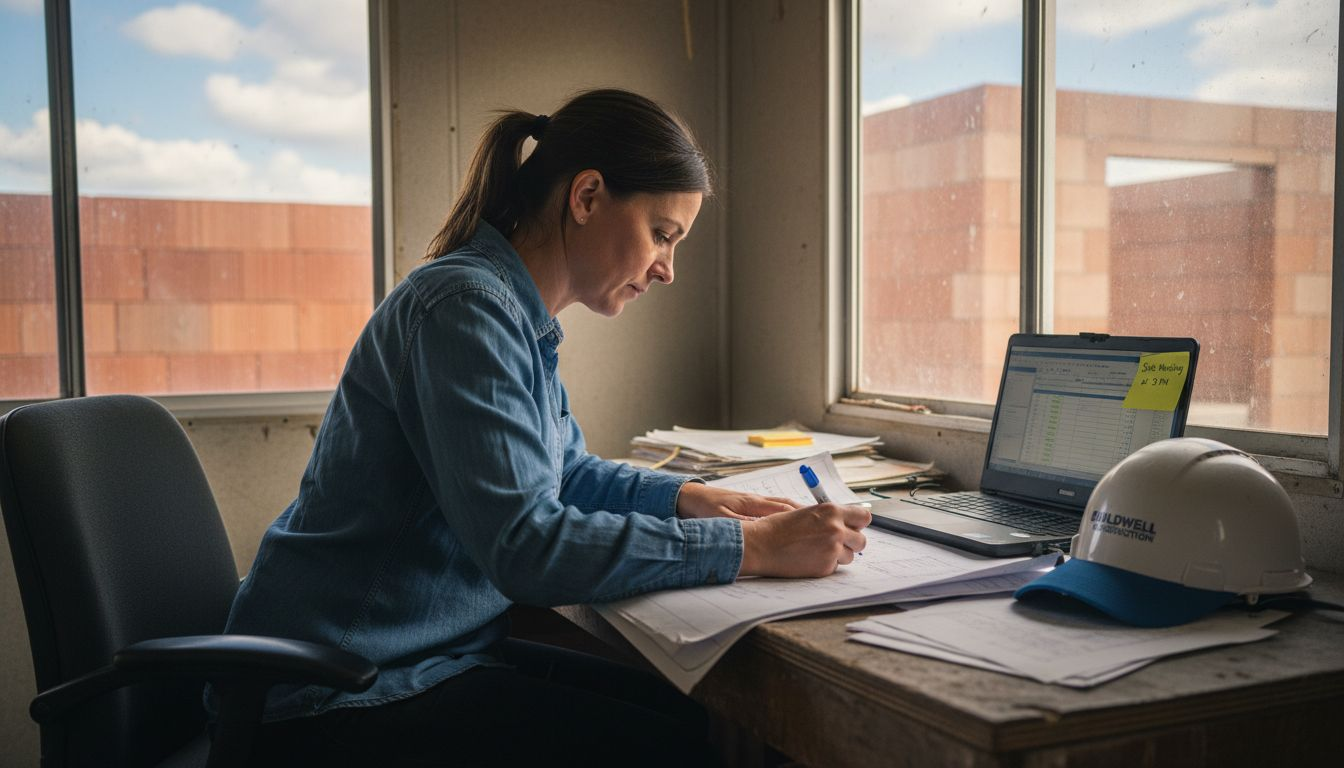
Each professional brings critical skills that collectively ensure residential builds meet local building codes, safety regulations, and quality benchmarks. Effective communication and collaborative problem-solving are essential, as these experts must seamlessly integrate their specialized knowledge to create safe, functional living spaces.
Pro tip: Request detailed professional credentials and past project portfolios when selecting your residential construction team to ensure comprehensive expertise and proven performance.
Key Responsibilities of Each Team Member
In residential construction, each professional plays a critical role with specific responsibilities that contribute to the project’s overall success. Understanding these individual responsibilities helps homeowners appreciate the complex choreography required to transform architectural plans into functional living spaces.
The core team members and their key responsibilities include:
Skilled Trades
-
Carpenters:
- Frame building structures
- Install interior and exterior wooden components
- Ensure structural integrity and precision
-
Electricians:
- Design and install electrical wiring systems
- Ensure compliance with electrical safety codes
- Connect power sources and electrical components
-
Plumbers:
- Install water supply and drainage systems
- Connect fixtures and appliances
- Implement proper water pressure and waste management
-
HVAC Technicians:
- Install heating and cooling systems
- Design ductwork and ventilation
- Ensure energy efficiency and climate control
Construction managers play a pivotal role in coordinating project management by overseeing budgets, timelines, and trade coordination. They act as central communicators, ensuring that each specialist’s work integrates seamlessly and meets project specifications.
Building inspectors provide critical oversight, verifying that every stage of construction meets local building codes and safety standards. Their independent assessments protect homeowners by confirming that each professional’s work adheres to regulatory requirements and industry best practices.
Pro tip: Request detailed documentation of each team member’s specific responsibilities and certification levels to ensure comprehensive understanding of their roles during your residential construction project.
Licensing, Compliance, and Local Regulations
In Texas, construction professionals must navigate a complex landscape of regulatory requirements that protect homeowners and ensure public safety. These stringent guidelines govern every aspect of residential construction, from initial planning to final inspection, creating a comprehensive framework that maintains high standards across the building industry.
Key licensing and compliance requirements include:
Certification Requirements
-
Professional Licensing:
- Must hold valid state-issued licenses
- Demonstrate required educational credentials
- Pass comprehensive professional examinations
-
Ongoing Professional Development:
- Complete mandatory continuing education credits
- Stay current with evolving building codes
- Maintain active certification status
Regulatory Compliance Domains
- Building code adherence
- Safety standard implementation
- Inspection protocol compliance
- Permit acquisition and documentation
Professionals must meticulously follow construction management regulations outlined in the Texas Administrative Code. These regulations mandate detailed documentation, regular inspections, and strict adherence to safety protocols that protect both workers and future homeowners.
Local municipalities often have additional specific requirements that layer onto state regulations. These can include zoning restrictions, environmental considerations, and specialized building standards unique to specific geographic regions within Texas. Navigating these complex regulatory environments requires specialized knowledge and consistent professional diligence.
Pro tip: Request copies of all professional licenses and verify their current status with the Texas Department of Licensing and Regulation before initiating any construction project.
Risks, Liabilities, and Avoidable Mistakes
Residential construction projects in Texas involve complex risk landscapes that can dramatically impact project success, homeowner satisfaction, and financial outcomes. Understanding these potential pitfalls is crucial for proactively managing and mitigating potential challenges throughout the construction process.
Primary Risk Categories:
-
Financial Risks:
- Budget overruns
- Unexpected material cost increases
- Potential project delays
-
Legal Risks:
- Contract disputes
- Permit compliance issues
- Potential litigation from non-compliance
-
Safety Risks:
- Worker injuries
- Structural integrity challenges
- Code violation penalties
Professionals must carefully manage construction project risks through comprehensive documentation, thorough planning, and consistent risk assessment. Systematic identification of potential issues allows teams to develop strategic mitigation strategies that protect both workers and homeowners.
The table below highlights common risks in Texas residential construction and strategies to reduce them:
| Risk Type | Typical Consequences | Effective Mitigation Strategy |
|---|---|---|
| Financial | Budget overruns and delays | Regular cost tracking, contingency planning |
| Legal | Contract disputes, penalties | Detailed contracts, legal review |
| Safety | Injuries, code violations | Safety training, routine inspections |
Common avoidable mistakes often stem from communication breakdowns, inadequate planning, and insufficient attention to regulatory requirements. Successful projects require meticulous coordination between all team members, with clear documentation and proactive problem-solving approaches that anticipate and address potential challenges before they escalate.
Pro tip: Implement a comprehensive risk management plan that includes detailed documentation, regular team communications, and contingency budgeting to minimize unexpected complications during your residential construction project.
Ensure Your Texas Residential Construction Project Succeeds with Expert Engineering Support
Managing roles in construction projects requires precision and trusted expertise to avoid costly risks and ensure compliance with Texas standards. Whether you are coordinating with architects, electricians, or plumbers, having licensed engineering services on your side is essential to verify structural integrity, oversee inspections, and navigate complex permitting processes. Key challenges such as risk management and licensing compliance demand professional guidance to protect your home investment and peace of mind.
Explore comprehensive engineering and inspection solutions tailored for Texas homeowners at Engineering and Inspection Archives – Florida Licensed Engineers. Our licensed engineers specialize in foundational inspections, construction plans, forensic investigations, and more, supporting your project from start to finish. 
Take control of your construction project today. Visit https://texaslicensedengineers.com to connect with trusted professionals ready to bring seamless coordination and detailed expertise to your residential build. Do not wait until after costly mistakes arise. Act now for quality assurance and compliance that builds lasting confidence.
Frequently Asked Questions
What are the key roles in a Texas construction project?
The key roles include architects, construction managers, electricians, carpenters, and plumbers. Each professional brings specialized skills essential for transforming architectural concepts into completed structures.
How do construction managers ensure project success?
Construction managers oversee project budgets, schedules, and coordination among different trades. Their comprehensive management ensures that every aspect of the project aligns with the vision, meets deadlines, and stays within budget constraints.
What responsibilities do skilled tradespeople have in residential construction?
Skilled tradespeople, such as carpenters, electricians, and plumbers, are responsible for specific tasks like framing structures, installing electrical systems, and implementing plumbing solutions. Their expertise is crucial for ensuring safety and compliance with building codes.
Why is licensing important for construction professionals?
Licensing is crucial as it ensures that construction professionals meet educational and competency standards. It protects homeowners by confirming that the professionals they hire are qualified to perform their tasks according to local regulations and safety standards.
Recommended
- What Is Civil Engineering and Its Impact on Texas Homes – Texas Licensed Engineers | Residential & Commercial
- Role of Engineers in Texas Construction Projects – Texas Licensed Engineers
- 8 Key Steps for a Texas Residential Construction Checklist – Texas Licensed Engineers | Residential & Commercial
- Commercial Engineering: Impact on Texas Projects – Texas Licensed Engineers | Residential & Commercial

