
Forensic Engineering Steps Texas: Guide for Homeowners
Facing unexpected structural damage or flood issues in Texas can leave any homeowner searching for answers. Accurate, thorough property documentation is the essential first step in any forensic engineering investigation. Gathering detailed records and incident information not only builds a strong foundation for expert assessment but also supports insurance claims and effective repair planning. Learn how strategic information collection and collaboration with a licensed forensic engineer can help you protect your property and secure reliable outcomes.
Table of Contents
- Step 1: Gather Relevant Property And Incident Information
- Step 2: Contact A Licensed Texas Forensic Engineer
- Step 3: Coordinate On-Site Assessment And Data Collection
- Step 4: Review Engineer Findings And Recommendations
- Step 5: Submit Documentation For Insurance And Repairs
Quick Summary
| Key Takeaway | Explanation |
|---|---|
| 1. Gather Comprehensive Documentation | Collect all relevant property and incident information to form a solid foundation for your investigation. |
| 2. Choose a Qualified Forensic Engineer | Select a licensed Texas engineer with relevant expertise for effective assessment and objective analysis. |
| 3. Facilitate On-Site Investigation | Provide unrestricted access and collaborate with the engineer during the physical inspection and evidence collection. |
| 4. Review the Forensic Report Carefully | Understand key findings and recommendations to inform decisions on repairs and insurance claims. |
| 5. Organize Documentation for Insurance | Prepare a comprehensive submission package to support your insurance claims and repair authorization. |
Step 1: Gather relevant property and incident information
Launching a forensic engineering investigation starts with comprehensive property documentation and strategic information collection. Your goal in this step is to compile a detailed record that provides forensic engineers with critical context about the incident and property conditions.
Begin by assembling all relevant documents and materials related to the property and incident. This includes collecting comprehensive property details across multiple categories:
- Property ownership records
- Original construction blueprints
- Building permit history
- Previous inspection reports
- Insurance documentation
- Maintenance logs
- Photographic evidence of pre and post-incident conditions
- Witness statements or incident reports
Documentation should capture precise environmental factors and sequence of events. Note specific dates, times, weather conditions, and any observable changes in the property’s structural integrity. Pay special attention to recording details about potential damage mechanisms, such as water intrusion points, structural stress indicators, or foundation shifting.
Your collected information will form the foundation for the forensic engineering assessment. Expert reports rely heavily on thorough initial data gathering, so be meticulous and organized in your documentation process.
Pro tip: Create a dedicated folder or digital file to store all collected documents, ensuring easy access and comprehensive organization for the forensic engineering team.
Step 2: Contact a licensed Texas forensic engineer
Now that you have gathered comprehensive property documentation, the next crucial step is connecting with a qualified forensic engineering professional who can thoroughly investigate your specific situation. Selecting the right licensed engineer in Texas requires careful consideration and strategic research.
When seeking a forensic engineer, prioritize professionals with specific state licensure and expertise in forensic engineering investigations. Focus on finding engineers who specialize in your specific type of property damage or structural issue. Consider the following criteria for selecting a qualified professional:
- Current Texas professional engineering license
- Specialized experience in forensic investigations
- Expertise in residential or commercial property assessments
- Track record of providing expert testimony
- Professional memberships in engineering associations
- Specific technical knowledge relevant to your case
Reach out to potential engineers with a detailed explanation of your property issue. Prepare to share all documentation collected in the previous step, including photographs, inspection reports, and relevant maintenance records. Forensic engineering professionals will use these materials to assess the scope and complexity of your specific situation.
A licensed Texas forensic engineer provides objective, scientifically grounded analysis that can be critical for insurance claims and potential legal proceedings.
Pro tip: Request initial consultations with multiple licensed forensic engineers to compare their approach, expertise, and estimated investigation costs before making a final selection.
Step 3: Coordinate on-site assessment and data collection
After selecting a licensed forensic engineer, you’ll now transition into the critical phase of on-site investigation and evidence collection. This step involves strategic collaboration to ensure a comprehensive and scientifically rigorous examination of your property’s condition and potential damage mechanisms.
Prepare for the site visit by understanding forensic investigation protocols. The forensic engineer will typically conduct a systematic evaluation that involves multiple key activities:
- Comprehensive visual inspection of the entire property
- Detailed photographic documentation
- Precise measurements and structural assessments
- Collection of material samples if required
- Identification of potential failure points or damage sources
- Environmental condition documentation
- Interview with property owners about incident details
During the assessment, be prepared to provide unrestricted access to all areas of your property. Forensic site examinations require thorough and unimpeded investigation to generate accurate findings. The engineer will use specialized equipment and methodical observation techniques to gather critical evidence about your property’s condition.
Transparent communication and complete access are essential for conducting a comprehensive forensic investigation that produces reliable technical findings.
Pro tip: Organize all available property records, previous inspection documents, and maintenance logs in a single folder to expedite the on-site assessment process and demonstrate your preparedness.

Step 4: Review engineer findings and recommendations
After the comprehensive on-site investigation, you will receive a detailed forensic engineering report that breaks down the technical analysis of your property’s condition. This critical document serves as the foundation for understanding the extent of damage, potential causes, and recommended remediation strategies.
Forensic engineering reports typically include several key components that require careful review and comprehension. Pay close attention to the following critical sections:
- Root cause analysis of structural issues
- Detailed photographic evidence
- Specific damage assessment and severity
- Recommended repair or mitigation strategies
- Estimated costs for potential repairs
- Potential long-term implications of the damage
- Professional recommendations for future prevention
When reviewing the report, focus on understanding the technical language and implications for your property. Structural investigation findings require careful interpretation to make informed decisions about repairs, insurance claims, or potential legal actions.
Professional forensic engineering reports provide objective, scientifically grounded insights that can be crucial for resolving property damage disputes and planning effective remediation.
Pro tip: Schedule a detailed consultation with the forensic engineer to walk through the report, ensuring you fully understand each technical recommendation and its potential impact on your property.
Step 5: Submit documentation for insurance and repairs
With your forensic engineering report in hand, you’re now ready to initiate the insurance claim and repair process. This critical step transforms technical findings into actionable documentation that will support your property restoration efforts.
Forensic engineering documentation plays a crucial role in substantiating your insurance claim and repair requirements. Prepare a comprehensive submission package that includes:
- Complete forensic engineering report
- High-resolution photographic evidence
- Detailed damage assessment documentation
- Cost estimates for recommended repairs
- Original property maintenance records
- Incident timeline and supporting materials
- Professional engineer’s expert recommendations
When submitting to insurance providers, follow a systematic approach. Professional documentation strategies can significantly improve your chances of claim approval and efficient repair authorization. Organize your materials chronologically and ensure all documents are clear, legible, and directly linked to the forensic engineer’s findings.
Precise, well-organized documentation serves as your strongest advocate in navigating insurance claims and repair processes.
Pro tip: Create digital and physical copies of all submitted documentation, and maintain a detailed log of every communication with insurers and contractors to protect your interests.
Below is a quick reference for stakeholders commonly involved in a forensic engineering case:
| Stakeholder | Primary Role | Interaction Point |
|---|---|---|
| Property Owner | Provides access and records | Throughout the process |
| Forensic Engineer | Performs technical assessment | Investigation and reporting |
| Insurance Adjuster | Reviews documentation and findings | Post-report submission |
| Legal Counsel | Advises if disputes arise | As needed after engineer findings |
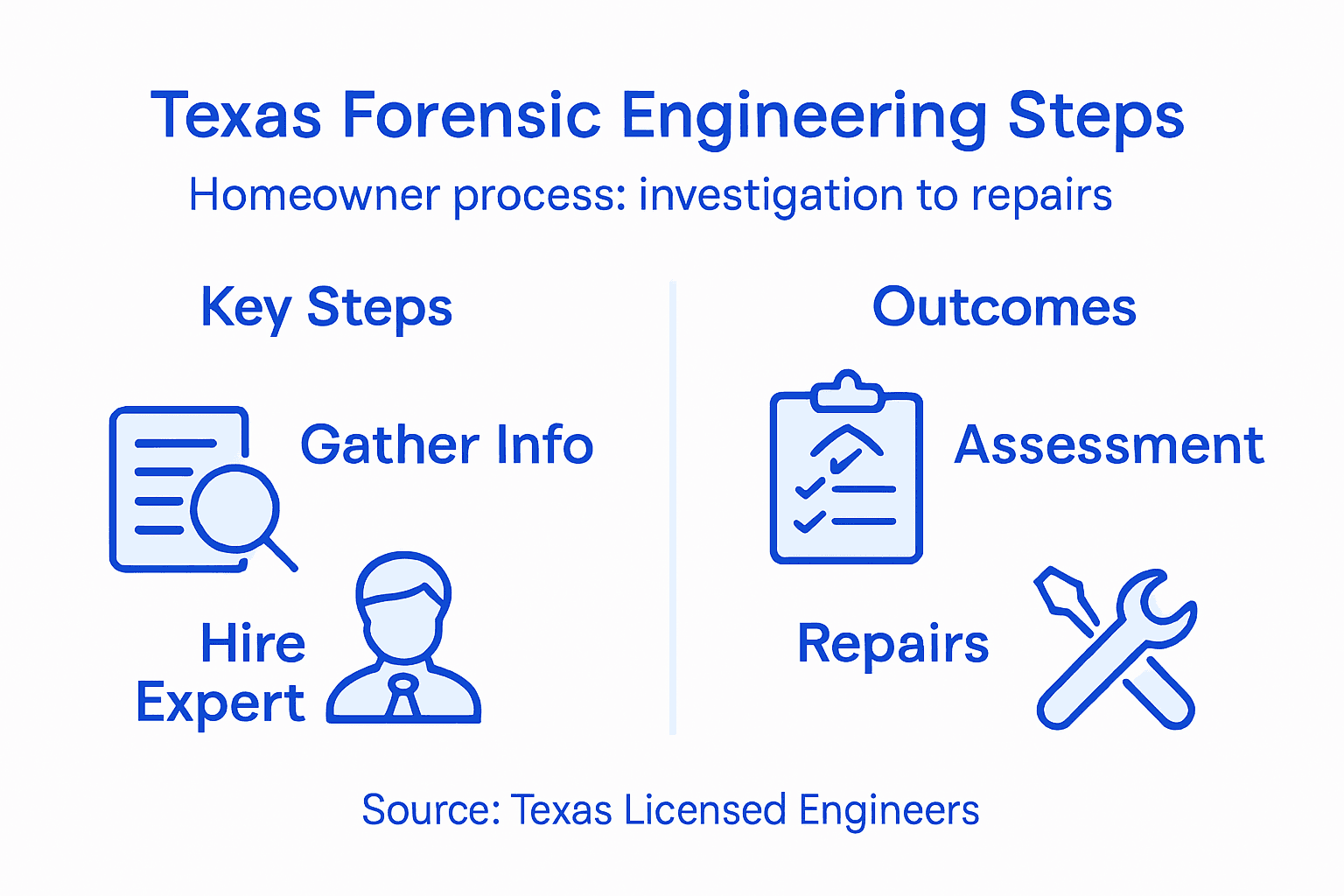
Here is a summary of how each step supports the forensic engineering process:
| Investigation Step | Purpose in the Process | Key Outcome for Property Owner |
|---|---|---|
| Gather documentation | Establish incident and property context | Prepares a complete record for engineers |
| Contact a licensed forensic engineer | Secure specialized expertise | Ensures objective, technical evaluation |
| Coordinate on-site assessment | Enable thorough physical investigation | Provides direct evidence and expert observations |
| Review findings and recommendations | Understand technical analysis and next actions | Informs decisions for repairs or insurance claims |
| Submit for insurance and repairs | Translate findings into actionable documentation | Supports claims approval and effective restoration |
Expert Forensic Engineering Support for Texas Homeowners
Facing property damage questions or structural concerns after an incident can be overwhelming. This guide highlights how important detailed documentation and working with a licensed forensic engineer are to uncover root causes and plan effective repairs. If you want to avoid hidden pitfalls and ensure your insurance claims and restoration efforts go smoothly, trusted professional help is essential.
Explore our TLE Archives for insights into forensic investigations and structural assessments that homeowners across Texas rely on.

Take control of your property’s future today by contacting Texas licensed engineers who specialize in residential forensic investigations and comprehensive structural inspections. Visit https://texaslicensedengineers.com now to secure expert guidance tailored to your specific situation. Don’t wait until problems escalate — get the professional assessment you need immediately and protect your home with confidence.
Frequently Asked Questions
What is the first step in the forensic engineering process for homeowners?
The first step is to gather all relevant property and incident information. Compile property ownership records, construction blueprints, inspection reports, and photographs of the property to create a complete documentation package for the forensic engineer.
How do I find a qualified forensic engineer in Texas?
To find a qualified forensic engineer, ensure they hold a current Texas professional engineering license and have specific experience in forensic investigations. Reach out to potential engineers, explain your property issue, and provide the documentation you gathered.
What should I expect during the on-site assessment by a forensic engineer?
During the on-site assessment, the forensic engineer will conduct a thorough visual inspection, take detailed measurements, and document environmental conditions. Be prepared to grant full access to your property and provide any relevant information regarding the incident.
How can I effectively review the forensic engineer’s report?
To effectively review the report, focus on sections detailing the root cause analysis, damage assessment, and recommended repair strategies. Schedule a consultation with the engineer to discuss any technical aspects of the report and understand the implications for your property.
What documentation do I need to submit for insurance claims?
You should prepare a submission package that includes the forensic engineering report, photographic evidence, damage assessment documentation, and cost estimates for repairs. Organizing these materials clearly can significantly improve your chances of obtaining insurance approval quickly.
What roles do various stakeholders play in the forensic engineering process?
Stakeholders, including the property owner, forensic engineer, and insurance adjuster, each have specific roles. The property owner provides access and records, the engineer conducts the investigation, and the adjuster reviews all documentation for claims assessment.
Recommended
- Complete Guide to Forensic Engineering Process in Texas – Texas Licensed Engineers
- Forensic Structural Analysis: Risks And Legal Impact In Texas – Texas Licensed Engineers | Residential & Commercial
- 7 Key Advantages of Forensic Engineering for Texas Homes – Texas Licensed Engineers
- Forensic Engineering Process: Step-by-Step Investigation Guide – FloridaLicensedEngineers.com

