
Complete Guide to Forensic Engineering Process in Texas
Every home in Houston or Austin faces its share of storms, floods, and shifting foundations that can leave property owners seeking answers. When unexpected damage strikes, the path to recovery starts with thorough investigation and documentation. Understanding the structured approach of forensic engineering helps Texas homeowners and contractors protect their investments, ensure accurate diagnoses, and build strong cases for insurance or repairs. This guide outlines each step so you can move forward with confidence and clarity.
Table of Contents
- Step 1: Assess Site Conditions And Prepare Documentation
- Step 2: Gather Evidence And Conduct Detailed Inspections
- Step 3: Analyze Collected Data For Root Causes
- Step 4: Develop Actionable Engineering Solutions
- Step 5: Verify Findings And Prepare Final Report
Quick Summary
| Key Points | Explanation |
|---|---|
| 1. Document Damage Thoroughly | Systematically photograph and record all visible damage, ensuring a clear visual record for forensic engineers to assess severity. |
| 2. Gather Essential Property Records | Compile construction plans, permits, and previous inspection reports to provide engineers with necessary background data during their investigation. |
| 3. Provide a Detailed Timeline of Events | Create a timeline outlining when damage was first observed and any relevant weather conditions or incidents to aid engineers in understanding root causes. |
| 4. Involve Witnesses and Neighbors | List names of individuals who observed the damage; their accounts can support your documentation and provide valuable context for engineers. |
| 5. Review Final Report Thoroughly | Meet with engineers to discuss their findings and ask questions before finalizing the report to ensure clarity and understanding. |
Step 1: Assess Site Conditions and Prepare Documentation
Before forensic engineers can diagnose what went wrong with your property, they need to understand the full context. This step involves documenting the current state of damage, gathering historical records, and photographing evidence. Getting this right sets the foundation for accurate findings and protects your interests during insurance claims or litigation.
Start by walking through your property systematically and noting visible damage patterns. Look for water stains, cracks, foundation settlement, or structural displacement. Take timestamped photographs from multiple angles, capturing both wide shots and close-ups of affected areas. If damage occurred during a flood, document water lines on walls, debris patterns, and any sediment left behind. For structural issues, photograph cracks in the pattern they appear, not just isolated shots. This visual record becomes invaluable when engineers need to assess severity and determine root causes.
Next, gather all relevant documentation about your property. This includes original construction plans, building permits, previous inspection reports, and any maintenance records. If you have homeowner’s insurance documentation, repair estimates, or prior claims related to similar issues, compile these materials now. When preparing for a structural inspection, engineers will need access to this information to compare current conditions against baseline data. The more complete your documentation package, the more thoroughly they can investigate.
Create a simple timeline of events leading to the damage. When did you first notice the problem? What weather conditions preceded it? Have you made any temporary repairs? Were there previous incidents at the property? This narrative helps engineers understand whether the damage resulted from a single catastrophic event or gradual deterioration. In Houston and Austin’s climate, understanding the sequence matters tremendously for distinguishing between flood damage, foundation movement, and structural failure.
Make a list of any witnesses or neighbors who observed the damage. Their accounts can corroborate your documentation and provide additional perspective on how the damage occurred. Also note any communications with contractors, insurance adjusters, or other professionals who’ve already assessed the situation.
Pro tip: Keep all original photographs on your phone or cloud storage before engineers arrive, and create a printed binder with organized documentation organized chronologically so engineers can quickly reference background information without wasting time searching through scattered records.
Here’s a summary of key types of evidence forensic engineers rely on:
| Evidence Type | Purpose | Example Applications |
|---|---|---|
| Photographic Records | Visual documentation of damage | Structural cracks, water stains |
| Historical Documents | Establish property baseline | Construction plans, permits |
| Physical Measurements | Quantify extent and patterns | Crack width, foundation tilt |
| Laboratory Test Data | Support technical conclusions | Soil composition, water analysis |
Step 2: Gather Evidence and Conduct Detailed Inspections
Now that you have documented the scene and organized your records, forensic engineers will conduct thorough inspections to uncover what caused the damage. This phase involves systematic examination using specialized equipment and techniques to collect physical evidence. The goal is to establish a clear chain of causation, whether the problem stems from flood damage, structural failure, poor construction, or environmental factors.
The inspection process starts with a visual walkthrough guided by your documentation. Engineers will examine affected areas more closely than your initial assessment, looking for subtle clues about failure mechanisms. They measure crack widths and patterns, check for water intrusion pathways, assess foundation settlement, and evaluate structural alignment. In Houston and Austin properties affected by flooding, engineers trace moisture movement through walls and foundations to understand how water entered and where it caused damage. When conducting detailed building inspections, professionals use moisture meters, crack gauges, and laser levels to quantify what the naked eye cannot accurately assess.
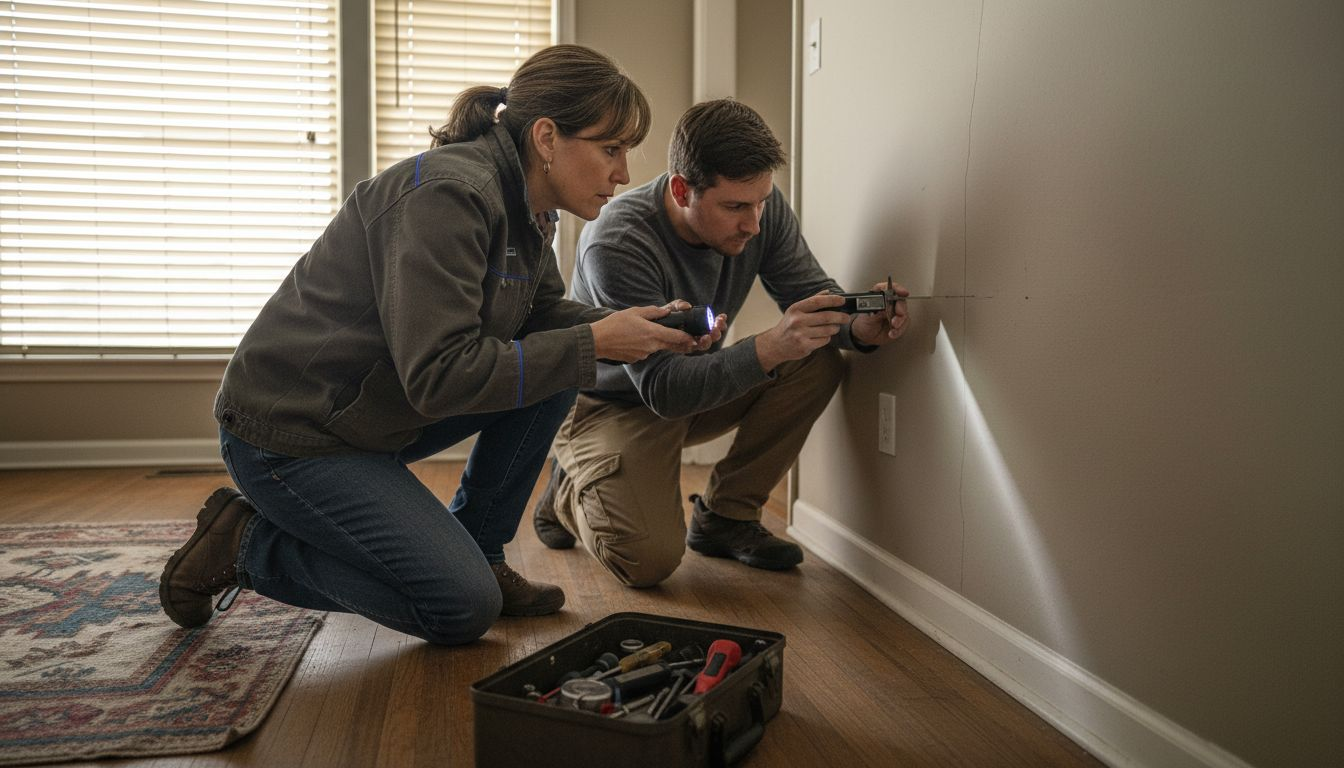
Engineers will also examine surrounding areas that appear unaffected. A crack in your living room might actually originate from foundation problems on the opposite side of the house. Water damage in your attic could indicate roof failures, plumbing leaks, or condensation issues from poor ventilation. This comprehensive approach prevents missing root causes that could lead to incorrect repairs or future problems.
Specialized testing often accompanies visual inspection. Soil sampling may reveal foundation settlement patterns. Laboratory analysis of water samples can identify contamination levels from flood damage. Structural load testing helps determine if beams or columns have been compromised. Ground penetrating radar can detect subsurface issues without excavation. These tests generate concrete data that supports professional conclusions.
Engineers will ask detailed questions about any temporary repairs you attempted, previous incidents, and changes you noticed before failure occurred. This information, combined with physical evidence, helps them construct an accurate timeline and mechanism of failure.
Pro tip: Stay present during the inspection and take notes on what engineers observe, but avoid asking them to reach conclusions until they complete their full investigation and have time to analyze all collected data and test results.
Step 3: Analyze Collected Data for Root Causes
With all evidence gathered and testing complete, forensic engineers shift focus to understanding what the data actually means. This analysis phase transforms raw measurements and observations into a coherent explanation of why your property failed. The engineers will work through their findings systematically to distinguish between the actual cause and the visible symptoms.
Engineers begin by organizing all collected information, from photographs and measurements to laboratory results and structural assessments. They compare findings against industry standards, building codes that were in effect when your property was constructed, and baseline conditions from neighboring properties. A crack pattern that seems alarming might actually be normal settlement in your soil type. Water intrusion in your basement could stem from surface grading rather than foundation defects. Forensic failure investigation follows a structured approach that examines all variables systematically, ensuring conclusions rest on solid engineering principles rather than assumptions.
The analysis separates cause from consequence. Your flooded attic is a symptom, but the root cause might be improper roof slope, missing flashing, or inadequate soffit venting. Foundation cracks are visible, but the underlying issue could be differential settlement, tree root damage, or hydrostatic pressure. Engineers test competing theories against the physical evidence to identify which explanation best fits all observed data. This methodical approach prevents incorrect repairs that would waste your money and fail to solve the actual problem.
Engineers also consider sequence and timing. Did the damage occur suddenly during a specific event, or did it develop gradually over months or years? Environmental factors matter tremendously in Texas. Houston’s clay soils expand and contract with moisture changes, causing movement that Austin’s limestone foundation doesn’t experience. Weather records, soil composition analysis, and historical photos help engineers place findings into proper context.
Once the analysis is complete, they develop preliminary conclusions about root cause. These findings form the foundation for their written report and recommendations for remediation.
Pro tip: Ask your engineer to walk you through their reasoning for how they eliminated other possible causes, not just explain the cause they selected, since understanding their elimination process strengthens your credibility if questions arise later.
Step 4: Develop Actionable Engineering Solutions
Once engineers understand what caused your property damage, they shift from investigation to problem-solving. This step translates their root cause findings into specific, practical repair strategies that address the actual failure mechanism rather than just treating symptoms. The solutions must be feasible, cost-effective, and ensure your property meets current building codes and safety standards.
Engineers begin by listing all viable repair approaches. For foundation settlement, solutions might include underpinning, helical piers, or polyurethane injection depending on soil conditions and structural requirements. For flood damage, repairs could involve waterproofing, elevated utilities, improved drainage, or a combination of strategies. Forensic engineering services develop practical repair and mitigation strategies that address structural, mechanical, and material failures while ensuring long-term durability. Engineers evaluate each option against criteria like effectiveness, timeline, budget impact, and disruption to your daily life.
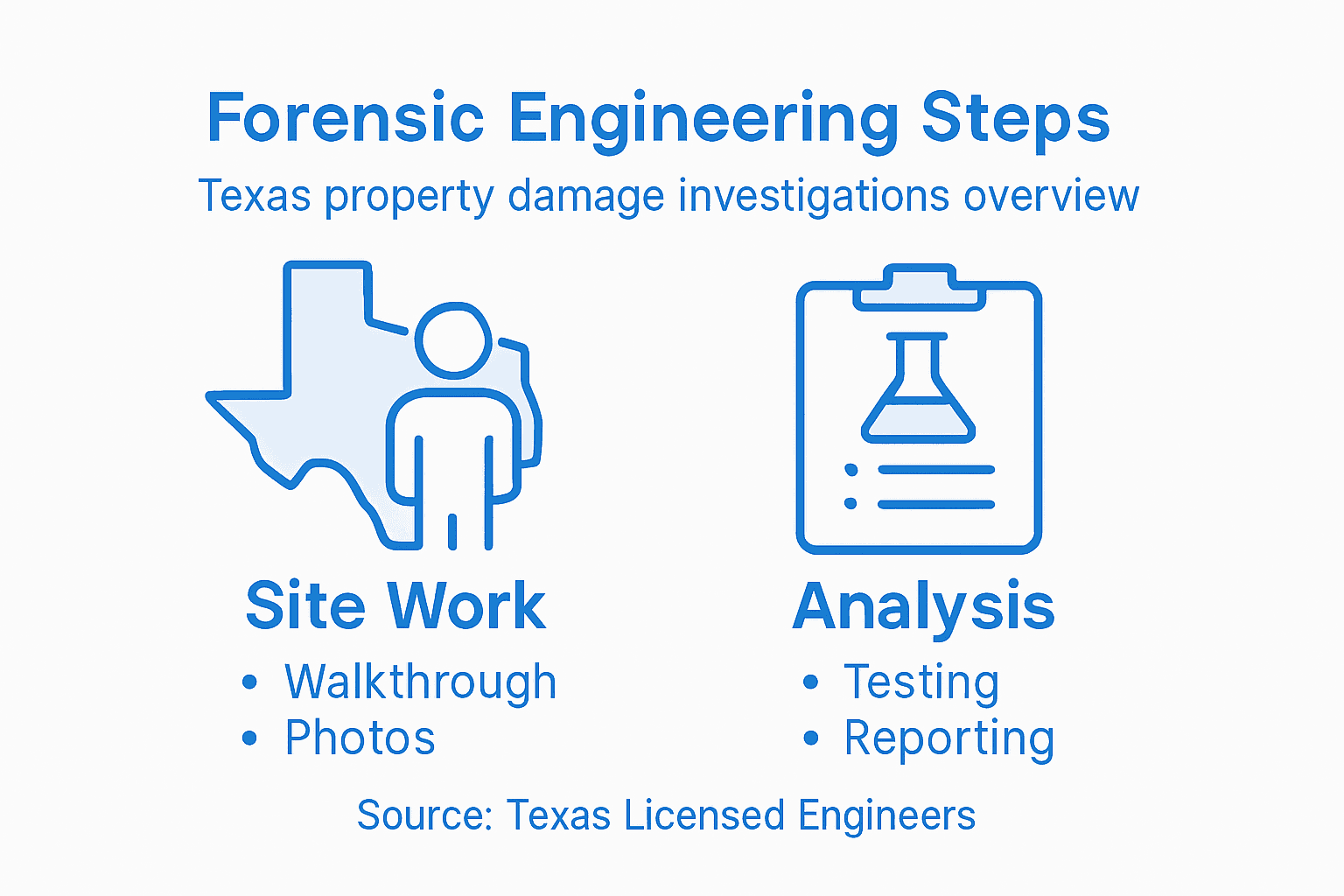
The engineer will prioritize solutions by urgency and safety impact. Life safety issues receive immediate attention. In Houston flood-prone areas, preventing future water intrusion ranks high priority. Cosmetic repairs like repainting can wait. They also consider whether repairs must happen simultaneously or can be phased over time to manage costs.
Engineers specify repair methods in detail. Rather than vague recommendations like “fix the roof,” they provide specifications for materials, installation procedures, and quality standards. These details become critical when you hire contractors or submit insurance claims. The engineer might specify that waterproofing must extend 6 feet up the foundation wall, use specific membrane types, and include drainage systems. This precision prevents contractors from cutting corners or misinterpreting intentions.
Cost estimates and timeline projections accompany recommended solutions. Engineers understand you need realistic information to make decisions and secure funding. They’ll also explain why certain cheaper alternatives are inadequate or might create future problems.
Pro tip: Get written explanations for why the recommended solution was chosen over alternatives, as this documentation strengthens insurance claims and provides contractors with clear reasoning for following specific procedures rather than cheaper shortcuts.
Step 5: Verify Findings and Prepare Final Report
Before your forensic engineer delivers conclusions, they conduct rigorous verification to ensure accuracy and defensibility. This step separates thorough professional investigation from hasty opinions. The final report becomes your primary tool for insurance claims, contractor negotiations, and potential legal proceedings, so accuracy matters immensely.
Engineers review all collected data, test results, photographs, and analysis to identify any gaps or inconsistencies. They recheck calculations, verify equipment readings, and confirm that conclusions logically follow from evidence. If something doesn’t align, they investigate further rather than ignoring uncomfortable findings. This self-checking process catches errors before they damage your credibility. Preparing the final forensic engineering report involves compiling comprehensive data, analysis, and conclusions clearly and objectively, with documented evidence and testing results verified for technical accuracy.
Most professional engineers submit their work for independent peer review. Another qualified engineer examines the investigation methodology, data interpretation, and conclusions without bias. This second opinion strengthens your position significantly. If questions arise later about findings, you can reference that independent verification occurred. It demonstrates due diligence and professional rigor.
The engineer then drafts the final report. Writing matters here. Technical jargon can confuse insurance adjusters and contractors who need to understand findings. The report clearly explains what was investigated, why testing was performed, what was discovered, and what the findings mean. Writing a forensic engineering expert report requires summarizing the investigation purpose, methods, observations, analysis, and conclusions in a clear, logical manner. Each claim stands on solid evidence, not assumptions or speculation.
The finished report includes executive summaries for busy readers, detailed technical sections for specialists, photographs organized chronologically, test data with analysis, and specific recommendations. Quality reports anticipate questions and address them directly. This completeness prevents back and forth clarifications later.
Compare approaches to reporting forensic engineering results:
| Report Feature | Technical Report | Executive Summary |
|---|---|---|
| Detail Level | High detail | Concise overview |
| Intended Audience | Specialists | Insurers, clients |
| Data Presentation | Full analyses | Key findings only |
| Use for Claims | Supporting docs | Decision support |
Pro tip: Request a meeting with your engineer to review the report before it’s finalized, allowing you to ask clarifying questions and ensure you fully understand conclusions before using the document for insurance claims or contractor bids.
Secure Expert Forensic Engineering Solutions in Texas Today
Understanding the complexities behind property damage through the forensic engineering process is vital for protecting your investment and ensuring lasting repairs. Whether it is flood damage, foundation settlement, or structural failure, navigating these challenges requires precise documentation, thorough inspection, and clear analysis. As the article highlights, addressing root causes rather than symptoms is essential for effective solutions and peace of mind.
At Texas Licensed Engineers, we specialize in comprehensive forensic investigations tailored to Texas homes and commercial properties. Our experts provide detailed assessments and actionable repair plans in cities like Houston, Austin, Dallas, and San Antonio. Explore our in-depth resources in the TLE Archives – Texas Licensed Engineers | Residential & Commercial to learn more about our services and how we apply engineering best practices and local code knowledge to safeguard your property.

Don’t leave your property’s safety to chance. Contact us now at Texas Licensed Engineers to schedule a forensic engineering consultation. Take the crucial step to identify root causes and receive expert recommendations that stand up to insurance claims, contractor negotiations, and future inspections.
Frequently Asked Questions
What is the first step in the forensic engineering process?
The first step in the forensic engineering process is to assess site conditions and prepare documentation. Walk through your property and note visible damage while gathering historical records and photos to build a comprehensive documentation package for the engineers.
How do forensic engineers inspect for damage?
Forensic engineers conduct detailed inspections by performing systematic examinations using specialized equipment. Look for subtle clues like crack patterns and water intrusion pathways, and ensure you are present during the inspection to take notes.
How do engineers determine the root cause of property damage?
Engineers analyze the collected data to distinguish between the visible symptoms and the actual root cause of the damage. Organize all information and have them explain how they eliminated other possible causes to understand their reasoning clearly.
What types of solutions do engineers recommend for property damage?
Engineers develop actionable engineering solutions that directly address the root cause of the damage, such as underpinning for foundation issues or waterproofing for flood damage. Discuss their recommendations thoroughly to ensure they are feasible and cost-effective while adhering to current building codes.
How can I verify the accuracy of the forensic engineering report?
You can verify the accuracy of the forensic engineering report by encouraging the engineer to conduct rigorous verification and independent peer review before finalizing it. Schedule a meeting to review and clarify any points to ensure you fully understand the conclusions and can effectively use the report for insurance claims or contractor bids.
Recommended
- Forensic Structural Analysis: Risks And Legal Impact In Texas – Texas Licensed Engineers | Residential & Commercial
- Forensic Engineering Investigation Guide for Accurate Results – FloridaLicensedEngineers.com
- Forensic Engineering Investigation Guide for Accurate Results – Florida Licensed Engineers
- Complete Guide to the Role of Forensic Engineering – FloridaLicensedEngineers.com
