
Residential Construction Planning Guide for Houston Homeowners
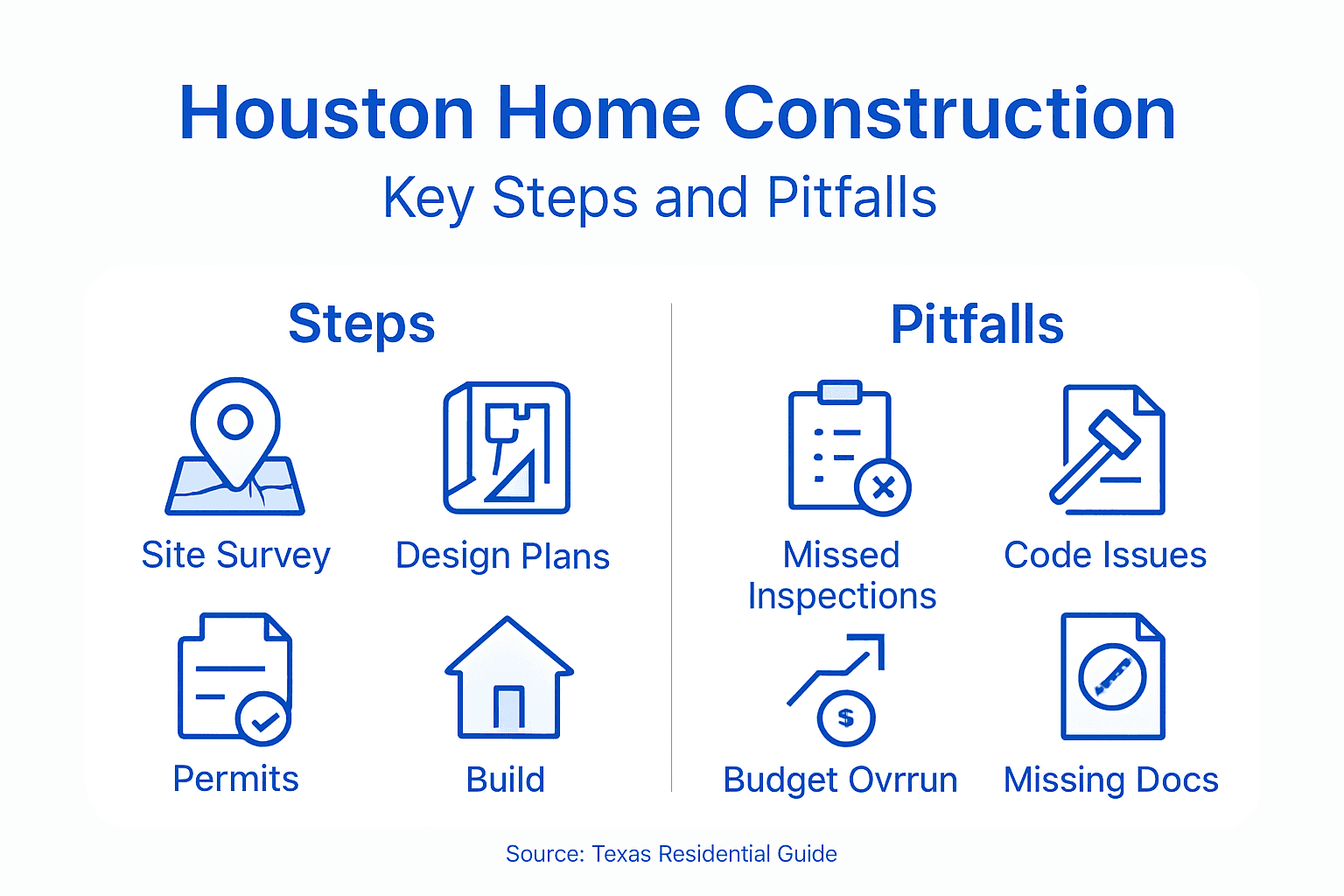
Breaking ground on a new home in Houston is both exciting and overwhelming, especially if this is your first major construction project. From understanding unique soil conditions to managing city permits, each step brings new decisions that affect your timeline and budget. This guide will walk you through every critical phase, highlighting site planning surveys, regulatory compliance, and inspection milestones so your project starts strong and finishes safe.
Table of Contents
- Step 1: Assess Property Needs And Site Conditions
- Step 2: Develop Construction Plans And Design
- Step 3: Obtain Permits And Approvals
- Step 4: Hire Qualified Contractors And Inspectors
- Step 5: Verify Structural Integrity And Code Compliance
- Step 6: Finalize Construction And Complete Documentation
Quick Summary
| Key Point | Explanation |
|---|---|
| 1. Conduct a Thorough Site Assessment | Evaluate property boundaries, existing structures, and utility locations to prevent costly construction surprises. |
| 2. Create Detailed Construction Plans | Collaborate with a qualified designer to ensure plans meet your needs and comply with Houston building codes. |
| 3. Obtain Necessary Permits | Submit a complete application with all required documents to start construction legally and avoid delays. |
| 4. Hire Qualified Contractors and Inspectors | Choose experienced professionals to ensure quality construction and compliance with safety standards. |
| 5. Document Everything Thoroughly | Compile all plans, inspections, and warranties to protect your investment and assist with future repairs or resale. |
Step 1: Assess Property Needs and Site Conditions
Before you break ground on your Houston residential project, you need to understand exactly what you’re working with. This means gathering detailed information about your property’s physical characteristics, existing structures, utilities, and site conditions. You might think you already know your land, but a thorough assessment reveals critical details that shape every decision moving forward, from foundation design to drainage systems. This step protects your investment and prevents costly surprises during construction.
Start by documenting your property boundaries and what currently exists on the land. Walk the entire property and note any existing structures, mature trees, fences, or other features. Pay attention to how water flows across your land during rain, where it pools, and which areas stay dry. Look at your neighbors’ properties too, particularly their drainage patterns and how their homes sit relative to street level. Next, identify all utility locations: water mains, sewer lines, electrical connections, and gas lines. You can request utility locates through Texas One Call before beginning any excavation work. Understanding these elements prevents expensive errors like building over a utility line or creating drainage problems that affect adjacent properties.
A site planning survey provides the precise data you’ll need on property boundaries, topography, existing structures, and utilities. This survey becomes your foundation for accurate design and ensures regulatory compliance while preventing boundary disputes. The surveyor will identify elevation changes, slope conditions, and drainage patterns specific to your lot, which proves invaluable when dealing with Houston’s unique soil and water challenges. Request that the surveyor note any low-lying areas prone to flooding, soil composition observations, and access points for construction equipment. This detailed site information directly influences your building placement, foundation type, and grading plan.
Pro tip: Get your survey done before hiring your builder or engineer, and request that the surveyor note storm surge zones, soil observations, and any easements that might restrict your building footprint.
Step 2: Develop Construction Plans and Design
With your site assessment complete, you’re ready to translate your vision into actual construction plans. This phase determines what your home will look like, how it functions, and whether it meets Houston’s building codes. Working with a qualified designer or architect transforms your ideas into detailed drawings that contractors will follow during construction. The plans become your communication tool, your legal document, and your budget blueprint all in one.
Start by clearly defining what you want from your home. Consider your lifestyle, future needs, budget constraints, and how long you plan to stay in the house. Do you want an open concept kitchen, multiple bathrooms for a growing family, or a dedicated home office? Share these priorities with your designer before they start sketching. A good designer asks detailed questions about how you actually live in your space, not just what looks nice in magazines. Next, your designer will create preliminary sketches showing the floor plan, elevation views, and how the house sits on your property. These sketches reflect your site conditions, solar orientation, and drainage patterns from your earlier assessment. Building a home in Houston requires understanding local building codes and selecting skilled designers who know how Houston’s climate and soil conditions affect construction decisions.
Once preliminary designs get your approval, the architect or designer develops detailed construction documents. These include floor plans with exact dimensions, electrical layouts, plumbing diagrams, structural details, and specification sheets for materials and finishes. Every window location, door swing, and wall thickness appears on these plans. The level of detail matters enormously because contractors use these plans to price the work, order materials, and schedule construction. In Houston, your designer must account for wind resistance requirements, potential flood zones, and clay soil characteristics that affect foundation design. This detailed planning phase prevents costly changes later and keeps your project on schedule. You’ll likely spend two to four months on design development, depending on complexity.

Pro tip: Build flexibility into your design by planning for future modifications, and request that your designer provide digital files in standard formats so multiple contractors can bid on the work accurately.
Step 3: Obtain Permits and Approvals
No matter how well you’ve planned your project, you cannot legally begin construction without the proper permits from the City of Houston. This step protects you, your neighbors, and ensures your home meets all safety and building code requirements. The permitting process might seem bureaucratic, but it’s your safeguard against structural problems, electrical hazards, and costly violations down the road. Getting permits right the first time saves you months of delays and thousands in rework.
Gather all the documents your permitting authority requires before submitting your application. You’ll need your sealed survey from the site assessment phase, detailed construction plans signed by your architect or engineer, a site plan showing existing and proposed structures, and specifications for major systems like electrical and plumbing. In Houston, residential permitting requires detailed plans that comply with the International Residential Code and local energy conservation standards. If your property sits in a floodplain, you’ll also need a floodplain development permit, which involves additional documentation about elevation, flood hazard zones, and how your home will be protected. Some smaller projects like sheds or non-structural additions may qualify for exemptions, but it’s safer to ask the permitting department directly rather than assume. Submit everything at once to avoid back-and-forth trips to City Hall. Incomplete applications get returned, costing you weeks of waiting.
Once you submit, the permit department reviews your plans for code compliance, which typically takes two to four weeks depending on their current workload and the complexity of your project. They’ll examine electrical layouts, structural calculations, plumbing design, energy efficiency measures, and how your home relates to flood zones and setback requirements. If they find issues, they’ll issue a request for information or corrections, and you’ll need to revise your plans and resubmit. This cycle can repeat, so anticipate that permitting might take six to eight weeks total. Keep copies of everything you submit and maintain contact with your permit reviewer. When approval comes through, you’ll receive your permit number and construction can officially begin.
Pro tip: Hire a permitting consultant if you’re unfamiliar with Houston requirements, especially if your property involves floodplain restrictions or complex site conditions, since they can expedite approvals and prevent costly resubmittals.
Step 4: Hire Qualified Contractors and Inspectors
Your permit is approved and your plans are finalized, but the success of your entire project hinges on hiring the right people to build it and inspect it. A qualified general contractor manages the construction process, coordinates subcontractors, and ensures work meets your plans and local codes. Independent inspectors verify that each phase of construction complies with building codes and your contract specifications. These professionals protect your investment and catch problems before they become expensive catastrophes.
Start your contractor search months before construction begins by asking for referrals from your architect, neighbors who recently built homes, and real estate professionals in your area. Interview at least three contractors and request references from recent Houston residential projects similar in scope to yours. Ask specifically about projects on clay soil and how they handled foundation work, drainage, and flood mitigation. Request proof of licensing, insurance, and bonding before accepting any bids. In Texas, verify contractors through the Texas Department of Licensing and Regulation or check their track record with the Better Business Bureau. When comparing bids, the lowest price rarely represents the best value. A contractor quoting significantly less than others may cut corners on materials or labor that will cost you later. Meet with your top candidate to discuss their timeline, how they handle weather delays, their communication style, and how they manage change orders when unexpected conditions arise during construction.
For inspections, hire a third party engineer or building inspector separate from the contractor to conduct effective construction inspections at critical phases. These inspections occur at foundation completion, framing closure, mechanical rough-in before drywall, and before final occupancy. Your inspector verifies that footings reached proper depth, electrical wiring matches plans, plumbing slopes correctly, and structural elements are properly secured. In Houston’s challenging environment with clay soils and flood risks, professional inspections catch settlement issues, water intrusion vulnerabilities, and grading problems before they become permanent defects. The cost of inspections typically runs one to two percent of your construction budget but prevents far costlier repairs after you move in.
Pro tip: Schedule inspections during actual construction work rather than after completion, so the contractor can immediately address any issues without expensive demolition or remedial work.
Step 5: Verify Structural Integrity and Code Compliance
As construction progresses, your primary concern shifts from planning to verification. You need confidence that your home is being built exactly as designed, meets all safety standards, and complies with Houston building codes. Structural integrity inspections and code compliance checks protect your investment by identifying problems while they can still be corrected without massive expense. This step transforms your plans from paper into a safe, legally compliant structure.
Schedule inspections at critical construction milestones rather than waiting until the project finishes. The foundation inspection happens immediately after excavation and before concrete is poured, verifying that footings reach proper depth for Houston’s clay soil conditions. Next comes the framing inspection, checking that all structural members are properly sized, connected, and anchored according to your plans. Before drywall covers the walls, request a mechanical inspection verifying electrical wiring, plumbing, and HVAC installations match the approved plans. Finally, conduct a final structural inspection before occupancy to confirm all systems function correctly and meet code requirements. Structural inspections in Houston enforce compliance with building codes covering foundation, framing, and final structure approval, ensuring safety and durability throughout the construction process.
Your inspector or engineer will verify adherence to the International Residential Code as adopted by Houston, including local amendments that account for our flood-prone environment and expansive clay soils. They’ll check that proper flashing prevents water intrusion, verify grading slopes water away from your foundation, and confirm that structural connections meet engineering calculations. The inspector documents findings in a report, noting any deviations from plans or code violations. If issues arise, your contractor has the opportunity to correct them immediately, which costs far less than fixing problems after you move in. Code compliance isn’t just about passing inspections, it’s about ensuring your home performs safely and lasts for decades without major structural failures.
Pro tip: Be present during inspections and ask your inspector to explain what they’re checking and why, so you understand how your home meets safety standards and resists Houston’s specific environmental challenges.
Step 6: Finalize Construction and Complete Documentation
As your home nears completion, attention shifts to final details, inspections, and creating a comprehensive record of everything built. Complete documentation protects your warranty claims, simplifies future maintenance and repairs, and provides proof of code compliance for resale. This final step transforms your construction project into a fully documented asset with a clear record of every system and specification.
Conduct a final walkthrough with your contractor before occupancy, systematically checking every room and system against your approved plans. Verify that all doors operate smoothly, windows close properly, electrical outlets function, plumbing fixtures work, and HVAC systems heat and cool effectively. Test garage doors, exterior lighting, and drainage around the foundation by observing water flow during the next rain. Create a punch list documenting any incomplete items or deficiencies requiring correction, and establish a deadline for the contractor to finish them. Request final inspections from the City of Houston covering electrical, plumbing, mechanical, and structural systems. Only after the building department approves these final inspections should you receive your certificate of occupancy, which permits you to legally occupy the home. Residential construction documentation comprises essential drawings including site plans, floor plans, elevations, sections, and utility plans that translate architectural design into buildable instructions and guide quality standards throughout the project.
Collect all original documents from your contractor and architect, including stamped construction plans, permit approvals, inspection reports, change orders, material warranties, equipment manuals, and proof of utility connections. Request digital copies in addition to hard copies, stored in multiple locations for safekeeping. These documents become invaluable when you need to reference specifications for repairs, submit insurance claims, or sell the property. Consider creating a detailed photographic or video record of the finished home and all systems before moving in, documenting the condition on occupancy day. Keep receipts for all materials and equipment installed, as these support warranty claims if problems arise. This comprehensive documentation package protects your investment and provides future owners with confidence in your home’s construction quality and compliance.
Pro tip: Create a digital folder organized by system (foundation, electrical, plumbing, HVAC) containing all plans, permits, warranties, and maintenance records, making it instantly accessible if you need to troubleshoot problems or prove compliance to insurance companies.
Use this reference table to know who is responsible for essential Houston homebuilding tasks:
| Task | Responsible Party | What They Deliver |
|---|---|---|
| Site Planning Survey | Licensed Surveyor | Boundaries, topography, utility locations |
| Construction Drawings | Architect/Designer | Detailed home plans and specifications |
| Permit Submission | Owner or Consultant | Complete set of required documents |
| Building Construction | General Contractor | Project management and execution |
| Inspections | Engineer/Third Party Inspector | Compliance checks at each build phase |
| Documentation Compilation | Contractor/Owner | Full package of plans and warranties |
Here’s a summary of key considerations for each major step of Houston residential construction:
| Step | Primary Focus | Critical Impact | Common Oversight |
|---|---|---|---|
| Site Assessment | Land boundaries and utilities | Prevents costly errors during building | Missing utility locate requests |
| Construction Design | Adjust plans to site and code | Enables accurate budgeting and scheduling | Overlooking flood and soil conditions |
| Permitting | Document submission and compliance | Legal start and safeguards against violations | Incomplete applications causing delays |
| Contractor Selection | Vet experience and qualifications | Ensures construction quality and code compliance | Choosing based on lowest bid only |
| Inspections | Verify at every milestone | Early detection of major issues | Skipping third-party inspections |
| Documentation | Gather all build records | Streamlines future repairs and resale | Not saving digital copies of plans |
Secure Your Houston Home Build with Expert Engineering Support
Building a new home in Houston means navigating complex site conditions like clay soil, flood zones, and strict permitting requirements. The “Residential Construction Planning Guide for Houston Homeowners” highlights critical challenges such as thorough site assessments, detailed construction plans, accurate permit submissions, and rigorous inspections. If you want to avoid costly mistakes, delays, and structural issues, you need trusted professionals who understand Houston’s unique environment and building codes.
At Texas Licensed Engineers, we specialize in residential engineering services designed to support every step of your project. From comprehensive foundation and structural inspections to precise construction plans and permitting assistance, our experienced team ensures code compliance and durability for your home. Explore our TLE Archives – Texas Licensed Engineers | Residential & Commercial to see how our expertise aligns with your needs and visit our site to get started.

Don’t risk your investment by moving forward without professional engineering guidance. Contact us today at https://texaslicensedengineers.com to schedule a consultation and make your Houston homebuild safe, smart, and stress-free.
Frequently Asked Questions
How do I assess my property needs and site conditions before construction?
Before construction, conduct a thorough site assessment by documenting property boundaries, existing structures, and utility locations. Walk the property to observe water drainage and check for features like mature trees. This will help you make informed decisions about foundation and drainage systems.
What should I include in my construction plans for my Houston home?
Your construction plans should include detailed drawings, including floor plans, elevation views, and mechanical layouts. Clearly outline your preferences regarding space utilization, such as the number of bedrooms and open areas. Communicate these details to your designer to ensure the plans reflect your vision and local codes.
What documents are required to obtain permits for residential construction in Houston?
To secure permits, compile essential documents like your site survey, detailed construction plans, and any specifications for major systems, including electrical and plumbing. Ensure that your application complies with local building codes and includes information on floodplain considerations if applicable for your property.
How can I find qualified contractors for my construction project?
Start your search for contractors by asking for referrals from architects or neighbors who recently completed similar projects. Interview multiple candidates, check their references, and verify that they hold appropriate licenses and insurance. Choose a contractor based on qualifications and experience rather than solely on cost to ensure project quality.
What critical inspections should occur during the construction of my home?
Schedule key inspections at various milestones, including foundation, framing, and mechanical rough-in phases. These inspections will verify compliance with building codes and check if all installations align with your approved plans. Being present during these inspections helps you understand the process and address any issues immediately.
How do I ensure I have complete documentation after construction ends?
After construction, perform a detailed walkthrough with your contractor to verify that all systems function properly. Collect all relevant documents, including plans, permits, inspection reports, and warranties, and organize them digitally and physically. This will simplify future maintenance and provide proof of compliance if needed.
Recommended
- 8 Key Steps for a Texas Residential Construction Checklist – Texas Licensed Engineers | Residential & Commercial
- Purpose of Building Plans: Securing Safety and Compliance in Texas – Texas Licensed Engineers
- Structural Engineering Guide 2025 for Texas Projects – Texas Licensed Engineers | Residential & Commercial
- What Is Civil Engineering and Its Impact on Texas Homes – Texas Licensed Engineers | Residential & Commercial
