
Purpose of Building Plans: Securing Safety and Compliance in Texas
Every Texas building project starts with the challenge of getting plans right—plans are the backbone of both legal compliance and successful construction from Houston to San Antonio. Building plans function as a complete roadmap, translating design ideas into clear instructions and guiding every phase of your project. For local homeowners and contractors, understanding comprehensive building plans helps avoid costly pitfalls, pass city inspections, and keep your budget under control.
Table of Contents
- Definition And Core Functions Of Building Plans
- Types Of Building Plans Used In Texas Projects
- Essential Features And Elements Of Building Plans
- Building Code Compliance In Texas Cities
- Owner And Contractor Responsibilities And Risks
- Cost Implications And Common Pitfalls
Key Takeaways
| Point | Details |
|---|---|
| Importance of Comprehensive Plans | Building plans are essential blueprints that ensure safety, compliance, and effective communication among all trades. Without them, projects risk delays and increased costs due to miscommunication and code violations. |
| Types of Plans in Texas | Various specialized plans serve specific functions, such as floor plans, site plans, and plumbing plans, each crucial for seamless construction. Understanding their roles aids effective coordination and compliance with local regulations. |
| Building Code Compliance | Texas enforces strict building codes requiring thorough documentation to pass inspections. Non-compliance can lead to costly rework and project delays, emphasizing the need for precise and detailed plans. |
| Owner and Contractor Responsibilities | Clear delineation of responsibilities between owners and contractors is critical for minimizing risks and avoiding disputes. Contracts should define roles, responsibilities, and expectations to ensure accountability throughout the construction process. |
Definition and Core Functions of Building Plans
Building plans are the blueprint of construction success – literally. They represent the architect’s and designer’s vision transformed into detailed technical drawings that guide every aspect of construction from site preparation to final inspection. Think of them as the conversation between the designer’s imagination and the construction team’s reality.
At their core, building plans serve as comprehensive sets of drawings that include floor plans, site plans, cross sections, elevations, electrical, plumbing, and landscape drawings. Each drawing serves a specific purpose. Floor plans show the layout of rooms and spaces from above, while elevations display how the building looks from different sides. Site plans reveal how the building sits on the property, including parking, drainage, and landscaping. Electrical and plumbing drawings map out all the systems running through the structure. For Texas homeowners and contractors, these aren’t just nice-to-have documents. They’re the legal requirement that stands between your project and approval from the city or county permitting office.
The core functions of building plans break down into several critical roles:
- Translation of design into reality – Architects and engineers communicate their vision through standardized symbols and measurements that construction teams can actually build
- Safety compliance documentation – Plans prove your project meets Texas building codes and local regulations before construction even begins
- Budget and material guidance – Detailed plans help contractors estimate costs accurately and order the right quantities of materials
- Construction coordination – Multiple trades (electricians, plumbers, HVAC technicians) use these plans to understand where their work fits within the larger project
- Legal protection – Approved plans create a binding agreement about what gets built, protecting both homeowners and builders from disputes
When you’re planning a residential addition in Houston or a commercial renovation in Austin, these plans aren’t abstractions. They’re the foundation for how your project gets permitted, built, and inspected. Without them, you’re essentially asking your contractor to build from memory and intuition, which rarely ends well in terms of code compliance or final costs.
The relationship between building plans and actual construction outcomes is direct. Strong plans prevent costly changes mid-project, reduce safety risks, and ensure your finished building functions exactly as intended. They also speed up the permitting process significantly because inspectors know exactly what to look for.
Pro tip: Request multiple copies of your approved building plans before construction starts – one for your contractor’s job site, one for the permit office, one for inspection days, and one for your records. This prevents lost or damaged documents from delaying your project.
Types of Building Plans Used in Texas Projects
Texas construction projects require multiple specialized plans, each serving a distinct purpose in the building process. Think of these plans as different chapters in the same instruction manual. A floor plan shows where walls go, while electrical plans show where power flows. Plumbing plans show where water and drainage go. Without this separation, a single document would become so cluttered that nobody could read it properly. Common building plan types include site plans, floor plans, elevation plans, plumbing plans, electrical plans, and landscaping plans. Each type addresses a specific aspect of construction and must comply with state and local regulations in Texas to ensure proper execution.
Understanding what each plan contains helps you communicate better with your design team and contractor. Site plans show the property boundaries, building footprint, parking areas, drainage patterns, and how the structure relates to surrounding features. Floor plans provide the top-down view of each level, showing room layouts, door and window locations, and spatial relationships. Elevation plans display the building from front, back, and side views, showing heights, materials, and exterior details. Electrical plans map out circuit layouts, outlet locations, lighting fixtures, and panel placements. Plumbing plans indicate water supply lines, drain lines, fixture locations, and cleanout access points. Mechanical plans show HVAC ductwork, equipment placement, and system zones. Landscaping plans detail vegetation, hardscaping, irrigation, and grading around the property.
For Texas projects specifically, local building departments may require additional specialized plans depending on your project type and location. Houston projects near flood zones might require detailed drainage and grading plans. Austin’s environmental regulations might demand enhanced landscaping or sustainability plans. Dallas commercial projects often need detailed fire safety and life safety plans. San Antonio’s historical districts might require architectural compatibility plans. Texas construction projects utilize various building plans depending on the building type and scope, including specialized plans for mechanical, electrical, and plumbing systems. Local regulations and codes influence the required plans, and compliance with these ensures safety and legal adherence during the project lifecycle.
The relationship between plan types and project success is straightforward. Missing or incomplete plans create delays during permitting and construction. Contradictions between plans cause costly field changes. Clear, comprehensive plans from the start prevent these problems entirely. Your structural engineer, mechanical engineer, electrical engineer, and architect each create their specialty plans, then a professional coordinator verifies they all work together without conflicts. This coordination step catches clashing pipes and electrical runs before construction workers show up on site.
Here’s how major types of building plans differ in purpose and application:
| Plan Type | Main Focus | Typical Texas Use |
|---|---|---|
| Site Plan | Property layout, access | Zoning and setback compliance |
| Floor Plan | Room arrangement | Interior flow and function |
| Elevation Plan | External appearance | Aesthetic review and neighborhood fit |
| Electrical Plan | Power and lighting paths | Required for inspection approval |
| Plumbing Plan | Water and drain routes | Water supply, drainage solutions |
| Mechanical Plan | HVAC and ventilation | Energy code and comfort compliance |
| Landscaping Plan | Exterior environment | Tree protection, drainage, grading |
Pro tip: When submitting plans for permit review in Texas, include a written checklist of all plan sheets included in your submission and confirm with the local permitting office which plan types are required for your specific project type, as requirements vary by city and county.
Essential Features and Elements of Building Plans
Effective building plans contain far more than pretty drawings. They’re packed with specific technical information that tells contractors exactly what to build and how to build it safely. Every dimension, note, and symbol serves a purpose. House plans include detailed drawings such as site plans showing the position of the house on the property, floor plans indicating room layouts and dimensions, elevations depicting exterior views, sections illustrating cross-sections, and foundation and framing plans. These elements collectively guide construction ensuring structural integrity and functional design. But beyond these basic drawing types, comprehensive plans include numerous additional elements that work together to create a complete construction roadmap.
The structural and foundational elements form the backbone of any building plan. Dimension lines and measurements specify exact distances between walls, openings, and structural elements down to the quarter-inch. Notes and annotations explain construction methods, material specifications, and special requirements. Title blocks identify the project, architect, date, and revision number. Legend and symbols communicate standard construction conventions so electricians understand what a particular symbol means versus plumbers or framers. Grid lines and reference marks help coordinate between different plan sheets. Scale notation indicates whether the plan is drawn at one-quarter inch equals one foot or another ratio, allowing anyone to measure distances accurately. Beyond these graphic elements, plans specify material specifications including concrete strength, lumber grades, steel types, and finishes.
Essential features of building plans encompass the building’s substructure, superstructure, foundation, walls, floors, roof, and internal systems like plumbing, electrical, and HVAC. Functional requirements include safety, structural stability, durability, thermal and sound insulation, moisture resistance, and fire protection, all integrated within the plans. In Texas projects, this means your plans must address unique considerations. Flood-prone areas require specific foundation elevations and drainage details. Wind-resistant design becomes critical in coastal regions and open plains. Expansive soil conditions common in Texas require special foundation systems clearly shown in structural plans. Summer heat demands proper insulation and ventilation strategies detailed in mechanical plans.
The coordination between different plan elements prevents costly mistakes on site. When your architect shows a wall location on the floor plan, that same wall appears in elevations, sections, and foundation plans. When electrical plans show an outlet location, the framing plan nearby must show no structural members blocking access. When plumbing plans show a drain line path, it cannot intersect with HVAC ductwork shown on mechanical plans. Professional plan coordination catches these conflicts before construction starts. Without it, workers discover the problems mid-project, requiring expensive changes, redesigns, and permit modifications.
Pro tip: Before submitting your plans for permit review, spend time cross-referencing dimensions and locations across all plan sheets yourself to catch obvious conflicts early, which saves weeks of back-and-forth with the building department.
Building Code Compliance in Texas Cities
Texas takes building code compliance seriously. It is not optional, not flexible, and not something you can negotiate your way around. In Texas, municipalities enforce strict building codes requiring that construction complies with local, state, and windstorm safety standards. Every county mandates that homes and commercial buildings be built to code and pass inspections by independent third parties, ensuring the safety, quality, and legality of projects. This means when you submit your building plans to Houston, Austin, Dallas, or San Antonio, inspectors will measure them against specific code requirements that have zero tolerance for deviation. Your contractor cannot simply decide to use cheaper materials or skip steps because the inspection process catches these violations before they become permanent parts of your building.
The inspection process in Texas cities follows a structured progression that your plans must support at every stage. Building officials oversee plan reviews and on-site inspections to verify code compliance across all construction phases covering structural, fire safety, plumbing, electrical, and mechanical systems. This means different inspectors review different aspects. A structural inspector checks foundation depth, rebar placement, and beam sizing. A fire safety inspector verifies egress routes, sprinkler systems, and material ratings. Electrical and plumbing inspectors check each system independently. Mechanical inspectors review HVAC sizing and ductwork. Your building plans must be detailed enough that each inspector can verify compliance without asking questions or guessing your intent. Ambiguous or incomplete plans get rejected at the review stage before construction even starts, causing expensive delays.
Texas has adopted the International Building Code (IBC) as its foundation, but individual cities layer additional requirements on top. Houston requires specific flood-resistant construction details because of its coastal proximity and flood history. Austin imposes energy efficiency standards stricter than the base code. Dallas requires wind-resistant design specifications for its open plains exposure. San Antonio enforces historical preservation requirements in certain districts. Your structural engineer and architect must understand not just the base IBC requirements but also the specific local amendments in your city. This is why submitting plans designed for a different state or city creates problems. The codes look similar on the surface, but the details that inspectors actually check vary by jurisdiction.
Compliance failures during construction are expensive to fix. A structural member that does not meet code must be torn out and rebuilt. Electrical work that violates code must be redone. Plumbing that fails inspection requires rework. These are not minor inconveniences. They delay your project schedule, increase costs, and create frustration between all parties. The solution is ensuring your plans are comprehensive, accurate, and specifically designed for your Texas city before construction begins. Work with licensed engineers and architects who understand your local codes. Have them coordinate all plans so structural, electrical, plumbing, and mechanical systems work together without conflicts or code violations.
Pro tip: Request a pre-submission meeting with your building department’s plan reviewer before formal submission to understand their specific priorities and any recent code amendments that might affect your project, saving significant revision cycles.
Owner and Contractor Responsibilities and Risks
The relationship between owner and contractor is fundamentally a partnership defined by responsibilities and protected by clear contractual terms. Many project problems stem not from technical issues but from unclear expectations about who owns which responsibilities. Building professionals in Texas emphasize ethical conduct, responsibility for safety, and adherence to codes. While contractors handle execution and compliance with technical standards, owners must select qualified professionals, understand contractual terms, and ensure permits and inspections are obtained to minimize legal and financial risks. This distinction matters because liability flows directly from responsibility. If the contractor fails to build to code, they bear legal responsibility. If the owner fails to hire a licensed professional, the owner bears that responsibility. Understanding this prevents costly disputes down the road.
As an owner, your primary responsibilities begin before construction starts. You must select qualified, licensed professionals including architects, engineers, and contractors with proper credentials for your project type. You must understand the contract terms before signing, including the scope of work, payment schedule, and dispute resolution process. You must obtain all required permits through the city or county before construction begins. You must schedule and attend required inspections throughout construction. You must maintain adequate insurance coverage protecting your interests. You must communicate clearly with your contractor about expectations and changes. Failing in any of these areas creates liability exposure. If you hire an unlicensed contractor to save money and something goes wrong, you cannot hide behind a contract that was never legal in the first place. Texas courts hold owners accountable for their due diligence in contractor selection.
Contractors carry responsibility for executing the work safely, skillfully, and according to approved plans and building codes. Construction contracts delineate responsibilities and risks shared by owners and contractors. Common risks include delays, cost overruns, regulatory compliance, and quality assurance. Contractors must understand building codes, interpret plans accurately, and identify conflicts or ambiguities that require clarification. They must conduct work in a safe manner protecting workers and the public. They must coordinate with inspectors and respond promptly to violations. They must maintain records documenting compliance. Contractors who cut corners on safety, use unqualified workers, or ignore code violations face both legal liability and financial penalties through punch list items and warranty claims. A contractor operating in Houston, Austin, Dallas, or San Antonio understands that Texas building departments do not accept excuses. Violations must be corrected or the building fails inspection.
Risks are shared but not equally. Cost overruns typically fall to the contractor unless the owner made changes or site conditions proved undiscoverable. Schedule delays can fall to either party depending on who caused them. Code violations almost always fall to the contractor because they own the execution responsibility. Quality disputes fall to whoever failed to meet the contractual specifications. The best protection for both parties is a clear contract that specifies exactly what gets built, what it costs, when it completes, and how changes get handled. Good contracts reduce disputes because everyone knows what success looks like before work begins.
Here’s a quick reference for key owner and contractor responsibilities in Texas construction projects:
| Responsibility | Owner’s Role | Contractor’s Role |
|---|---|---|
| Hiring professionals | Select licensed experts | Demonstrate valid licensure |
| Permits and inspections | Initiate and track approvals | Schedule and pass inspections |
| Plan compliance | Review for completeness | Execute to exact specifications |
| Legal and insurance risks | Maintain appropriate coverage | Ensure job site safety |
| Record-keeping | Request and retain all documents | Provide detailed inspection logs |
Pro tip: Include a requirement in your construction contract that the contractor obtain and maintain proof of all required inspections and provide you with copies of inspection reports within 24 hours of each inspection, creating a paper trail that protects both parties if disputes arise later.
Cost Implications and Common Pitfalls
Building plans directly impact your project budget, and the relationship is not always obvious until costs start climbing. Many owners assume that skipping detailed plans or hiring cheap designers saves money upfront. The reality is far different. Building design variables such as plan complexity and height significantly affect construction costs. Complex or irregular designs can increase costs by up to 50% due to construction challenges. Proactive identification and management of these variables can reduce redesign, delays, and budget overruns. Think about it this way: spending 5,000 dollars on comprehensive structural plans that prevent costly foundation redesigns during construction is an investment with an enormous return. Skipping that planning to save money creates risk that often costs 50,000 dollars or more when problems surface on site.
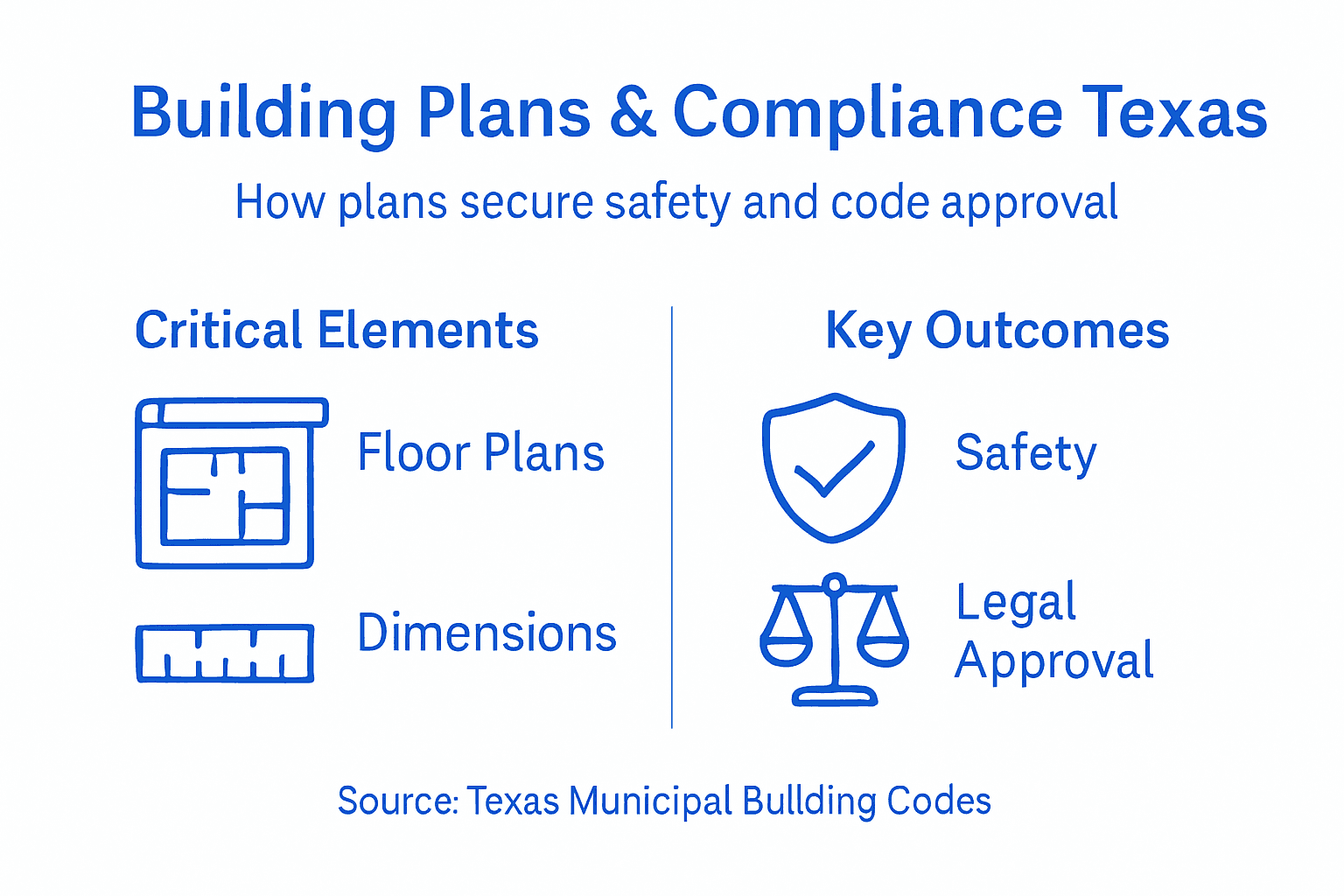
Common pitfalls that destroy budgets fall into several categories. First, underestimating permit fees and inspection costs. Texas cities charge permit fees based on project value, and those fees add up quickly. A 500,000 dollar residential project in Houston might incur 10,000 to 15,000 dollars in permit and inspection fees alone. If you did not budget for this, you are starting your project in the red. Second, insufficient plan coordination that reveals conflicts during construction rather than during design. When your electrical contractor discovers that the plumbing vent stack runs directly through the planned panel location, that conflict requires rework costing thousands. Coordinated plans catch these conflicts during the review phase when fixing them is inexpensive. Third, vague contract language about scope and changes. Without clear definitions, small changes balloon into disputes about whether they are included or billable extras. Fourth, failure to comply with local codes during planning leads to costly delays, rework, and possible legal penalties. Common pitfalls include underestimating permit fees, ignoring required inspections, and insufficient contract clarity, all contributing to increased project costs and risk.
The cost of redesign during construction is brutal. A structural change that requires re-engineering costs hundreds of dollars in professional fees plus thousands in construction labor to tear out and rebuild. An electrical layout change requires new conduit runs, new wire pulls, and potential conflicts with other systems. A plumbing reroute means new pipe runs, new connections, and potential code review. These are not one-time costs either. A change at foundation stage might ripple through framing, mechanical, electrical, and plumbing, multiplying costs across every trade. This is why comprehensive planning upfront prevents catastrophic budget overruns. Your structural engineer spending time analyzing soil conditions and designing appropriate foundations prevents foundation failures and redesigns worth exponentially more.
Hidden costs also appear when inspectors reject work that fails to meet code. A rejected electrical installation requires the electrician to return, identify the violation, fix it, and request re-inspection. Each return trip costs labor plus the electrician’s mobilization. Inspectors do not accept incomplete work either. If your HVAC sizing proves inadequate during mechanical inspection, the entire system must be redesigned and reinstalled. These inspection failures reflect poor planning or incomplete plans that did not specify requirements clearly enough for the contractor to execute correctly the first time.
Pro tip: Build a 10 to 15 percent contingency into your project budget specifically for permit modifications, inspection corrections, and minor field changes discovered during construction, protecting yourself from budget surprises that nearly every project encounters.
Ensure Safety and Compliance with Expert Texas Licensed Engineering Services
Navigating the complex requirements of building plans to secure safety and compliance in Texas can be overwhelming. From detailed structural and foundation inspections to comprehensive permitting and construction plan preparation, the challenges outlined in this article find their solution with seasoned professionals who understand Texas cities’ unique building codes and inspection processes. If you want to avoid costly delays, code violations, and costly redesigns, partnering with experienced engineers is essential.

Don’t leave your project to chance. Get reliable, precise engineering and inspection support tailored to Texas residential and commercial projects including those in Houston, Austin, Dallas, and San Antonio. Visit Texas Licensed Engineers today and explore the value of our services at the Engineering and Inspection Archives – Florida Licensed Engineers. Secure your building plans and construction success with professional assistance right now.
Frequently Asked Questions
What are building plans, and why are they important?
Building plans are detailed technical drawings that serve as a blueprint for construction projects. They are essential for translating the designer’s vision into reality, ensuring safety compliance, providing budget guidance, coordinating construction trades, and offering legal protection for both homeowners and builders.
What types of building plans are commonly required for construction projects?
Common types of building plans include site plans, floor plans, elevation plans, electrical plans, plumbing plans, mechanical plans, and landscaping plans. Each plan addresses specific aspects of construction and must comply with local regulations to ensure proper execution.
How do building plans contribute to safety and code compliance?
Building plans play a critical role in safety and code compliance by documenting that a project adheres to local, state, and national building codes. They provide detailed information needed for inspections and ensure construction practices maintain safety standards throughout the project life cycle.
What are the risks of not having comprehensive building plans?
Not having comprehensive building plans can lead to significant risks, including costly mid-project changes, safety hazards, and delays in permitting and inspections. Incomplete or unclear plans can result in code violations, legal disputes, and budget overruns due to rework and redesigns.
Recommended
- 8 Key Steps for a Texas Residential Construction Checklist – Texas Licensed Engineers | Residential & Commercial
- Architectural Plan Essentials: Ensuring Code Compliance – FloridaLicensedEngineers.com
- Role of Engineers in Texas Projects: Ensuring Safety and Compliance – Texas Licensed Engineers | Residential & Commercial
- Architectural Plan Essentials: Ensuring Code Compliance – Florida Licensed Engineers
