
Role of Engineers in Texas Construction Projects
Most American contractors in cities like Houston and Austin can face costly delays if engineering oversight is not prioritized from the start. With more than fifty percent of project overruns linked to compliance missteps, understanding an engineer’s contribution becomes a direct line to greater efficiency and project safety. This article uncovers the practical benefits and legal protections engineers provide so your next Texas project stays on track and above board.
Table of Contents
- Engineers’ Essential Role in Construction
- Key Types of Engineers in Texas Projects
- Qualifications and Licensing Requirements
- Core Engineering Responsibilities on Site
- Legal, Safety, and Compliance Risks
Key Takeaways
| Point | Details |
|---|---|
| Engineers Ensure Safety and Functionality | Engineers are essential in construction projects, providing expertise in safety, compliance, and project management to create sustainable structures. |
| Diverse Engineering Specialties Collaborate | Various engineering disciplines work together to tackle complex challenges, ensuring projects meet state and local requirements. |
| Licensing is Crucial for Professional Integrity | Engineers in Texas must obtain rigorous licenses to validate their expertise and maintain high safety standards in construction. |
| Comprehensive Risk Management is Essential | Engineers must proactively address legal and safety risks through adherence to regulations and ethical decision-making in project management. |
Engineers’ Essential Role in Construction
In Texas construction projects, engineers serve as the critical architects of safety, functionality, and innovation. Civil engineers play a unique role by designing infrastructure that ensures public welfare through strategic technical expertise. Their responsibilities extend far beyond basic construction tasks, encompassing comprehensive project management, risk assessment, and compliance verification.
Engineers bring sophisticated technical knowledge to construction projects, integrating complex structural design principles with practical implementation strategies. From analyzing soil compositions to calculating load-bearing requirements, they transform theoretical engineering principles into tangible built environments. Their comprehensive understanding of geotechnical analysis, environmental considerations, and structural dynamics allows them to anticipate potential challenges and develop preemptive solutions that maintain project integrity and safety.
The role of engineers in Texas construction projects involves multiple critical dimensions. They conduct detailed site evaluations, develop precise engineering calculations, create comprehensive construction plans, and ensure rigorous adherence to local and state building codes. By applying advanced scientific principles, engineers transform raw project concepts into safe, functional, and sustainable structures that meet both regulatory standards and client expectations.
Pro Tip: Always request a detailed engineering assessment before beginning any construction project to identify potential structural risks and optimize design efficiency.
Key Types of Engineers in Texas Projects
Texas construction projects rely on diverse engineering specialties that collaborate to create complex, safe, and innovative built environments. Civil engineering encompasses multiple disciplines critical to successful project execution, each bringing unique expertise to address different technical challenges. These specialized engineers work together to transform architectural concepts into functional, sustainable structures that meet rigorous state and local requirements.
Five primary engineering types dominate Texas construction projects: Structural Engineers focus on building integrity and load-bearing designs, analyzing materials and structural systems to ensure safety and stability. Geotechnical Engineers specialize in soil mechanics and foundation analysis, critically evaluating ground conditions to prevent potential structural failures. Environmental Engineers address sustainability concerns, developing strategies to minimize ecological impact and ensure projects comply with environmental regulations.

Transportation Engineers design transportation infrastructure like highways, bridges, and traffic systems, while Construction Engineers manage project logistics, coordinate complex construction processes, and implement practical engineering solutions. Advanced engineering specialties contribute unique perspectives that transform raw construction concepts into sophisticated, resilient infrastructure. Each engineer brings specialized knowledge that addresses specific technical challenges, ensuring comprehensive project development and successful implementation.
Here’s a comparison of primary engineering specialties and their focus areas in Texas construction projects:
| Engineering Specialty | Main Focus | Typical Challenge | Real-World Impact |
|---|---|---|---|
| Structural Engineering | Building safety and integrity | Load calculations | Ensures stable, secure buildings |
| Geotechnical Engineering | Soil and foundation analysis | Subsurface variability | Prevents costly foundation issues |
| Environmental Engineering | Eco-friendly project development | Regulatory compliance | Minimizes environmental impact |
| Transportation Engineering | Infrastructure and traffic systems | Space optimization | Improves mobility and safety |
| Construction Engineering | Project logistics and coordination | Schedule constraints | Streamlines construction process |
Pro Tip: Consult multiple engineering specialists during project planning to identify potential interdisciplinary challenges and develop integrated solutions that maximize project efficiency and safety.
Qualifications and Licensing Requirements
Engineering professionals in Texas must navigate a comprehensive and stringent licensing process to practice legally and professionally. The Texas Board of Professional Engineers and Land Surveyors oversees a rigorous system designed to ensure only qualified engineers contribute to the state’s critical infrastructure development. This regulatory framework protects public safety by maintaining high standards of technical competence and professional integrity.
To become a licensed Professional Engineer (PE) in Texas, candidates must complete several critical steps. These include earning a four-year engineering degree from an accredited program, passing the Fundamentals of Engineering (FE) exam, gaining a minimum of four years of professional work experience under a licensed PE, and successfully completing the Professional Engineering (PE) licensing exam. Additional requirements include background checks, character references, and demonstration of ethical professional conduct. Each engineering discipline may have specialized additional requirements specific to its technical complexity.
The licensing process involves multiple layers of evaluation, including comprehensive technical examinations, professional experience verification, and ongoing continuing education requirements. Engineers must maintain their licenses through periodic renewal, which typically involves completing professional development hours and staying current with evolving technological and safety standards. Specialties like structural, civil, environmental, and mechanical engineering each have unique licensing pathways that reflect their distinct technical challenges and responsibilities.
This table summarizes key steps and business significance of Texas engineering licensing:
| Licensing Step | Purpose | Business Significance |
|---|---|---|
| Accredited Engineering Degree | Foundation knowledge | Ensures technical competence |
| Fundamentals of Engineering Exam | Demonstrates proficiency | Filters qualified candidates |
| Four Years Work Experience | Practical application | Builds trusted professional expertise |
| Professional Engineering Exam | Validates advanced skill | Safeguards critical infrastructure |
| Ongoing Renewal & Education | Updates skills | Maintains safety and compliance |
Pro Tip: Begin documenting your professional experience and academic credentials early in your engineering career to streamline the complex licensing application process.
Core Engineering Responsibilities on Site
Texas construction projects demand comprehensive oversight and technical expertise from engineers who manage complex project requirements. Civil engineers manage critical site responsibilities that go far beyond simple project supervision, ensuring every aspect of construction meets rigorous professional standards. Their role involves continuous monitoring, precise technical assessment, and strategic coordination across multiple project dimensions.
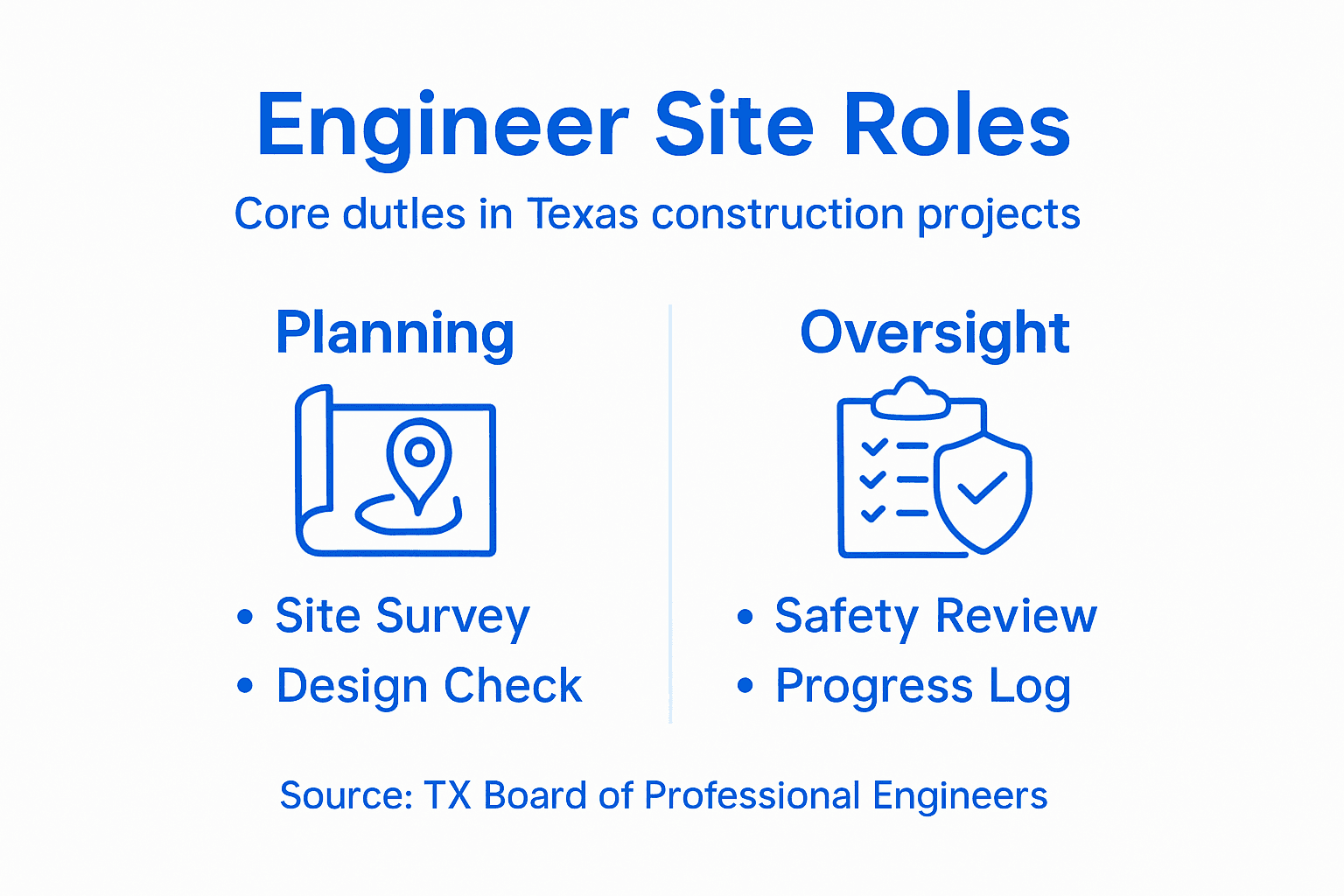
Site Surveying and Analysis represents a fundamental engineering responsibility, where professionals conduct detailed ground assessments, analyze soil conditions, and develop comprehensive infrastructure designs. Engineers must evaluate environmental factors, structural load requirements, and potential geological challenges before and during construction. This process involves advanced technical measurements, geological mapping, and creating precise architectural plans that account for Texas’s unique environmental conditions.
Construction engineering integration requires engineers to coordinate multiple project elements simultaneously. Their responsibilities include managing contractor interactions, verifying material quality, ensuring compliance with local and state building codes, and maintaining detailed documentation of all project activities. Technical expertise allows engineers to anticipate potential challenges, develop contingency plans, and implement innovative solutions that optimize project efficiency and safety.
Pro Tip: Develop a comprehensive digital documentation system that tracks all site measurements, design modifications, and compliance checks to streamline project management and reduce potential administrative errors.
Legal, Safety, and Compliance Risks
Engineering professionals in Texas face complex legal and safety challenges that demand meticulous attention to regulatory requirements. Professional engineers navigate significant legal responsibilities that extend beyond technical expertise, involving critical ethical and safety considerations. Their decisions directly impact public welfare, making comprehensive risk management an essential aspect of project development.
Regulatory Compliance represents a critical dimension of engineering practice, with potential legal consequences for noncompliance. Engineers must maintain strict adherence to state and local building codes, safety standards, and professional conduct guidelines. Potential risks include professional liability, project shutdown, financial penalties, and potential license suspension if regulatory violations occur. Each engineering decision requires careful documentation and verification to mitigate potential legal vulnerabilities.
Ethical decision making becomes paramount in managing construction project risks. Engineers must balance innovative design approaches with stringent safety protocols, ensuring that technological advancements do not compromise structural integrity or public safety. This involves continuous professional education, rigorous site inspections, comprehensive risk assessments, and maintaining transparent communication with stakeholders about potential project challenges.
Pro Tip: Develop a comprehensive risk management checklist that includes regulatory compliance verification, safety protocol documentation, and potential scenario planning to proactively address legal and safety challenges.
Ensure Your Texas Construction Project Thrives with Expert Engineering Support
The role of engineers in Texas construction projects is vital for ensuring safety, compliance, and long-term stability. From structural design and foundation inspections to managing regulatory risks and environmental considerations engineers solve complex challenges that can make or break your project. Avoid costly delays and potential hazards by working with licensed professionals who understand Texas codes and industry best practices.

Discover comprehensive solutions tailored for residential and commercial projects at Texas Licensed Engineers. Our services include detailed construction plans, forensic investigations for flood damage and accidents, engineering calculations, and more. Explore real-world expertise and client success stories in our TLE Archives – Texas Licensed Engineers | Residential & Commercial to understand how we can protect your investment and streamline your project from start to finish.
Take the first step now to secure reliable engineering guidance that matches the critical responsibilities highlighted in the article. Visit https://texaslicensedengineers.com and schedule your consultation today.
Frequently Asked Questions
What is the role of engineers in Texas construction projects?
Engineers play a critical role in Texas construction projects by ensuring safety, functionality, and compliance through their technical expertise. They manage project challenges, conduct risk assessments, and develop comprehensive construction plans.
What are the main types of engineers involved in Texas construction projects?
The main types of engineers include Structural Engineers, Geotechnical Engineers, Environmental Engineers, Transportation Engineers, and Construction Engineers. Each specializes in different aspects of construction, ensuring comprehensive project execution.
What are the qualifications needed to become a licensed engineer in Texas?
To become a licensed Professional Engineer in Texas, candidates must earn a four-year engineering degree, pass the Fundamentals of Engineering exam, gain work experience under a licensed PE, and pass the Professional Engineering licensing exam.
Why is regulatory compliance important for engineers in construction projects?
Regulatory compliance is crucial because engineers must adhere to local and state building codes and safety standards. Noncompliance can result in legal consequences, project shutdowns, and financial penalties.
Recommended
- Role of Engineers in Texas Projects: Ensuring Safety and Compliance – Texas Licensed Engineers | Residential & Commercial
- Commercial Engineering: Impact on Texas Projects – Texas Licensed Engineers | Residential & Commercial
- Why Use Licensed Engineers in Texas Projects – Texas Licensed Engineers | Residential & Commercial
- What Is Civil Engineering and Its Impact on Texas Homes – Texas Licensed Engineers | Residential & Commercial
- Pool Construction Process Explained for Texas Homeowners
