
Home Inspection vs Engineering Inspection: Key Differences for Texas Homeowners
Most American homeowners in cities like Houston and Austin face a tough decision when planning renovations. Choosing between a home inspection and an engineering inspection can impact project safety and long-term costs. With engineering inspections costing up to three times more than standard home checks, understanding which service fits your unique situation is crucial. This guide explains the essential differences, helping you make confident choices about protecting your Texas property investment.
Table of Contents
- Defining Home Inspections And Engineering Inspections
- Types Of Inspections: Purpose And Scope
- Inspection Qualifications And Texas Regulations
- When To Choose An Engineer Vs Inspector
- Costs, Risks, And Common Pitfalls
Key Takeaways
| Point | Details |
|---|---|
| Home Inspections vs. Engineering Inspections | Home inspections provide a general overview of a property’s condition, while engineering inspections offer detailed structural analysis and compliance assessments. |
| Inspection Purpose | Home inspections are typically used for routine evaluations, whereas engineering inspections are recommended for properties with specific risks or serious structural concerns. |
| Cost Considerations | Home inspections are generally less expensive, ranging from $300 to $500, while engineering inspections range from $500 to $1,500 due to their comprehensive nature. |
| Regulatory Standards | Both home inspectors and professional engineers in Texas must meet strict state licensing requirements to ensure quality and safety in property assessments. |
Defining Home Inspections and Engineering Inspections
Understanding the distinct roles of home inspections and engineering inspections is crucial for Texas homeowners planning property assessments. A home inspection is a comprehensive visual examination of a property’s accessible areas, designed to identify visible defects and potential issues at a specific point in time. Home inspections focus on evaluating residential property conditions according to established professional standards.
While home inspections provide a general overview of a property’s condition, engineering inspections offer a more technical and specialized assessment. Licensed engineers conduct deeper, more comprehensive evaluations that go beyond visual examinations. These inspections involve detailed structural analysis, technical measurements, and compliance assessments with building codes and safety regulations. Engineering inspections are typically more invasive and technically rigorous than standard home inspections, often requiring specialized equipment and advanced diagnostic techniques.
Key differences between these two inspection types include scope, depth of analysis, and professional qualifications. Home inspectors typically examine visible systems and components like electrical, plumbing, roofing, and general structural elements. Engineering inspections, by contrast, provide forensic-level assessments that can diagnose complex structural problems, assess potential risks, and recommend precise remediation strategies. These comprehensive evaluations are particularly important for older homes, properties with known structural issues, or buildings requiring significant renovation.
Pro tip: Always request sample reports from your inspector to understand the depth and specificity of their assessment before scheduling an inspection.
Types of Inspections: Purpose and Scope
Texas homeowners encounter multiple types of property inspections, each serving a unique purpose and providing different levels of assessment. Home inspections represent the most common type, typically conducted during real estate transactions to evaluate a property’s general condition. These standard inspections cover visible systems like electrical, plumbing, roofing, and foundational elements, offering a broad overview of potential maintenance needs or existing issues.
Engineering inspections, by contrast, represent a more specialized and technical assessment. Building inspections by licensed engineers are comprehensive evaluations that go beyond visual examinations, focusing on structural integrity, compliance with building codes, and potential safety risks. These inspections often involve specialized diagnostic techniques, advanced measurement tools, and in-depth technical analysis that can uncover complex structural problems not apparent during standard home inspections.
The scope of inspections varies significantly based on their specific type and purpose. Some common inspection categories include:
- Baseline Home Inspections: Standard assessments for real estate transactions
- Structural Engineering Inspections: Detailed evaluations of building foundations, load-bearing elements, and structural integrity
- Foundation Inspections: Specialized assessments of ground settlement, potential shifting, and structural support systems
- Renovation Inspections: Technical reviews of proposed or completed renovation work to ensure compliance and safety
- Forensic Inspections: Detailed investigations of specific property damage, structural failures, or potential construction defects
Pro tip: Request detailed sample reports from different inspection types to understand the varying levels of assessment and technical depth available for your specific property needs.
Inspection Qualifications and Texas Regulations
Texas maintains rigorous regulatory standards for home and engineering inspections to protect homeowners and ensure professional competence. Home inspectors must be licensed by the Texas Real Estate Commission through a comprehensive certification process that includes extensive training and examination. The licensing framework includes three distinct levels: Apprentice Inspector, Real Estate Inspector, and Professional Real Estate Inspector, each with specific requirements for practice and supervision.
Professional engineers undergo an equally stringent credentialing process regulated by the Texas Board of Professional Engineers and Land Surveyors. Professional engineering licenses require strict educational and examination standards to practice in Texas, with special emphasis on structural assessment and public safety compliance. Engineers must demonstrate advanced technical knowledge, pass comprehensive state-level examinations, and maintain continuous professional development to retain their licensing status.
The certification requirements for different inspection types vary significantly:
-
Home Inspector Qualifications:
- 154 classroom hours of specialized training
- 40 hours of practical experience
- Mandatory state examination
- Biennial license renewal
- Continuing education requirements
-
Professional Engineer Qualifications:
- Advanced engineering degree
- Comprehensive state licensing examination
- Documented professional experience
- Ongoing technical education
- Strict adherence to professional conduct standards
These regulatory frameworks ensure that Texas homeowners receive high-quality, professional inspections from qualified experts who understand the state’s unique structural and environmental challenges.
Pro tip: Always verify an inspector’s current license status and credentials through official Texas state licensing websites before scheduling an inspection.
When to Choose an Engineer vs Inspector
Home inspectors and professional engineers serve different but complementary roles in assessing property conditions. While home inspectors provide general visual assessments, professional engineers offer specialized technical evaluations that address complex structural and safety concerns. Understanding the specific scenarios where each professional is most appropriate can help Texas homeowners make informed decisions about their property assessments.
Standard home inspections are typically recommended for routine real estate transactions, general property condition evaluations, and identifying visible maintenance issues. These inspections cover basic systems like electrical, plumbing, roofing, and foundational elements. In contrast, professional engineering inspections become crucial when more comprehensive technical analysis is required, particularly for properties with potential structural complexities or significant renovation needs.
Critical scenarios that demand a professional engineer’s expertise include:
- Suspected foundation shifting or settlement
- Significant structural damage from natural disasters
- Complex renovation or remodeling projects
- Older homes with potential structural integrity issues
- Properties with unique architectural designs
- Commercial property assessments
- Legal compliance and certification requirements
- Detailed forensic investigations of structural problems
Key differences in assessment approach:
Home Inspector:
- Visual examination
- General condition assessment
- Standard residential property focus
- Limited technical depth
Professional Engineer:
- Detailed technical analysis
- Structural integrity evaluation
- Advanced diagnostic techniques
- Comprehensive safety assessments
- Legal and compliance certification
Pro tip: Request a preliminary home inspection first, and if any complex issues are identified, schedule a professional engineering assessment for in-depth technical evaluation.
Here’s a concise overview of when to use each type of inspection in Texas:
| Scenario or Need | Home Inspection | Engineering Inspection |
|---|---|---|
| Routine real estate sale | Most appropriate | Not typically needed |
| Suspected foundation issue | May recommend further review | Essential for diagnostics |
| Older property assessment | Suitable for general issues | Critical for structural analysis |
| Major renovations planned | Limited evaluation | Provides technical review |
| Legal or compliance requirement | Not usually sufficient | Often required by law |
Costs, Risks, and Common Pitfalls
Home inspection costs and risks vary significantly between standard home inspections and professional engineering assessments. Homeowners should understand that while home inspections are typically less expensive, they provide only a surface-level evaluation of a property’s condition. A standard home inspection might range from $300 to $500, whereas a comprehensive engineering inspection can cost between $500 and $1,500, depending on the property’s complexity and specific assessment requirements.
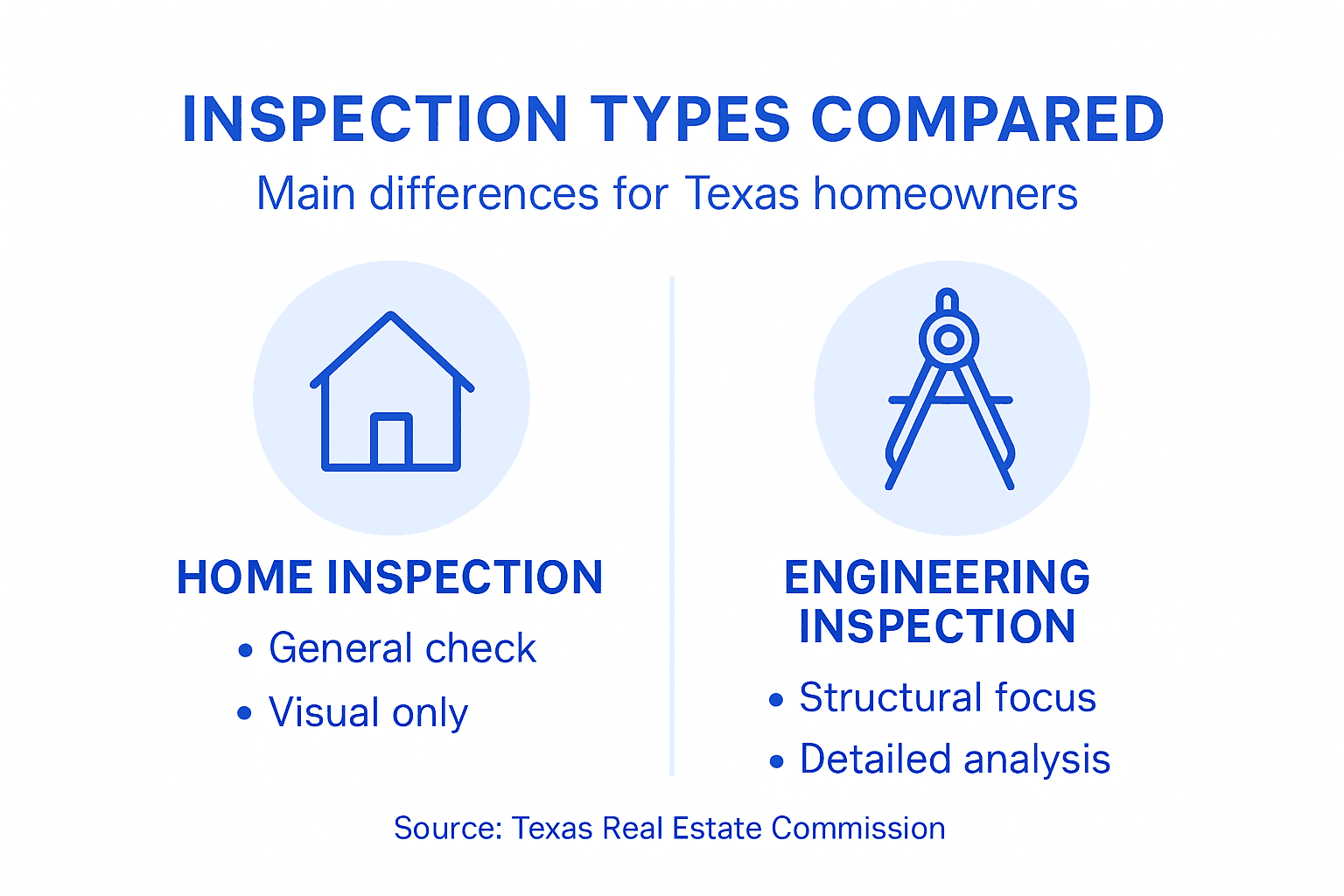
The primary risks associated with property inspections stem from their inherent limitations. Home inspections are visual examinations that cannot guarantee a property’s future condition or uncover deeply hidden structural issues. Professional engineering inspections offer more in-depth analysis but come with higher costs and more extensive technical evaluations. Texas homeowners must carefully consider the potential long-term expenses of overlooking critical structural problems against the upfront investment in a more comprehensive inspection.
Common pitfalls that Texas homeowners should avoid include:
- Misunderstanding inspection scope and limitations
- Confusing inspections with building code compliance
- Assuming visual inspections reveal all potential issues
- Delaying necessary specialized inspections
- Ignoring recommended follow-up assessments
- Selecting inspectors based solely on price
- Failing to review inspection reports thoroughly
- Overlooking potential future maintenance needs
Cost and risk comparison:
Home Inspection:
- Lower cost ($300-$500)
- Visual assessment only
- Limited technical depth
- Suitable for general property evaluation
Engineering Inspection:
- Higher cost ($500-$1,500)
- Comprehensive technical analysis
- Detailed structural assessment
- Critical for complex property issues
Pro tip: Request a detailed cost breakdown and scope of work from both home inspectors and engineers before scheduling an inspection to understand exactly what services are included.
Here is a snapshot comparison of typical costs and risk coverage for each inspection type:
| Inspection Type | Price Range | Level of Risk Detection |
|---|---|---|
| Home Inspection | $300–$500 | Basic, visual-only |
| Engineering Inspection | $500–$1,500 | Advanced, in-depth analysis |
Choose the Right Inspection with Confidence for Your Texas Property
Understanding the critical differences between home inspections and engineering inspections is the first step to protecting your investment and ensuring your property’s safety. If you are facing concerns like foundation issues, structural repairs, or complex renovations, relying on a professional engineering assessment is essential. Texas homeowners deserve expert evaluations that go beyond surface-level reviews to uncover hidden risks and provide clear solutions.
Texas Licensed Engineers | Residential & Commercial offers trusted, licensed engineering services tailored to the unique needs of Texas homes and commercial properties.

Don’t leave your property’s structural integrity to chance. Visit texaslicensedengineers.com today to connect with experts who can deliver thorough foundation inspections, forensic investigations, and detailed construction plans. Take action now for peace of mind backed by technical expertise and state-of-the-art evaluations.
Frequently Asked Questions
What is the main difference between a home inspection and an engineering inspection?
Home inspections are visual assessments of a property’s general condition, focusing on visible systems like electrical, plumbing, and roofing. Engineering inspections involve more technical evaluations that assess structural integrity, compliance with codes, and safety risks, often requiring specialized equipment and techniques.
When should I choose an engineering inspection over a home inspection?
Choose an engineering inspection if you suspect complex structural issues, are evaluating an older property, or need detailed analysis for significant renovations. Engineering inspections are also essential for legal compliance or when dealing with properties with unique architectural designs.
What qualifications do home inspectors and engineers need in Texas?
Home inspectors in Texas must be licensed by the Texas Real Estate Commission after completing specific training hours and passing an exam. Professional engineers must have an advanced engineering degree, pass a state licensing exam, and meet ongoing education requirements to ensure their expertise in technical assessments.
How much do home inspections and engineering inspections cost?
Home inspections typically cost between $300 and $500, providing a general overview of the property. In contrast, engineering inspections are more comprehensive and can range from $500 to $1,500 due to the detailed analysis and technical evaluation involved.
Recommended
- Residential Inspection in Texas – Safeguarding Homebuyers – Texas Licensed Engineers | Residential & Commercial
- Why Get Engineering Services in Texas Homes – Texas Licensed Engineers | Residential & Commercial
- Commercial vs Residential Engineering: Key Differences in Texas – Texas Licensed Engineers | Residential & Commercial
- What Is Residential Engineering and Why Texas Homes Rely on It – Texas Licensed Engineers | Residential & Commercial
