
How to Select Engineering Services for Texas Projects
Most American homeowners and contractors across Texas know that choosing the right engineering partner can define the success of any residential project. With Houston, Austin, Dallas, and San Antonio all experiencing intense weather and frequent flooding, structural safety is more urgent than ever. Proper planning and evaluation are essential to avoid common setbacks and safeguard your home or investment. This guide offers actionable steps to help you select qualified engineering expertise tailored to Texas-specific flood and foundation challenges.
Table of Contents
- Step 1: Define Your Project Requirements
- Step 2: Research Texas-Licensed Engineering Firms
- Step 3: Evaluate Firm Credentials and Experience
- Step 4: Review Service Proposals and Timelines
- Step 5: Verify Compliance and Customer Reviews
- Step 6: Confirm Final Selection and Contract Terms
Quick Summary
| Key Insight | Explanation |
|---|---|
| 1. Define Clear Project Requirements | Document the specific scope and details of your project to ensure everyone understands your needs clearly. |
| 2. Research Licensed Engineering Firms | Use official Texas resources to verify the credentials and qualifications of potential engineering firms before selection. |
| 3. Evaluate Firm Experience Thoroughly | Assess the professional credentials and past project experience of firms to ensure they match your specific project needs. |
| 4. Analyze Proposals Carefully | Review engineering proposals in detail, focusing on clarity, cost, and alignment with project requirements. |
| 5. Verify Compliance and Reputation | Check licensing, disciplinary records, and customer reviews to gauge firm reliability and professionalism before finalizing selection. |
Step 1: Define your project requirements
Selecting the right engineering services starts with crystal clear project requirements. Your goal in this initial step is to create a comprehensive roadmap that communicates exactly what you need from your Texas engineering team.
Begin by documenting the specific scope of your project with meticulous detail. Whether you’re planning a residential foundation repair in Houston or a drainage assessment in Austin, you’ll want to outline precise parameters. This includes identifying the exact location, understanding potential environmental challenges, and determining your project’s technical specifications. The Project Development Process Manual by TxDOT recommends comprehensive pre-construction planning to ensure confidence in project estimates and schedules.
Break down your project requirements into clear categories: structural needs, timeline expectations, budget constraints, and any unique site-specific considerations. For Texas residential projects, this might mean accounting for local flood risks, soil conditions, or specific municipal building codes. Consider creating a detailed checklist that includes measurements, potential environmental impacts, required permits, and any specialized engineering expertise you’ll need.
Your next step will involve reviewing these requirements with potential engineering service providers to ensure they can meet your specific needs. Be prepared to discuss your documented requirements in detail and ask clarifying questions about their approach and capabilities.
Pro tip: Keep your project requirements document flexible yet specific, allowing room for professional engineering input while maintaining clear project boundaries.
Step 2: Research Texas-licensed engineering firms
Finding the right engineering firm requires strategic research to ensure you select a fully qualified and legally authorized professional team for your Texas project. Your mission is to identify licensed engineers who can confidently address your specific structural or residential engineering needs.
Start by consulting the official Texas Board of Professional Engineers roster, which provides comprehensive verification of licensed professional engineers and registered engineering firms across Texas. These official rosters help you confirm that potential engineering teams meet state regulatory requirements and have valid credentials. The Texas Society of Professional Engineers offers additional search tools that can help you find reputable firms with verified professional affiliations in major Texas cities like Houston, Austin, Dallas, and San Antonio.
When researching potential engineering firms, compile a list of key criteria to evaluate their qualifications. Look for firms with specific experience in your project type such as foundation assessments, flood damage evaluations, or residential structural inspections. Review their professional licenses, check their standing with state engineering boards, examine past project portfolios, and verify their expertise in addressing Texas specific environmental challenges like flood risks and soil conditions.
Your next step involves creating a shortlist of qualified engineering firms and preparing to conduct initial consultations to discuss your specific project requirements in more depth.
Pro tip: Always cross reference engineering firm credentials using multiple official sources to ensure comprehensive verification of their professional standing.
Step 3: Evaluate firm credentials and experience
Evaluating engineering firm credentials goes beyond surface level research it requires a comprehensive and strategic approach to understanding their true professional capabilities. Your goal is to dig deep into their professional background and verify their ability to handle your specific Texas project needs.
Start by examining the comprehensive list of top engineering firms in Texas, which provides insights into firms with extensive experience in sectors like infrastructure, energy, and specialized residential engineering. Pay close attention to firms that demonstrate a proven track record in projects similar to yours. Look for specific indicators of expertise such as years of operational experience, specific project portfolios, technical certifications, and their ability to address Texas specific engineering challenges like flood mitigation, foundation assessments, and site development.

When evaluating credentials, create a detailed assessment matrix that includes key evaluation criteria. This should encompass professional licensing status, professional society memberships, academic credentials of key team members, project complexity history, client testimonials, and their demonstrated expertise in handling projects within your specific geographic region. Consider requesting references from previous clients who have completed projects similar in scope and complexity to your own. Verify their professional standing with state engineering boards and look for any additional specialized certifications that demonstrate advanced technical capabilities.
Your next step involves comparing your shortlisted firms based on these comprehensive evaluation criteria and preparing for initial consultation meetings to discuss your specific project requirements.
Pro tip: Request and carefully review detailed project case studies that demonstrate the engineering firm’s direct experience with challenges similar to your specific Texas project requirements.
Step 4: Review service proposals and timelines
Reviewing engineering service proposals is a critical step that requires careful analysis and strategic evaluation to ensure your Texas project meets its technical and financial objectives. Your goal is to transform these proposals from complex documents into clear roadmaps for project success.
Begin by carefully examining the engineering proposal and selection process, which outlines a disciplined approach to comparing and assessing potential engineering service offerings. Pay close attention to how each proposal addresses your specific project requirements. Look for comprehensive details that demonstrate the firm’s understanding of your project scope including precise project timelines, detailed deliverables, cost breakdowns, and technical approach. Scrutinize each proposal for clarity on project milestones, potential challenges specific to Texas engineering environments like flood zone considerations or soil stability issues, and the proposed team’s qualifications.
Create a systematic comparison matrix to objectively evaluate each proposal. This matrix should include key evaluation criteria such as project understanding, technical expertise, proposed timeline accuracy, cost effectiveness, experience with similar Texas projects, and the proposed team’s specific qualifications. Consider not just the lowest price but the overall value proposition. Assess how well each proposal addresses potential local engineering challenges unique to your specific location such as drainage issues, foundation requirements, or municipal code compliance.
Your next step involves scheduling detailed follow up discussions with the top ranked proposal providers to clarify any questions and confirm the proposed approach matches your project vision.
Pro tip: Request a detailed risk assessment and contingency planning section within each proposal to understand how the engineering firm anticipates and mitigates potential project complications.
Step 5: Verify compliance and customer reviews
Verifying an engineering firm’s compliance and reputation is the final critical step in selecting the right professional team for your Texas project. Your goal is to transform potential risks into confidence by thoroughly investigating the firm’s professional standing and real world performance.
Begin by consulting the official Texas Board of Professional Engineers roster, which provides a comprehensive and daily updated verification system for engineering licenses and professional credentials. This official resource allows you to confirm an engineering firm’s legal authorization to practice in Texas, check their current license status, and review any potential disciplinary records. Beyond the official roster, expand your research to include customer reviews professional references and detailed background checks that reveal the firm’s actual performance history.
Create a comprehensive verification checklist that goes beyond basic compliance. This should include validating professional licenses, checking state board records, reviewing professional insurance coverage, examining past project outcomes, and gathering detailed customer testimonials. Pay special attention to reviews from projects similar to yours in Texas considering factors like technical expertise local knowledge project management skills and ability to navigate specific regional engineering challenges. Look for consistent patterns in customer feedback that demonstrate the firms reliability professionalism and technical competence.
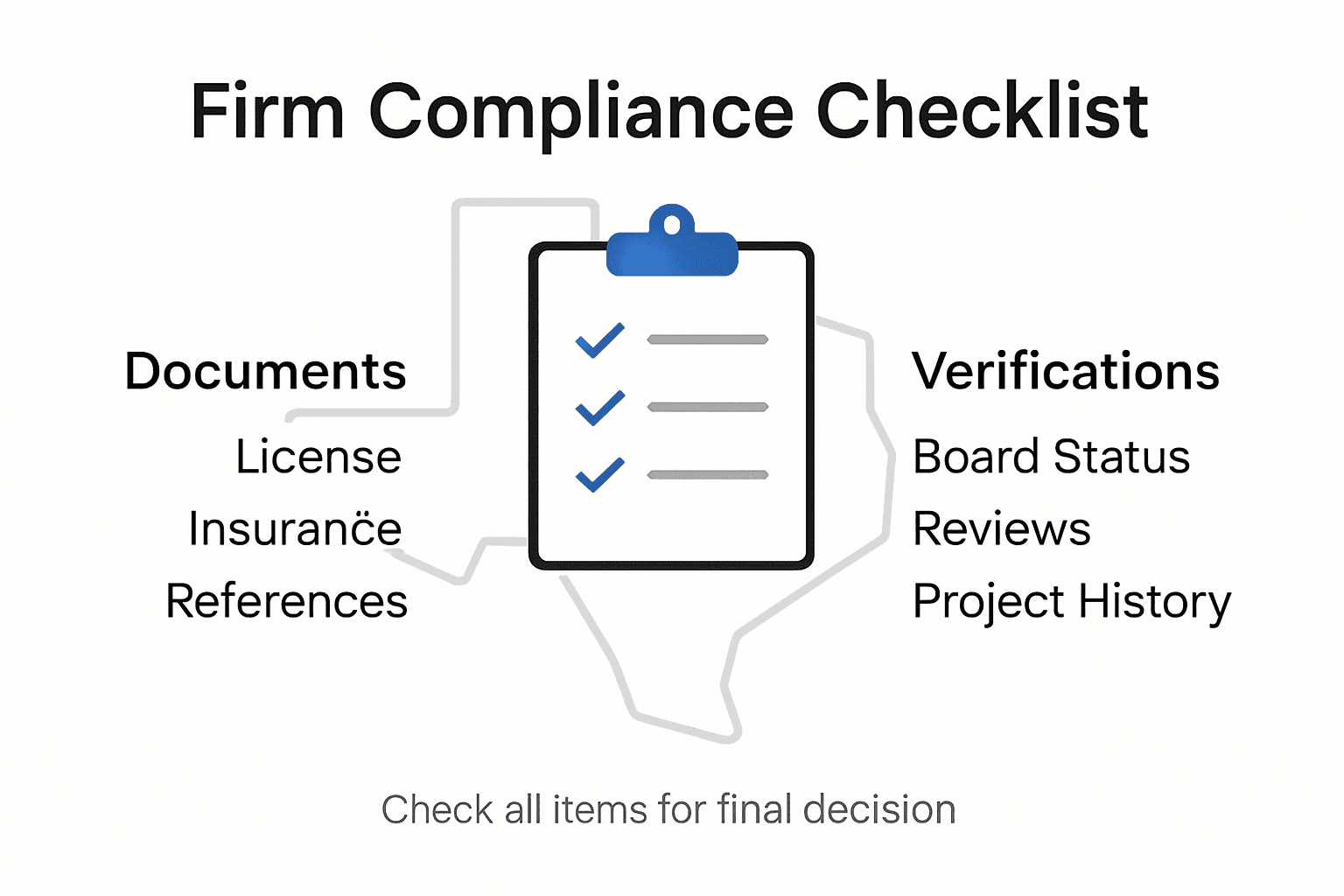
Your next step involves synthesizing all gathered information to make a final informed decision about which engineering firm best meets your project requirements.
Pro tip: Request and independently verify references from projects completed in your specific Texas region to gain the most relevant insights into the engineering firm’s local performance capabilities.
Step 6: Confirm final selection and contract terms
Selecting the right engineering firm culminates in a detailed contract negotiation that protects both your project interests and ensures legal compliance. Your goal is to transform your carefully researched selection into a precise and comprehensive professional agreement.
Review the Texas Professional Services Procurement Act guidelines, which mandates that engineering service contracts be awarded based on demonstrated competence and qualifications rather than simply lowest cost. Carefully examine the proposed contract to ensure it includes comprehensive details about project scope, specific deliverables, precise timelines, fee structures, and compliance with Texas state regulations. Pay particular attention to sections addressing potential project modifications, payment schedules, liability provisions, and performance expectations specific to your unique engineering project requirements.
Negotiate contract terms that provide clear protections and expectations for both parties. This includes establishing milestone payments tied to specific project achievements, defining exact responsibilities for each phase of the project, outlining communication protocols, and incorporating flexibility for potential unexpected challenges. Consider including provisions for regular project reviews, performance metrics, and mechanisms for addressing any potential disputes or unexpected complications that might arise during your Texas engineering project.
Your next step involves a final careful review of all contract details with potential legal consultation to ensure complete understanding and protection of your project interests.
Pro tip: Request a detailed contingency clause that specifically addresses potential Texas environmental challenges like flood risks or soil instability to protect your project investment.
This table highlights typical Texas engineering project challenges and recommended evaluation factors:
| Project Challenge | Example Impact | Key Firm Evaluation Factor |
|---|---|---|
| Flood Risk | Site drainage complications | Local hydrology expertise |
| Soil Conditions | Foundation instability | Geotechnical experience |
| Code Compliance | Permitting delays | Knowledge of municipal codes |
| Timeline Delays | Project overruns | Proven project management |
Here is a summary comparing key steps in selecting a Texas engineering firm:
| Step | Primary Focus | Key Outcome |
|---|---|---|
| Define Project | Document scope and needs | Clear project requirements |
| Research Firms | Identify licensed candidates | Shortlist qualified firms |
| Evaluate Credentials | Assess experience and expertise | Ranking of firm suitability |
| Review Proposals | Analyze proposals and costs | Select top candidates |
| Verify Compliance | Check licensing and reputation | Confirm professional integrity |
| Finalize Contract | Negotiate terms and protections | Secure legal agreement |
Find Trusted Texas Engineering Services Tailored to Your Project Needs
Selecting the right engineering service for your Texas project means overcoming crucial challenges like flood risk evaluation, foundation stability, and compliance with local codes. If you want to avoid costly delays or unexpected site complications you must partner with experts who truly understand Texas conditions. This article highlights key steps such as defining clear project requirements and verifying firm credentials to help you confidently move forward.

Ready to turn your engineered vision into reality with licensed professionals? Discover trusted local support for residential and commercial projects including structural inspections, construction plans, permitting, and forensic investigations. Explore how our Texas licensed engineers can assist you at texaslicensedengineers.com. To dive deeper into the selection process see our Uncategorized Archives – Pennsylvania Licensed Engineers and explore insights relevant across states. Take action today to ensure your Texas project has the professional expertise it deserves.
Frequently Asked Questions
How can I define my project requirements for Texas engineering services?
Start by documenting the specific scope of your project, including location, environmental challenges, and technical specifications. Create a detailed checklist that outlines structural needs, timeline expectations, and any site-specific considerations to ensure clarity in your communication with engineering firms.
What should I look for when researching Texas-licensed engineering firms?
Focus on identifying firms that are legally authorized to practice and have experience relevant to your project type. Review their credentials through official registries, assess their track record with similar projects, and compile a list of firms based on their qualifications and past performance.
How do I evaluate the credentials and experience of engineering firms?
Examine each firm’s professional history, including years of experience and past project portfolios. Create an assessment matrix to compare their licenses, memberships, client testimonials, and expertise in addressing local engineering challenges, which will help you rank their suitability for your project.
What key elements should I analyze in engineering service proposals?
Carefully review how each proposal outlines project timelines, deliverables, and costs, ensuring it aligns with your specific requirements. Use a systematic comparison matrix to evaluate each proposal based on project understanding, technical expertise, and overall value, rather than just price.
How can I verify the compliance and reputation of an engineering firm?
Conduct thorough checks on their licensing status and look for customer reviews to gauge their performance history. Create a verification checklist that includes validating licenses, examining previous project outcomes, and gathering client testimonials to ensure the firm meets your expectations.
What should be included in the final contract with the chosen engineering firm?
Ensure the contract clearly details project scope, timelines, fee structures, and compliance with state regulations. Negotiate terms that include milestone payments, communication protocols, and provisions for addressing potential project challenges, which will protect both your interests and those of the firm.
Recommended
- How to Choose Texas Engineering Firm for Your Project – Texas Licensed Engineers | Residential & Commercial
- Defining Civil Engineering Services in Texas Homes – Texas Licensed Engineers | Residential & Commercial
- Why Get Engineering Services in Texas Homes – Texas Licensed Engineers | Residential & Commercial
- Structural Engineering Guide 2025 for Texas Projects – Texas Licensed Engineers | Residential & Commercial

