
Residential Inspection in Texas – Safeguarding Homebuyers
Most American buyers in Houston and Austin encounter surprises when they discover that nearly 90 percent of properties need some form of repair, large or small, after inspection. For Texas homeowners, understanding what a residential inspection reveals can mean the difference between peace of mind and costly headaches. This guide breaks down the essential steps and standards every buyer should know before closing on their next American dream home.
Table of Contents
- What Is a Residential Inspection in Texas?
- Types of Home Inspections and Their Purposes
- Residential Inspection Process: Step-by-Step
- Legal Requirements and Texas Standards
- Risks, Costs, and What to Avoid
Key Takeaways
| Point | Details |
|---|---|
| Comprehensive Assessments | Residential inspections provide essential evaluations of a property’s condition and safety before purchase. |
| Specialized Inspection Types | Homebuyers can choose from various inspection types to address specific property concerns, including structural and environmental evaluations. |
| Professional Standards | Inspectors must be licensed by the Texas Real Estate Commission, ensuring they meet educational and professional criteria. |
| Cost and Investment | Inspection costs typically range from $300 to $500, offering significant savings by identifying potential issues before finalizing a home purchase. |
What Is a Residential Inspection in Texas?
A residential inspection in Texas is a comprehensive, professional evaluation designed to assess the condition and safety of a property before purchase. Conducted by licensed professionals regulated by the Texas Real Estate Commission (TREC), these inspections provide potential homebuyers with critical insights into a property’s structural integrity and potential issues. Home inspections serve as an essential safeguard, helping buyers understand exactly what they are investing in before making one of the most significant financial decisions of their lives.
Under Texas regulations, a residential inspection involves a detailed, non-invasive visual examination of a property’s key systems and components. Certified inspectors meticulously examine structural elements, electrical systems, plumbing, roofing, foundations, and other critical areas to identify material defects that could impact the home’s value or safety. These professionals undergo rigorous training, including 154 classroom hours of specialized Texas inspector modules and 40 hours of hands-on practicum, ensuring they have the expertise to conduct thorough assessments.
The inspection report produced provides a snapshot of the property’s current condition, highlighting any existing problems or potential maintenance concerns. While the assessment cannot predict future issues, it offers buyers a transparent view of the home’s condition at the time of inspection. This documentation becomes a crucial tool for negotiating repairs, understanding potential future investments, or even deciding whether to proceed with a property purchase.
Pro tip: Always attend the residential inspection in person to ask questions and gain firsthand insights about the property’s condition directly from the licensed professional inspector.
Types of Home Inspections and Their Purposes
Texas homeowners and potential buyers can choose from several specialized home inspection types designed to address specific property concerns. While a general home inspection provides a comprehensive overview of a property’s condition, targeted inspections offer deeper insights into particular aspects of residential structures. These specialized evaluations help identify potential problems that might not be apparent during standard assessments, giving homeowners and buyers a more complete understanding of a property’s condition.
The primary types of home inspections in Texas include general property inspections, structural assessments, electrical system evaluations, plumbing inspections, and specialized environmental inspections. Structural inspections focus on the building’s foundational elements, examining load-bearing walls, roof framing, and potential structural weaknesses. Electrical system inspections verify the safety and functionality of wiring, circuit breakers, and overall electrical infrastructure. Plumbing inspections check for potential leaks, pipe condition, water pressure, and drainage system effectiveness.
Environmental inspections represent a critical category of specialized assessments. These include radon testing, mold evaluation, pest inspections, and health and safety assessments that identify potential hazards affecting residential properties. Radon testing detects potentially dangerous radioactive gas levels, while mold inspections assess moisture-related risks. Pest inspections help identify potential structural damage from termites, rodents, or other invasive organisms, providing homeowners with crucial information about potential long-term property maintenance challenges.
Pro tip: Consider scheduling multiple specialized inspections simultaneously to save time and potentially negotiate a comprehensive inspection package with your licensed professional inspector.
Here’s a summary comparing the most common types of home inspections in Texas:
| Inspection Type | Main Focus Area | Typical Findings | When to Consider |
|---|---|---|---|
| General Home | All major systems | Overall condition, issues | Most property sales |
| Structural | Foundation, framing | Shifting, cracks | Older homes, visible issues |
| Electrical System | Wiring, panels | Outdated/faulty circuits | After renovations |
| Plumbing | Pipes, fixtures | Leaks, water pressure | Noted stains or leaks |
| Environmental | Mold, radon, pests | Hazards, infestations | Allergies, musty odor |
Residential Inspection Process: Step-by-Step
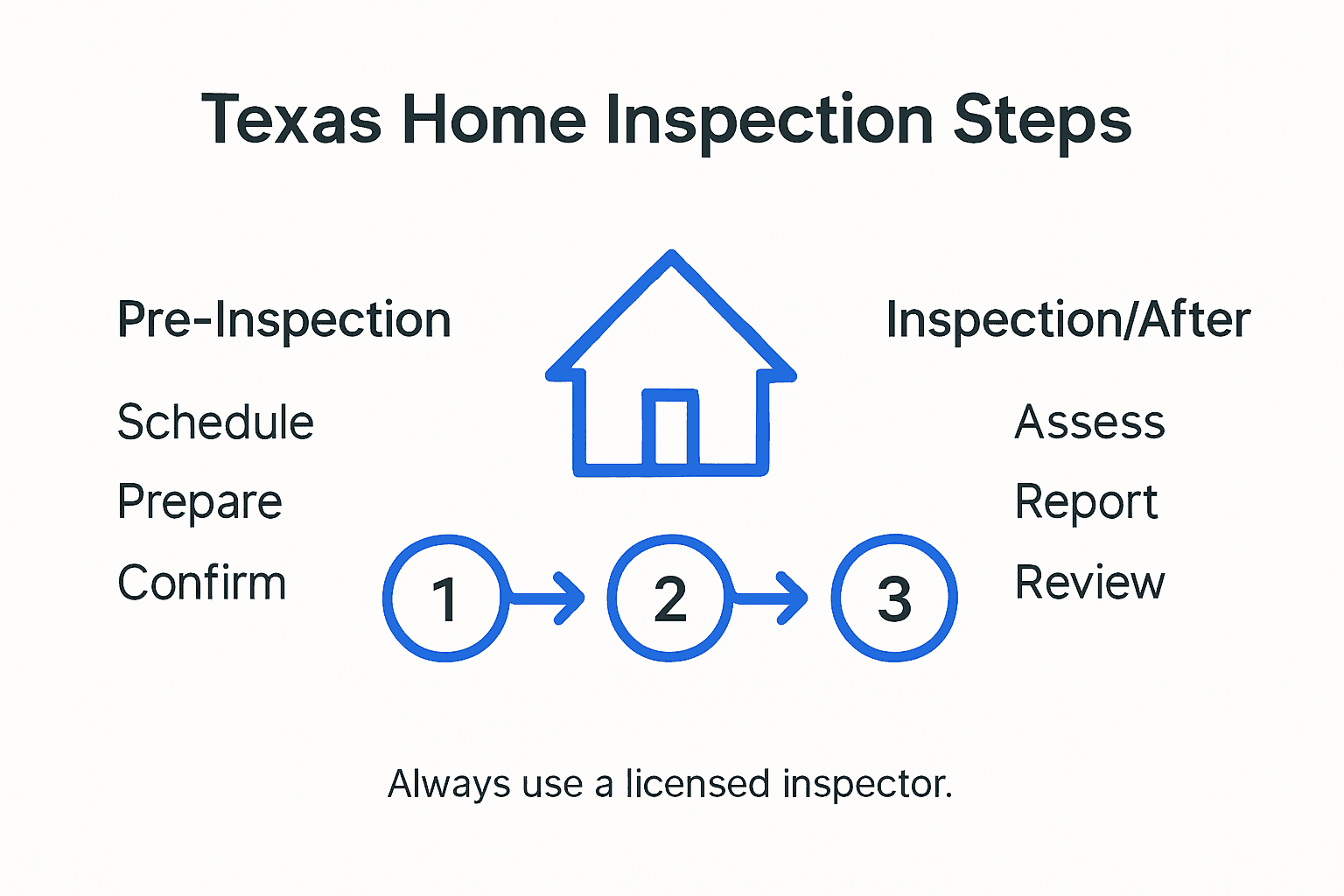
The residential inspection process follows a systematic approach designed to provide comprehensive insights into a property’s condition. Inspection protocols begin with a detailed pre-inspection phase where the licensed professional reviews property details and prepares for a thorough examination. Inspectors typically start by gathering essential information about the property, including its age, previous maintenance records, and any specific concerns raised by the homeowner or potential buyer.
During the actual inspection, the professional conducts a non-invasive visual assessment of the entire property. This methodical examination covers critical areas including:
- Exterior structural elements
- Roof and roofing systems
- Foundation and structural integrity
- Electrical systems and wiring
- Plumbing infrastructure
- Heating, ventilation, and air conditioning (HVAC) systems
- Interior living spaces
- Insulation and energy efficiency components
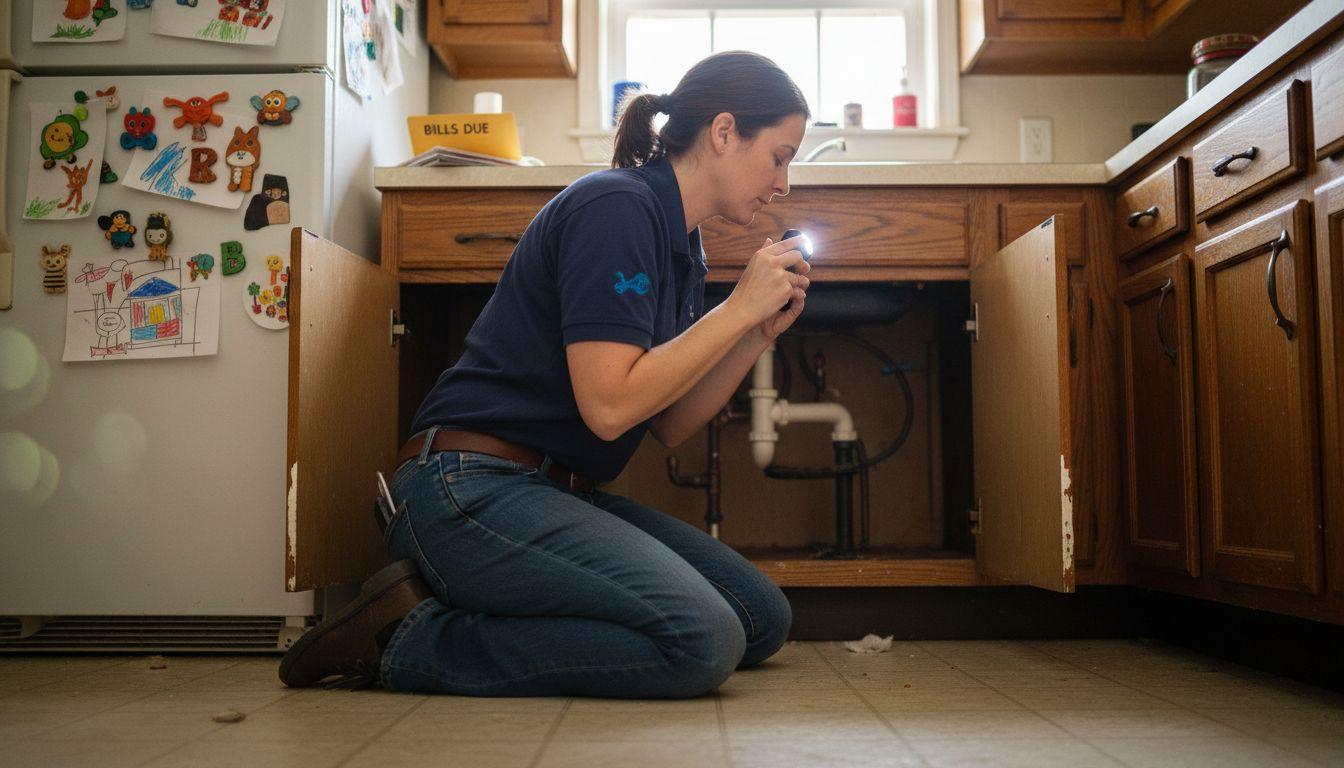
The health and safety assessment represents a crucial component of the inspection process, with inspectors meticulously documenting any potential hazards or deficiencies that could impact the property’s livability or structural soundness. Each observed issue is carefully noted, photographed, and included in the final comprehensive report, which provides a detailed breakdown of the property’s current condition, potential maintenance needs, and recommended repairs.
Pro tip: Request a digital copy of the inspection report and create a backup immediately, storing it in multiple secure locations to ensure you always have access to this critical property documentation.
Legal Requirements and Texas Standards
Home inspection regulations in Texas represent a comprehensive framework designed to protect homebuyers and ensure professional standards in residential property assessments. The Texas Real Estate Commission (TREC) serves as the primary regulatory body, establishing stringent requirements for home inspectors through the Texas Administrative Code Chapter 535, Subchapter R. These regulations create a multilayered licensing system that guarantees only qualified professionals can conduct residential inspections.
The licensing structure in Texas includes three distinct levels of professional certification:
- Apprentice Inspector: Entry-level certification for those beginning their inspection career
- Real Estate Inspector: Intermediate level with expanded professional responsibilities
- Professional Real Estate Inspector: Highest tier requiring extensive experience and advanced qualifications
Each licensing level demands specific educational achievements, including mandatory training hours and successful completion of comprehensive examinations. Inspectors must demonstrate expertise in residential building codes that cover critical areas such as structural integrity, electrical systems, plumbing, mechanical systems, and energy conservation standards. Local Texas jurisdictions may implement additional or more stringent requirements beyond state minimums, further ensuring rigorous property assessment protocols.
Pro tip: Always verify an inspector’s current TREC license status online before hiring, as this provides immediate confirmation of their legal authorization to conduct residential inspections in Texas.
This table gives an overview of Texas residential inspector licensing and the requirements for each level:
| License Level | Required Training Hours | Key Qualifications |
|---|---|---|
| Apprentice Inspector | 154 classroom | Must work under supervision |
| Real Estate Inspector | Additional experience | Can conduct inspections independently |
| Professional Real Estate Inspector | Extensive experience | Highest authority, advanced exams |
Risks, Costs, and What to Avoid
Home inspection costs in Texas typically range from $300 to $500 for an average single-family home, though prices can fluctuate based on property size, age, and complexity. These expenses represent a critical investment in understanding potential property issues, serving as a preventative measure against more expensive future repairs. Homebuyers should view the inspection fee as a small fraction of the overall home purchase cost, potentially saving thousands by identifying significant structural or system-related problems before finalizing a real estate transaction.
Key risks in residential inspections include:
- Hiring an unlicensed inspector without proper TREC certification
- Assuming an inspection guarantees future property performance
- Overlooking critical limitations in standard inspection protocols
- Failing to understand the scope and boundaries of inspection reporting
- Neglecting to review the detailed inspection report thoroughly
Inspection standards clearly indicate that home inspections are non-invasive visual assessments with inherent limitations. Inspectors cannot predict future conditions or uncover concealed defects, making it essential for homebuyers to understand that an inspection report provides a snapshot of the property’s condition at a specific moment. Professional inspectors are trained to identify material defects that could impact property value or safety, but they cannot guarantee the absence of all potential issues.
Pro tip: Request a sample inspection report from your potential home inspector before hiring, which will help you understand their reporting style and comprehensiveness.
Ensure Your Home’s Safety with Expert Licensed Engineering Services in Texas
Understanding the complexities of a residential inspection in Texas is essential for safeguarding your investment. If you are concerned about structural integrity, foundation issues, or detailed assessments beyond the standard inspection scope, our team at Texas Licensed Engineers offers specialized engineering solutions tailored for residential and commercial properties. We help you address critical challenges such as foundation inspections, forensic investigations, and comprehensive structural evaluations that go beyond the visible to protect your home’s value and safety.
Explore trusted expertise and certified services by visiting our TLE Archives – Texas Licensed Engineers | Residential & Commercial, where you can learn how our licensed engineers support homeowners in Houston, Austin, Dallas, San Antonio, and across Texas. Don’t leave your home’s future to chance. Act now to schedule a professional consultation and gain peace of mind with precise engineering insights from Texas Licensed Engineers. Your home deserves the best defense against hidden risks and costly repairs.
Frequently Asked Questions
What is a residential inspection in Texas?
A residential inspection in Texas is a professional evaluation of a property’s condition and safety, conducted by licensed inspectors to identify any material defects.
Why should I attend the residential inspection in person?
Attending the inspection allows you to ask questions directly to the inspector and gain firsthand insights about the property’s condition, helping you make informed decisions.
What types of inspections are available in Texas?
In Texas, common types of inspections include general home inspections, structural assessments, electrical system evaluations, plumbing inspections, and environmental inspections such as mold and radon testing.
How much does a residential inspection typically cost in Texas?
The cost of a residential inspection in Texas usually ranges from $300 to $500, depending on the property’s size, age, and complexity.
Recommended
- 7 Key Steps for a Complete Residential Inspection Checklist – Texas Licensed Engineers | Residential & Commercial
- Structural Inspection in Texas – Protecting Property Value – Texas Licensed Engineers | Residential & Commercial
- What Is Residential Engineering and Why Texas Homes Rely on It – Texas Licensed Engineers | Residential & Commercial
- Blog – Texas Licensed Engineers | Residential & Commercial
