
How to Request Structural Inspection for Texas Homes
Every year, thousands of American homeowners and Houston agents face costly delays because of overlooked structural issues. In Texas, property safety and compliance are high-stakes considerations, especially before sales or renovations. Knowing how and when to request a structural inspection can give you peace of mind and help you avoid unexpected setbacks. This guide offers straightforward steps to help you prepare your property, gather documents, and connect with trusted professionals who understand Texas standards.
Table of Contents
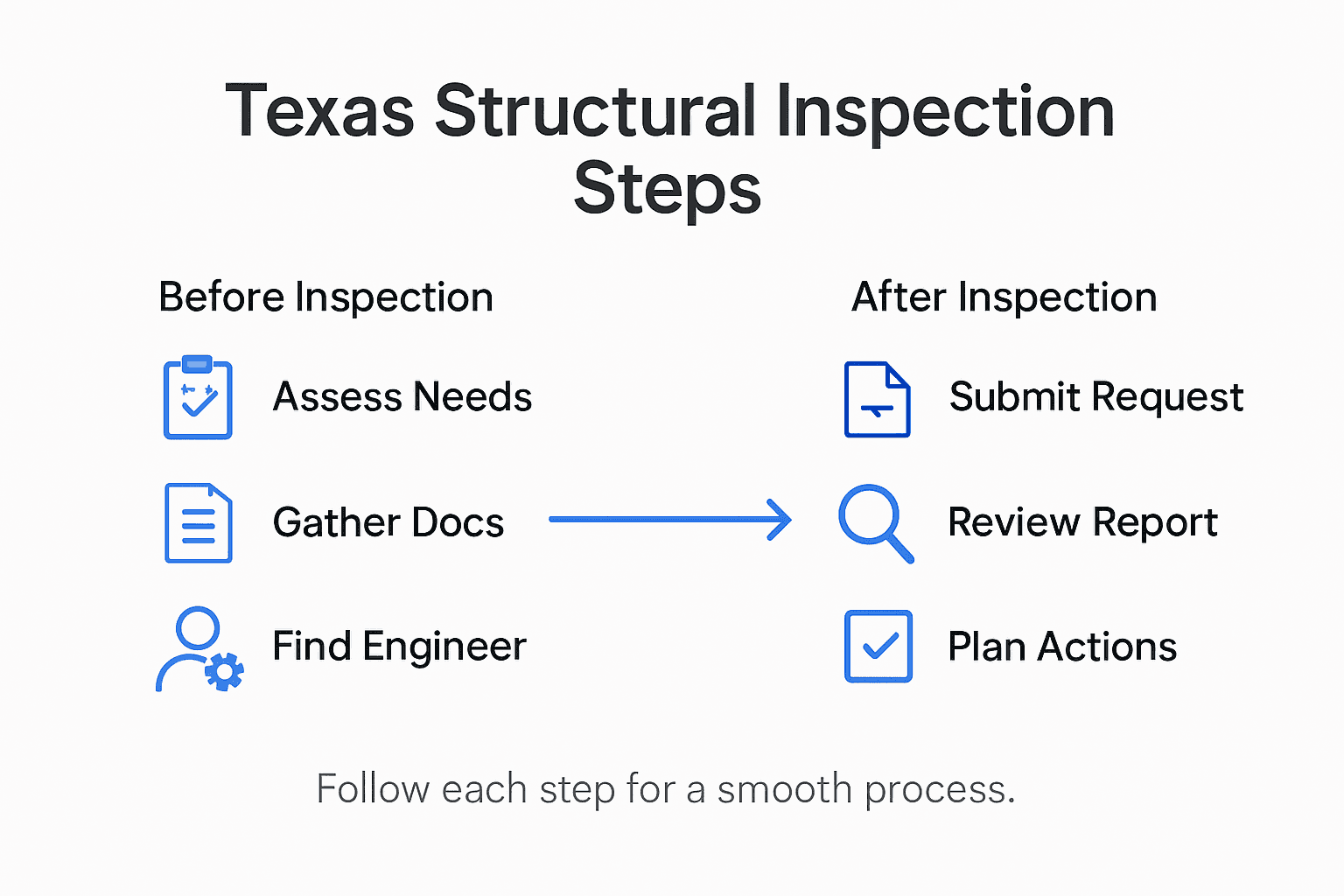
- Step 1: Assess Inspection Needs For Your Property
- Step 2: Gather Essential Property Documentation
- Step 3: Select A Licensed Structural Engineer
- Step 4: Submit An Inspection Request
- Step 5: Review Findings And Complete Next Steps
Quick Summary
| Key Takeaway | Explanation |
|---|---|
| 1. Assess Structural Needs Carefully | Evaluate the age and condition of your home for inspection needs, focusing on signs like cracks and uneven floors. |
| 2. Gather All Relevant Documents | Collect property history, inspection records, and plans to help engineers assess your home’s structure effectively. |
| 3. Choose an Experienced Engineer | Select a licensed engineer with relevant residential experience and knowledge of local soil conditions for accurate evaluations. |
| 4. Submit Inspection Requests Promptly | Complete all necessary forms and documents online to avoid delays in scheduling your structural inspection. |
| 5. Analyze Inspection Reports Thoroughly | Review findings carefully to prioritize repairs or further inspections, ensuring the structural integrity of your home. |
Step 1: Assess Inspection Needs for Your Property
Assessing your Texas home’s structural inspection needs requires a strategic approach that considers multiple factors affecting your property’s integrity and safety. Understanding when and why you need a structural inspection can save you significant time and money by identifying potential issues before they escalate into major problems.
Begin by examining your property’s age, construction type, and recent history. Homes over 20 years old, those with visible foundation cracks, or properties located in areas with expansive clay soils typically require more frequent structural evaluations. The National Standards for the Physical Inspection of Real Estate recommend focusing on health, safety, and structural deficiencies as key assessment criteria. Look for warning signs such as uneven floors, wall cracks, doors that don’t close properly, or visible foundation shifts. These indicators suggest you might need a comprehensive structural assessment to determine potential underlying issues.
Documenting your observations systematically will help professional engineers understand your specific concerns and conduct a more targeted inspection. Take clear photos of any visible damage, measure crack widths, and note locations of structural anomalies. This preparation demonstrates proactiveness and helps engineers quickly diagnose potential problems.
Here is a summary of common warning signs and their possible structural implications:
| Warning Sign | Possible Cause | Recommended Action |
|---|---|---|
| Uneven floors | Foundation settlement | Schedule professional assessment |
| Wall cracks | Structural movement | Monitor and document changes |
| Sticking doors | Frame distortion | Inspect for foundation issues |
| Visible foundation shift | Soil instability | Plan for soil evaluation |
Pro tip: Schedule your structural inspection during dry seasons when soil conditions are most stable, allowing for more accurate foundation and structural evaluations.
Step 2: Gather Essential Property Documentation
Collecting the right property documentation is a critical step in preparing for a comprehensive structural inspection of your Texas home. This process involves assembling a comprehensive set of records that will provide engineers with a complete picture of your property’s history and condition.
Start by gathering key documents that home inspection checklists recommend, including property tax records, previous inspection reports, building permits, repair histories, and any existing warranties. Look for original construction plans, foundation drawings, and records of any significant renovations or structural modifications. These documents help inspectors understand the property’s structural evolution and potential areas of concern. Pay special attention to certificates of structural adequacy which document past repairs, soil testing results, and insurance claims related to structural issues.

Organize these documents in a clear, chronological manner, making sure they are easily accessible for the structural engineer. Include photographs documenting any visible structural changes, cracks, or areas of concern. Digital copies are preferred, but well-preserved physical documents can also provide valuable insights. Create a summary sheet that highlights key dates, major repairs, and any known structural challenges to help the inspector quickly understand your property’s unique characteristics.
Pro tip: Create a digital folder with scanned copies of all property documents and store a backup in a secure cloud service to ensure you never lose critical property information.
Step 3: Select a Licensed Structural Engineer
Selecting the right licensed structural engineer is a crucial step in ensuring a thorough and accurate assessment of your Texas home’s structural condition. The process requires careful research and verification to protect your property investment and guarantee professional expertise.
Begin by verifying credentials through the Texas Board of Professional Engineers, which maintains an official database of licensed professionals. Look for engineers specifically licensed in structural engineering with active credentials and a clean professional record. The Texas Society of Professional Engineers recommends a Qualifications-Based Selection process that prioritizes an engineer’s specific experience and expertise over initial cost considerations. This means evaluating their background in residential structural assessments, understanding of local Texas building conditions, and demonstrated track record of comprehensive property evaluations.
When interviewing potential structural engineers, request detailed information about their professional experience, specialization in residential inspections, and familiarity with Texas soil conditions and construction styles. Ask for references from previous clients, review their professional portfolio, and confirm their ability to provide a comprehensive written report that meets state regulatory requirements. Pay attention to their communication skills, willingness to explain technical details, and professional approach to structural assessment.
Pro tip: Request sample inspection reports from potential engineers to assess the depth and clarity of their professional documentation before making a final selection.
This table outlines key factors to consider when choosing a licensed structural engineer in Texas:
| Selection Factor | Why It Matters | What to Look For |
|---|---|---|
| State license status | Ensures legal qualifications | Active Texas structural engineering license |
| Residential experience | Increases inspection accuracy | Multiple residential projects in portfolio |
| Local soil knowledge | Improves problem identification | Familiarity with Texas soil conditions |
| Document clarity | Assures actionable findings | Clear, detailed written reports |
Step 4: Submit an Inspection Request
Submitting a structural inspection request in Texas requires careful preparation and understanding of local municipal requirements. Your goal is to navigate the process efficiently while ensuring all necessary documentation is accurately completed.
Municipal online portals like McKinney’s inspection request system provide streamlined approaches for homeowners to submit inspection requests. You will typically need to create an account, complete detailed forms, and upload supporting documents such as property plans, previous inspection records, and any relevant engineering documentation. For counties with advanced systems like Harris County’s ePermits platform, you can expect a digital workflow that allows you to apply for inspections, manage permits, and track the status of your request in real time.
Ensure you have all required documentation prepared before initiating the request. This includes your property records, the structural engineer’s preliminary assessment, photographs of areas of concern, and any relevant permits. Double check that all forms are filled out completely and accurately, as incomplete submissions can delay your inspection process. Be prepared to pay any associated filing or inspection fees, which vary depending on your specific local jurisdiction and the scope of the structural assessment.
Pro tip: Create digital copies of all submitted documents and take screenshots of your online submission for your personal records.
Step 5: Review Findings and Complete Next Steps
Reviewing the structural inspection findings requires careful attention and a strategic approach to understanding the implications for your Texas home. Your goal is to comprehensively analyze the report and develop an informed action plan based on the engineer’s professional assessment.
The American Society of Civil Engineers recommends a systematic approach to interpreting structural condition assessment results, which involves carefully examining each section of the report and understanding the potential risks and recommended actions. Pay close attention to the severity of any identified issues, distinguishing between minor concerns that can be monitored and critical structural problems requiring immediate intervention. Look for detailed explanations of material conditions, potential foundation shifts, load bearing capacity, and any recommended repairs or further investigations.
After receiving the report, create a prioritized action plan that addresses the most critical findings first. This may involve scheduling additional specialized inspections, obtaining quotes from contractors for recommended repairs, or developing a long term maintenance strategy. Document all findings, keep copies of the inspection report in a secure location, and consider consulting with the structural engineer to fully understand the technical details and potential implications of their recommendations.
Pro tip: Create a digital and physical backup of your inspection report, and set calendar reminders to follow up on recommended maintenance or monitoring tasks.
Secure Your Texas Home with Expert Structural Inspection Services
Requesting a structural inspection for your Texas home can feel overwhelming when facing challenges like foundation cracks, soil instability, or unclear documentation. This article guides you through identifying these key structural concerns and selecting the right licensed engineer to protect your property and peace of mind. If you need professional guidance on any step from thorough foundation inspections to detailed engineering reports, our experienced team stands ready to help.

Explore our comprehensive residential and commercial solutions in the TLE Archives – Texas Licensed Engineers | Residential & Commercial to see how we deliver confident, actionable results. Don’t wait until minor issues turn into costly repairs — visit Texas Licensed Engineers today to schedule your inspection and get personalized support from licensed experts who understand Texas soil and building conditions. Your home’s safety starts with the right assessment and trusted engineering expertise.
Frequently Asked Questions
How do I assess if my Texas home needs a structural inspection?
To determine if your home requires a structural inspection, look for signs such as uneven floors, wall cracks, or sticking doors. Start by documenting these observations and consider scheduling an assessment if your home is over 20 years old or has visible foundation issues.
What documents do I need to prepare before submitting a structural inspection request?
Gather essential documents like property tax records, previous inspection reports, building permits, and renovation records. Organizing these documents clearly can help inspectors understand your property’s history and condition more effectively.
How can I find a licensed structural engineer for my home inspection?
Begin by verifying qualifications through the appropriate licensing board to ensure the engineer holds an active structural engineering license. Interview potential engineers about their experience with residential inspections to choose one that best suits your needs.
What steps should I follow to submit a structural inspection request?
To submit your request, visit your local municipal inspection request portal, create an account, and complete the necessary forms. Make sure to upload all supporting documents and pay any required fees to avoid delays in processing your request.
How do I interpret the findings from a structural inspection report?
Carefully examine each section of the report, paying attention to identified issues and recommended actions. Create a prioritized action plan based on the severity of the findings to address critical concerns first and ensure your property’s structural integrity.
What should I do after receiving the structural inspection report?
After reviewing the report, document any findings and create a plan for necessary repairs or further inspections. Follow up on recommended actions promptly to maintain your home’s structural health and avoid further complications.
Recommended
- Structural Inspection in Texas – Protecting Property Value – Texas Licensed Engineers | Residential & Commercial
- 7 Essential Steps for a Structural Inspection Checklist – Texas Licensed Engineers | Residential & Commercial
- Structural Engineering Guide 2025 for Texas Projects – Texas Licensed Engineers | Residential & Commercial
- What Is a Structural Engineer and Why Texans Rely On Them – Texas Licensed Engineers | Residential & Commercial
