
Role of Engineers in Texas Projects: Ensuring Safety and Compliance
Every American city relies on skilled engineers to keep schools, bridges, and neighborhoods safe. With more than five million residents depending on infrastructure in Texas alone, these experts play a vital role in every construction project. From designing sturdy foundations to ensuring everything meets strict state codes, engineers stand behind the reliability and safety of the places where American families live and work.
Table of Contents
- Defining Engineers’ Role In Texas Projects
- Types Of Engineering Services For Texas Properties
- Engineering Licensing And Regulatory Standards In Texas
- Key Responsibilities In Construction And Inspection
- Risks, Liabilities, And Legal Implications For Engineers
Key Takeaways
| Point | Details |
|---|---|
| Engineers Ensure Safety and Compliance | Engineers in Texas are vital for maintaining safety and structural integrity in construction, adhering to state regulations while mitigating risks. |
| Diverse Engineering Services Offered | Texas engineers provide specialized services including structural, water resource, and environmental engineering, tailored to meet the state’s unique challenges. |
| Rigorous Licensing and Standards | The Texas engineering profession is governed by stringent licensing requirements, ensuring competence and adherence to safety and regulatory standards. |
| Complex Legal Responsibilities | Engineers face significant legal risks related to professional liability and regulatory compliance, necessitating vigilant documentation and ethical practices. |
Defining Engineers’ Role in Texas Projects
Engineers play a critical role in ensuring the safety, structural integrity, and regulatory compliance of construction and infrastructure projects across Texas. These highly trained professionals serve as guardians of technical standards, meticulously analyzing and designing systems that protect public welfare and meet stringent state regulations. From residential foundations to complex commercial structures, engineers apply specialized knowledge to mitigate risks and create robust solutions.
In Texas, engineers provide comprehensive services that span multiple critical domains. Structural engineering involves designing safe building frameworks that can withstand local environmental challenges like extreme weather, soil conditions, and potential natural disasters. They conduct detailed site assessments in Greater Austin to evaluate ground stability, load-bearing capacities, and potential structural vulnerabilities. Their expertise extends to:
- Foundation design and analysis
- Seismic and wind resistance calculations
- Drainage and grading evaluations
- Construction plan development
- Permitting documentation preparation
Beyond structural considerations, Texas engineers also serve crucial forensic and investigative functions. When accidents, flood damage, or structural failures occur, licensed engineers conduct thorough investigations to determine root causes, assess liability, and recommend remediation strategies. Their technical expertise becomes instrumental in legal proceedings, insurance claims, and repair planning. These professionals are not just designers but also problem solvers who protect community safety through meticulous technical analysis and proactive risk management strategies.
The regulatory landscape in Texas demands exceptional precision from engineering professionals. State licensing requirements ensure that only qualified individuals can certify critical infrastructure projects. Engineers must maintain rigorous professional standards, continuously update their technical knowledge, and demonstrate comprehensive understanding of local building codes, environmental regulations, and safety protocols. By bridging technical expertise with regulatory compliance, Texas engineers create resilient infrastructure that supports community growth and protects public welfare.
Types of Engineering Services for Texas Properties
Texas properties require a comprehensive range of engineering services that address complex infrastructural, environmental, and structural challenges unique to the state’s diverse landscape. Water resource management and infrastructure planning represent critical engineering domains that ensure community resilience and sustainable development across residential and commercial sectors. Engineers provide specialized expertise that goes far beyond basic construction, delivering nuanced solutions tailored to Texas’s specific geographic and regulatory requirements.
The primary engineering services for Texas properties encompass several key specializations:
- Structural Engineering
- Foundation design and analysis
- Seismic and wind resistance evaluations
- Load-bearing capacity assessments
- Water Resource Engineering
- Flood control infrastructure
- Drainage system design
- Water supply network planning
- Environmental Engineering
- Site contamination assessments
- Environmental impact studies
- Sustainability infrastructure development
Civil works and infrastructure development represent another crucial aspect of engineering services in Texas. Professional engineers conduct detailed site investigations, develop comprehensive project plans, and ensure regulatory compliance for complex construction initiatives. These services are particularly critical in managing Texas’s challenging environmental conditions, including expansive clay soils, hurricane-prone coastal regions, and areas susceptible to flooding.
Forensic and specialized engineering services further distinguish Texas engineering professionals. When structural failures, property damage, or complex technical challenges emerge, licensed engineers provide expert analysis, investigative reports, and remediation strategies. Site assessments in Greater Dallas demonstrate how engineers combine technical expertise with rigorous problem-solving to protect property owners and public safety. By integrating advanced technological tools, comprehensive regulatory knowledge, and deep understanding of local environmental dynamics, Texas engineers deliver critical services that support sustainable community development and infrastructure resilience.
Engineering Licensing and Regulatory Standards in Texas
Texas maintains rigorous regulatory standards to ensure the highest level of professional competence and public safety in engineering practice. Professional engineering licensing requirements represent a comprehensive framework that protects both consumers and the built environment by establishing strict criteria for engineering professionals. These standards encompass multiple dimensions of professional qualification, including educational background, professional experience, and demonstrated technical expertise.
The licensing process for engineers in Texas involves several critical components:
- Educational Requirements
- Degree from an accredited engineering program
- Minimum bachelor’s degree in engineering
- Specific coursework in core engineering disciplines
- Professional Experience
- Documented work experience under licensed professional engineer supervision
- Minimum four years of progressive engineering work
- Detailed documentation of professional achievements
- Examination Process
- Comprehensive professional engineering licensing exam
- Discipline-specific technical assessments
- Ongoing continuing education requirements
Texas Administrative Code provisions outline the specific categories of professional engineer licenses, reflecting the state’s commitment to maintaining exceptional engineering standards. Different license types address various engineering domains, including structural, civil, mechanical, and environmental engineering, each with unique qualification pathways and specialized requirements. Site assessments in Greater Houston demonstrate how these rigorous standards translate into practical professional performance.
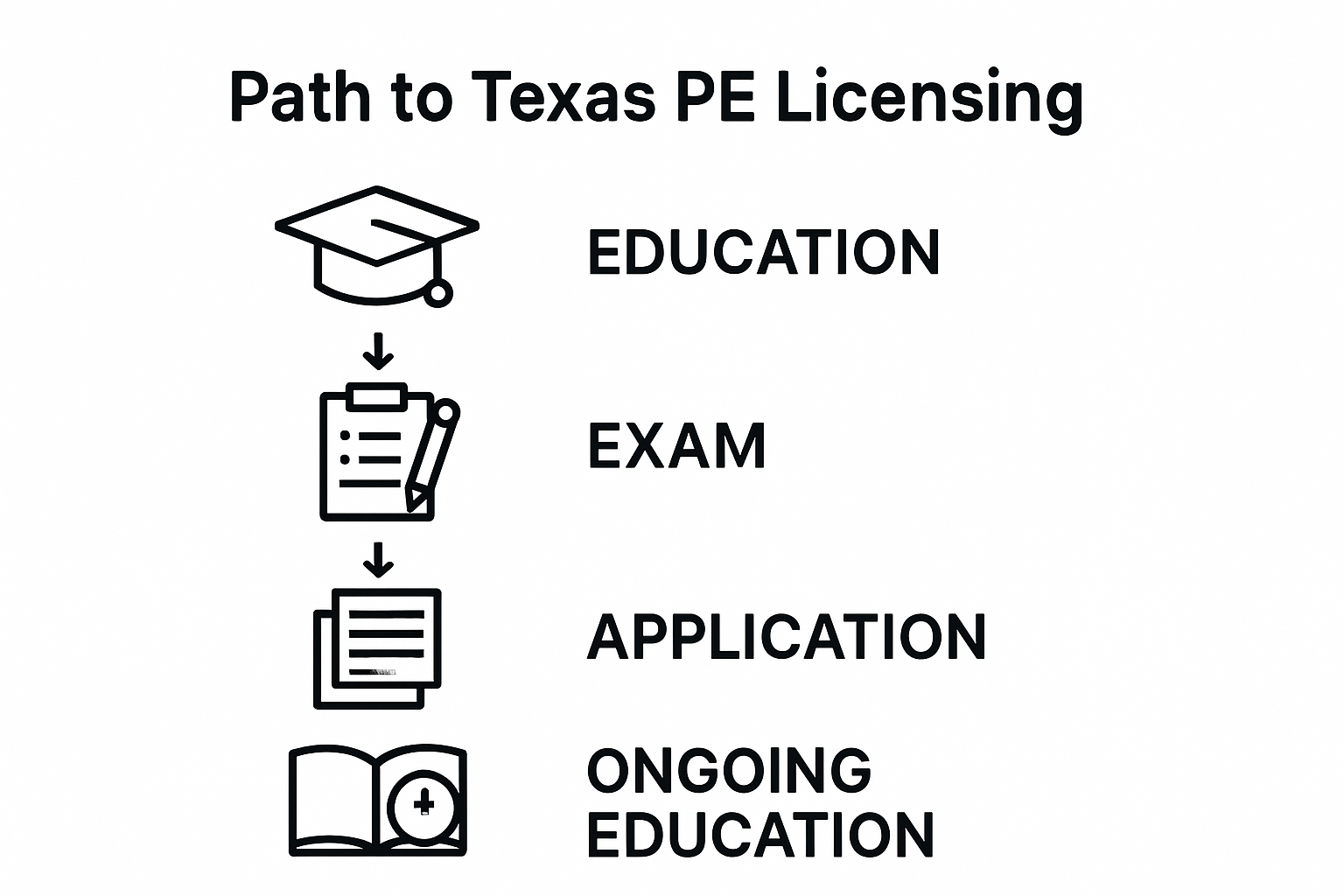
Beyond initial licensing, Texas engineers must continuously demonstrate professional competence through ongoing education and periodic license renewals. This dynamic regulatory approach ensures that engineering professionals remain current with technological advancements, evolving safety protocols, and emerging industry best practices. By maintaining such comprehensive and stringent licensing standards, Texas protects public infrastructure, promotes innovation, and upholds the highest levels of professional integrity in engineering practice.
Key Responsibilities in Construction and Inspection
Licensed professional engineers in Texas shoulder critical responsibilities that extend far beyond traditional design work, serving as guardians of public safety and infrastructure integrity throughout construction and inspection processes. Their role encompasses comprehensive oversight, technical analysis, and rigorous verification of every construction phase, ensuring that projects meet exacting standards of structural reliability, regulatory compliance, and operational efficiency.
Key responsibilities of engineers during construction and inspection include:
- Pre-Construction Assessment
- Site feasibility evaluations
- Geotechnical investigations
- Environmental impact assessments
- Construction Phase Oversight
- Materials quality verification
- Structural integrity monitoring
- Compliance documentation
- Inspection and Validation
- Detailed structural examinations
- Safety standard verification
- Performance benchmark testing
Infrastructure challenge assessments reveal the complex technical scrutiny required in modern construction projects. Engineers must analyze multiple interdependent systems, anticipate potential failure points, and develop comprehensive mitigation strategies. This involves sophisticated technical diagnostics, including advanced computational modeling, stress analysis, and predictive maintenance protocols that extend well beyond traditional visual inspections.

Site assessments in Greater San Antonio exemplify the intricate nature of engineering inspections, where professionals must synthesize technical expertise with regulatory knowledge. Engineers are responsible for documenting precise measurements, identifying potential structural vulnerabilities, and ensuring that every construction element meets or exceeds state and federal safety standards. Their work represents a critical intersection of technical skill, regulatory compliance, and public safety protection, making them essential guardians of Texas’s built environment.
Risks, Liabilities, and Legal Implications for Engineers
Professional engineers in Texas face complex legal landscapes that demand exceptional attention to ethical standards and regulatory compliance. The potential consequences of professional missteps extend far beyond simple professional repercussions, encompassing significant legal, financial, and personal risks that can fundamentally alter an engineer’s career trajectory and professional standing.
The primary legal risks for Texas engineers include:
- Professional Liability
- Design errors and omissions
- Structural failure consequences
- Negligence claims
- Regulatory Compliance Risks
- Licensing standard violations
- Incomplete documentation
- Unauthorized practice
- Ethical Responsibility
- Public safety violations
- Conflict of interest
- Misrepresentation of professional capabilities
Regulatory oversight mechanisms demonstrate the intricate legal framework governing engineering practice. Engineers can face severe penalties including license suspension, professional censure, and potential civil litigation for substantive professional failures. These risks necessitate comprehensive professional liability insurance, meticulous documentation, and an unwavering commitment to maintaining the highest standards of technical competence and ethical conduct.
Texas Licensed Engineers services highlight the critical importance of understanding these legal complexities. Professional engineers must proactively manage potential risks by maintaining rigorous documentation, staying current with evolving regulatory standards, and implementing robust quality control processes. The legal implications of engineering work extend beyond immediate project outcomes, representing a continuous obligation to protect public safety, maintain professional integrity, and uphold the fundamental trust placed in licensed engineering professionals.
Protect Your Texas Projects with Trusted Licensed Engineers
Understanding the vital role engineers serve in Texas projects is the first step to ensuring safety, structural integrity, and complete regulatory compliance. If you are managing residential or commercial development, you know that challenges like foundation design, construction plans, permitting, and forensic investigations require precision and expertise. These are critical pain points that Texas property owners and developers face when navigating complex state regulations and environmental factors such as flood damage or grading issues.
At Texas Licensed Engineers, we specialize in addressing these challenges head-on with comprehensive engineering services tailored for projects across Houston, Austin, Dallas, San Antonio, and beyond. Our professionals deliver trusted solutions including structural and foundation inspections, permitting support, and expert forensic investigations that help you avoid costly delays or legal complications. Leverage our proven expertise to move forward with confidence knowing your project meets the highest standards.

Take control of your project’s safety and compliance now. Visit our Uncategorized Archives to explore how our licensed engineers turn technical challenges into secure outcomes. Don’t wait until risks become liabilities. Connect with Texas Licensed Engineers today and secure a strong foundation for your Texas project.
Frequently Asked Questions
What are the primary roles of engineers in construction projects?
Engineers ensure safety, structural integrity, and regulatory compliance in construction projects, handling everything from site assessments to design and oversight during construction.
How do engineers ensure compliance with local regulations?
Engineers stay updated on local building codes and environmental regulations, ensuring that all aspects of a project adhere to these strict standards and maintain public safety.
What types of engineering services are critical for Texas projects?
Key engineering services include structural engineering, water resource engineering, and environmental engineering, each addressing unique challenges in Texas’s diverse landscape.
What legal risks do engineers face in their profession?
Engineers can face legal risks such as professional liability from design errors, regulatory compliance violations, and ethical responsibilities affecting public safety.
Recommended
- Greater Dallas – Texas Licensed Engineers | Residential & Commercial
- Greater Houston – Texas Licensed Engineers | Residential & Commercial
- Greater Austin – Texas Licensed Engineers | Residential & Commercial
- greater San Antonio – Texas Licensed Engineers | Residential & Commercial
- Conformità normativa nei cantieri: comprensione e importanza – Sikuro
